Al final del artículo ¿Qué significa equivalente de publicidad, lo que costaría taparles la boca, lo que ocupa que hablen de ellos...?Ojo a esta noticia

Pardo de Vera y los grandes accidentes de tren: fue jefa de obra en Angrois y adjudicó Adamuz
La expresidenta de ADIF Isabel Pardo de Vera está imputada en la causa judicial por corrupción debido a su responsabilidad en presuntos amaños de obra atheobjective.com

Install the app
How to install the app on iOS
Follow along with the video below to see how to install our site as a web app on your home screen.
Nota: This feature may not be available in some browsers.
Estás usando un navegador desactualizado. Es posible que no muestre este u otros sitios web correctamente.
Debe actualizar o usar un navegador alternativo.
Debe actualizar o usar un navegador alternativo.
*Tema mítico* : URGENTE: Descarrila tren en la linea AVE Andalucía
- Autor del tema El Conde del Alfoz
- Fecha de inicio
- Featured
maestroburppp
Madmaxista
- Desde
- 18 Abr 2025
- Mensajes
- 17.651
- Fruta
- 22.469
ya se contó páginas atrás. ¿Un sabotaje de precisión interfiriendo en toda la cadena de suministros y causar el máximo daño económico, político, fruta, empresarial y social? No sé si 12.000 millones potenciales, a perder. Y esperar a ver los tailandeses o filipinos o no sé qué otros, que también querían trenes españoles por un monto parecido.No te lo contará TelePedro, pero han reventado el contrato de la mayor obra ferroviaria del mundo: el AVE a La Meca, que España ganó por ser la mejor. Ahora está en el aire. La fruta de España, por los suelos. De ser referencia mundial a dar vergüenza⚠️ pic.twitter.com/KaHodZ0kRC
— Muy.Mona/🇪🇸💚 Ver en X
Última edición:
maestroburppp
Madmaxista
- Desde
- 18 Abr 2025
- Mensajes
- 17.651
- Fruta
- 22.469
MUCHOS DE AQUÍ SERÉIS MUY JÓVENES PARA ACORDAROS
PERO EN USA EN TORNO A 2018
SE VIVIÓ UNA CADENA DE ACCIDENTES DE AVIONES MILITARES
CADA DOS POR TRES SE ESTABA ACCIDENTANDO ALGÚN AVIÓN MILITAR Y 3 TRENES AL DÍA
Y SE VIERON OBLIGADOS A DEJARLOS Y DEJAR AVIONES MILITARES EN TIERRA.
HASTA INTENTAR DESCUBRIR QUÉ ESTABA PASANDO.
( NO RECUERDO SI SE DIO CON LA CAUSA)
↓↓↓↓
(adjunto visible para usuarios registrados)
MILITARY
April 6, 2018 7:03am EDT | Updated April 6, 2018 8:17am
Senior U.S. general says mishaps do not represent a crisis; national security correspondent Jennifer Griffin reports from the Pentagon.
Three U.S. military aircraft crashes this week that killed five service members within two days have some on Capitol Hill worried the military's worn-out air fleet may not be getting the funding it needs.
At a press conference Thursday, the director of the Pentagon’s Joint Staff refused to say the crashes marked a negative trend when a reporter asked if military aviation was in crisis.
“I would reject ‘wave’ and ‘crisis,’” said Marine Lt. Gen. Kenneth F. McKenzie, Jr. “We’re are going to look at each one in turn. Each one is tragic. We regret each one. We will look at them carefully. I am certainly not prepared to say that it’s a ‘wave’ of mishaps or some form of ‘crisis.’”
But the crashes this week indicate a continuation of a disturbing pattern.
(adjunto visible para usuarios registrados) Video
There have been five noncombat aviation crashes in 2018, killing nine service members — 37 were killed in aircraft crashes last year, nearly double the number killed in 2016.
Only 37 percent of Marine Corps CH-53E heavy-lift helicopters can fly right now, the head of Marine Corps aviation, Lt. Gen. Steven R. Rudder, told Congress in November.
“If you are flying a smaller number of airplanes, they break more frequently, and if you can’t pay for the parts, you have a smaller number of airplanes, and so you’re not getting the hours,” Marine Corps Commandant Gen. Robert B. Neller told a Reagan National Defense Forum audience moderated by Fox News’s Jennifer Griffin in December.
(adjunto visible para usuarios registrados)
The helicopter crash killed (left to right) Capt. Samuel A. Schultz, 1st Lt. Samuel D. Phillips, Gunnery Sgt. Derik R. Holley and Lance Cpl. Taylor J. Conrad. (US Marine Corps)
“Last year in aviation, we had a horrible safety year, probably the worst year in 10 years,” Neller added.
“I think the high-op tempo and stress on the force over the past 17 years of continuous combat operations in Iraq, Afghanistan, Syria, and elsewhere is catching up to the U.S. military,” Todd Harrison, a defense expert with the Center for Strategic and International Studies, told Task & Purpose.
The Pentagon just received $700 billion in the massive spending bill signed by Trump last month — a sizable portion of that is supposed to help fix aircraft and improve pilot training.
A month after the Marine Corps transport plane crash killing 16, a Marine MV-22 Osprey crashed off the coast of Australia, while landing aboard a U.S. Navy warship. Three Marines drowned, 23 others were rescued.
Days later, Neller ordered all of his aircraft grounded for 24 hours.
Eight hours before the deadly Super Stallion crash in Southern California, a Marine Corps Harrier jet crashed shortly after takeoff in the East African nation of Djibouti.
The pilot ejected, and was released from the hospital later in the week, according to the Marines.
But just a day later, a Marine Corps CH-53E Super Stallion was forced to make an emergency landing on a beach in Djibouti causing minor damage. No marines were hurt.
But the two crashes in consecutive days were enough for the Djibouti government to ground all U.S. military flights Thursday, including Reaper drones from the largest American base in Africa — hindering counterterrorism operations in nearby Somalia and Yemen, where the U.S. military has launched dozens of airstrikes this year.
The U.S. military cut short a two-week training exercise, which had just started in Djibouti when the grounding was announced, potentially robbing American forces of vital training.
A year ago, the exercise was dubbed “preparation for real-world missions in the region — because we don’t get ‘do-overs’ when it comes to crisis operations,” said Navy Cmdr. Tom Sandoval, a deputy operations director at the time.
(adjunto visible para usuarios registrados) Video
House Armed Services Chairman Mac Thornberry, R-Texas, warned the White House in an interview earlier this week not to “rob” the military’s readiness money to fund the National Guard at the border.
When President George W. Bush sent 6,000 troops to the border, it cost $415 million — money that was stripped from the Air Force and Navy’s Operations and Maintenance (O&M) budgets.
When President Barack Obama did the same thing in 2010, sending 1,200 Guard troops to the border, it cost roughly $160 million.
The Pentagon’s top spokeswoman assured reporters that Defense Secretary Jim Mattis has not ignored the readiness problems of his forces.
“Border security is national security. We are leaning forward to support the president, and his intent and his goal,” said chief Pentagon spokeswoman Dana W. White about Trump’s move. “But readiness remains our top priority.”
But when asked by a reporter if the Pentagon could rule out stripping critical operations and maintenance dollars to fund the National Guard deployment to the border, the Pentagon was mum.
“We haven’t made those determinations,” White said.
A new “support cell” to coordinate Defense Department and Department of Homeland Security efforts would examine the issue, White said.
Maj. Stephen Del Bagno of Valencia, Calif., the pilot of the F-16 fighter jet that crashed outside Las Vegas during a training flight Wednesday, flew for the elite Thunderbirds, the Air Force’s premier flight demonstration team. He had accumulated more than 3,500 flying hours in 30 different air frames, and had been a civilian flight instructor before joining the Air Force.
The crash that killed Del Bagno this week marked the third time in less than two years a Thunderbirds jet had crashed.
(adjunto visible para usuarios registrados) Video
Tuesday, a Marine Corps CH-53E Super Stallion helicopter crashed in Southern California, killing four marines. The Super Stallion is the largest helicopter in the U.S. military, capable of carrying up to 55 marines with full combat load.
The Marine Corps identified the four killed late Thursday: Capt. Samuel A. Schultz, 28, of Huntington Valley, Pa., 1st Lt. Samuel D. Phillips, 27, of Pinehurst, N.C., Gunnery Sgt. Derik R. Holley, 33, of Dayton, Ohio, and Lance Cpl. Taylor J. Conrad, 24, of Baton Rouge, La.
The crash was the deadliest for the Marine Corps since a KC-130 crashed in the Mississippi Delta, killing 15 marines and a sailor in July.
PERO EN USA EN TORNO A 2018
SE VIVIÓ UNA CADENA DE ACCIDENTES DE AVIONES MILITARES
CADA DOS POR TRES SE ESTABA ACCIDENTANDO ALGÚN AVIÓN MILITAR Y 3 TRENES AL DÍA
Y SE VIERON OBLIGADOS A DEJARLOS Y DEJAR AVIONES MILITARES EN TIERRA.
HASTA INTENTAR DESCUBRIR QUÉ ESTABA PASANDO.
( NO RECUERDO SI SE DIO CON LA CAUSA)
Aquí la entrevista. Son 56 minutos y creo, un recopilatorio lo más esclarecedor posible de lo que se sabe hasta la fecha. https://t.co/1ALQLWIXJf pic.twitter.com/A6Jr1vuEyL
— Óscar Puente Ver en X
(adjunto visible para usuarios registrados)
MILITARY
String of US military aircraft crashes in 2018 continues deadly trend
By Lucas Tomlinson Fox NewsApril 6, 2018 7:03am EDT | Updated April 6, 2018 8:17am
Deadly week: Crashes claim lives of 5 US service members
Senior U.S. general says mishaps do not represent a crisis; national security correspondent Jennifer Griffin reports from the Pentagon.
Three U.S. military aircraft crashes this week that killed five service members within two days have some on Capitol Hill worried the military's worn-out air fleet may not be getting the funding it needs.
At a press conference Thursday, the director of the Pentagon’s Joint Staff refused to say the crashes marked a negative trend when a reporter asked if military aviation was in crisis.
“I would reject ‘wave’ and ‘crisis,’” said Marine Lt. Gen. Kenneth F. McKenzie, Jr. “We’re are going to look at each one in turn. Each one is tragic. We regret each one. We will look at them carefully. I am certainly not prepared to say that it’s a ‘wave’ of mishaps or some form of ‘crisis.’”
But the crashes this week indicate a continuation of a disturbing pattern.
(adjunto visible para usuarios registrados) Video
There have been five noncombat aviation crashes in 2018, killing nine service members — 37 were killed in aircraft crashes last year, nearly double the number killed in 2016.
Only 37 percent of Marine Corps CH-53E heavy-lift helicopters can fly right now, the head of Marine Corps aviation, Lt. Gen. Steven R. Rudder, told Congress in November.
“If you are flying a smaller number of airplanes, they break more frequently, and if you can’t pay for the parts, you have a smaller number of airplanes, and so you’re not getting the hours,” Marine Corps Commandant Gen. Robert B. Neller told a Reagan National Defense Forum audience moderated by Fox News’s Jennifer Griffin in December.
(adjunto visible para usuarios registrados)
The helicopter crash killed (left to right) Capt. Samuel A. Schultz, 1st Lt. Samuel D. Phillips, Gunnery Sgt. Derik R. Holley and Lance Cpl. Taylor J. Conrad. (US Marine Corps)
“Last year in aviation, we had a horrible safety year, probably the worst year in 10 years,” Neller added.
“I think the high-op tempo and stress on the force over the past 17 years of continuous combat operations in Iraq, Afghanistan, Syria, and elsewhere is catching up to the U.S. military,” Todd Harrison, a defense expert with the Center for Strategic and International Studies, told Task & Purpose.
The Pentagon just received $700 billion in the massive spending bill signed by Trump last month — a sizable portion of that is supposed to help fix aircraft and improve pilot training.
A month after the Marine Corps transport plane crash killing 16, a Marine MV-22 Osprey crashed off the coast of Australia, while landing aboard a U.S. Navy warship. Three Marines drowned, 23 others were rescued.
Days later, Neller ordered all of his aircraft grounded for 24 hours.
Eight hours before the deadly Super Stallion crash in Southern California, a Marine Corps Harrier jet crashed shortly after takeoff in the East African nation of Djibouti.
The pilot ejected, and was released from the hospital later in the week, according to the Marines.
But just a day later, a Marine Corps CH-53E Super Stallion was forced to make an emergency landing on a beach in Djibouti causing minor damage. No marines were hurt.
But the two crashes in consecutive days were enough for the Djibouti government to ground all U.S. military flights Thursday, including Reaper drones from the largest American base in Africa — hindering counterterrorism operations in nearby Somalia and Yemen, where the U.S. military has launched dozens of airstrikes this year.
The U.S. military cut short a two-week training exercise, which had just started in Djibouti when the grounding was announced, potentially robbing American forces of vital training.
A year ago, the exercise was dubbed “preparation for real-world missions in the region — because we don’t get ‘do-overs’ when it comes to crisis operations,” said Navy Cmdr. Tom Sandoval, a deputy operations director at the time.
(adjunto visible para usuarios registrados) Video
House Armed Services Chairman Mac Thornberry, R-Texas, warned the White House in an interview earlier this week not to “rob” the military’s readiness money to fund the National Guard at the border.
When President George W. Bush sent 6,000 troops to the border, it cost $415 million — money that was stripped from the Air Force and Navy’s Operations and Maintenance (O&M) budgets.
When President Barack Obama did the same thing in 2010, sending 1,200 Guard troops to the border, it cost roughly $160 million.
The Pentagon’s top spokeswoman assured reporters that Defense Secretary Jim Mattis has not ignored the readiness problems of his forces.
“Border security is national security. We are leaning forward to support the president, and his intent and his goal,” said chief Pentagon spokeswoman Dana W. White about Trump’s move. “But readiness remains our top priority.”
But when asked by a reporter if the Pentagon could rule out stripping critical operations and maintenance dollars to fund the National Guard deployment to the border, the Pentagon was mum.
“We haven’t made those determinations,” White said.
A new “support cell” to coordinate Defense Department and Department of Homeland Security efforts would examine the issue, White said.
Maj. Stephen Del Bagno of Valencia, Calif., the pilot of the F-16 fighter jet that crashed outside Las Vegas during a training flight Wednesday, flew for the elite Thunderbirds, the Air Force’s premier flight demonstration team. He had accumulated more than 3,500 flying hours in 30 different air frames, and had been a civilian flight instructor before joining the Air Force.
The crash that killed Del Bagno this week marked the third time in less than two years a Thunderbirds jet had crashed.
(adjunto visible para usuarios registrados) Video
Tuesday, a Marine Corps CH-53E Super Stallion helicopter crashed in Southern California, killing four marines. The Super Stallion is the largest helicopter in the U.S. military, capable of carrying up to 55 marines with full combat load.
The Marine Corps identified the four killed late Thursday: Capt. Samuel A. Schultz, 28, of Huntington Valley, Pa., 1st Lt. Samuel D. Phillips, 27, of Pinehurst, N.C., Gunnery Sgt. Derik R. Holley, 33, of Dayton, Ohio, and Lance Cpl. Taylor J. Conrad, 24, of Baton Rouge, La.
The crash was the deadliest for the Marine Corps since a KC-130 crashed in the Mississippi Delta, killing 15 marines and a sailor in July.
Adjuntos
Archivo oculto para usuarios no registrados
Última edición:
Bobesponjista
Madmaxista
- Desde
- 21 Jun 2012
- Mensajes
- 14.029
- Fruta
- 32.047
Le van a dar la cabeza en bandeja de plataYa está la extrema derecha pidiendo la dimisión del ministro.
El Profeta 2.0
Team Algopasista
- Desde
- 30 Jun 2012
- Mensajes
- 9.304
- Fruta
- 22.663
Máquina.Gareth es, probablemente, la mejor fuente de información de Twitter para el accidente de Adamuz. Ha descubierto que los carriles viejos y los nuevos son de materiales diferentes y, por tanto, necesitan una soldadura especial. https://t.co/MspbmFgOYh
— La Revista de Trenes Ver en X
La explicación:
1/ La Especificación Técnica ET 03.360.155.0 de ADIF (octubre 2024) regula la soldadura aluminotérmica de carriles. En su sección 1.2, Campo de Aplicación, establece literalmente: “En esta ET no se contemplan soldaduras realizadas entre secciones diferentes de carril, ni con carriles de desigual desgaste o diferentes grados de carril.”
2/ La norma solo aplica a carriles Vignole nuevos, de perfiles 45E3, 54E1 o 60E1, en grados R260 o R350HT. Mismo perfil, mismo grado, mismo estado. Todo lo demás queda fuera. No es que lo prohíba: simplemente no lo regula. No existe procedimiento homologado.
3/ En Adamuz, según las imágenes analizadas, el carril nuevo es R350HT. El carril viejo puede ser R260. Si esto se confirma, estamos ante una soldadura entre dos grados de acero distintos. La NAV 3-3-2.1 permite esta combinación, pero exige usar la carga aluminotérmica del acero de menor grado (R260).
4/ ¿Por qué? Porque el R350HT es un acero tratado térmicamente, más duro, con mayor contenido de carbono efectivo. Si usas la carga de R350HT sobre R260, el exceso de calor y carbono puede generar martensita en el carril viejo. La martensita es frágil. Se fractura.
5/ Pero hay un problema adicional que ninguna norma cubre: el desgaste. El carril de 1992 tiene 33 años de servicio. Eso implica desgaste vertical en la cabeza (5-15 mm típico), desgaste lateral en curvas, endurecimiento superficial por trabajo mecánico, microgrietas invisibles, tensiones residuales acumuladas.
6/ Cuando sueldas un carril nuevo (perfil nominal intacto, 172 mm de altura) con uno viejo (perfil reducido por desgaste), el molde de soldadura no encaja bien. Se genera una discontinuidad geométrica. El tren pasa por encima a 300 km/h. Cada rueda golpea ese escalón. Las cargas de impacto se multiplican con la velocidad.
7/ Además, la distribución térmica durante la soldadura es asimétrica. El carril nuevo tiene más masa, absorbe más calor. El carril viejo, con sección reducida, se calienta más rápido. La zona afectada térmicamente (HAZ) se comporta de forma diferente en cada lado. Las propiedades metalúrgicas resultantes son desiguales.
8/ La ET 03.360.155.0 lo sabe. Por eso excluye estos casos de su ámbito. El problema es que no existe otra norma que los cubra. Ni en ADIF, ni en la normativa europea EN 14730-1.
9/ ¿Qué debería haberse hecho? Si el carril viejo era R260 y el nuevo R350HT, como mínimo: identificación previa del grado de ambos carriles mediante espectrometría, selección de carga aluminotérmica R260, evaluación del desgaste del carril existente, y si el desgaste superaba los límites, sustitución completa del tramo, no soldadura.
10/ Aún no tenemos nada de esto documentado en los pliegos del contrato Guadalmez-Córdoba. Las prescripciones técnicas remiten a la normativa estándar. Sin cláusulas específicas para transiciones. Sin protocolos de compatibilidad metalúrgica más allá del grado nominal. Sin requisitos diferenciados de inspección para uniones críticas.
11/ La pregunta no es si abusa la norma. La norma no existe. La pregunta es: ¿quién evaluó la compatibilidad de esa unión? ¿Quién decidió que era seguro soldar en esas condiciones? ¿Qué criterio técnico se aplicó?
Que tengan que venir de fuera a contarnos las cosas... No nos deja en buen lugar al resto.
Creo que seguimos igual que antes del accidente. Seguimos sin estar a la altura de las circunstancias.
Nos marean con ruido, y la gente pica.
Quizás sea una fantasía mía, pero siempre he creído que en las explicaciones sencillas se encuentra la verdad.
Máquina.
Que tengan que venir de fuera a contarnos las cosas... No nos deja en buen lugar al resto.
Creo que seguimos igual que antes del accidente. Seguimos sin estar a la altura de las circunstancias.
Nos marean con ruido, y la gente pica.
Quizás sea una fantasía mía, pero siempre he creído que en las explicaciones sencillas se encuentra la verdad.
Ayer ya dije que no nos fijáramos en el ruido que introducen algunos para ganar tiempo para que hablemos de lo que ellos quieren.
Si en una remodelación de vía esta se parte en el el punto de unión de la vía antigua con la nueva que se ha hecho recientemente lo normal es poner todas las miradas en como se ha hecho ese punto de unión.
Asurbanipal
Será en Octubre
Máximo Décimo Hispanio
sensador de pollos
Ábalos sólo leía los catálogos de señoritas, Raquel Sánchez no sabemos si leía y Puente sólo lee los informes que recopilan lo que se dice de él, y X. pic.twitter.com/TGrfG8TA6I
— Marta de Pedro 🇪🇸 Ver en X
maestroburppp
Madmaxista
- Desde
- 18 Abr 2025
- Mensajes
- 17.651
- Fruta
- 22.469
el ejpertoc
Madmaxista
- Desde
- 5 Oct 2020
- Mensajes
- 6.911
- Fruta
- 16.144
(adjunto visible para usuarios registrados)
Un nuevo carril roto.
En esta ocasión en la línea Madrid-Barcelona
Un nuevo carril roto.
En esta ocasión en la línea Madrid-Barcelona
Adjuntos
Archivo oculto para usuarios no registrados
maestroburppp
Madmaxista
- Desde
- 18 Abr 2025
- Mensajes
- 17.651
- Fruta
- 22.469
maestroburppp
Madmaxista
- Desde
- 18 Abr 2025
- Mensajes
- 17.651
- Fruta
- 22.469
.
MUCHOS DE AQUÍ SERÉIS MUY JÓVENES PARA ACORDAROS
PERO EN USA EN TORNO A 2018
SE VIVIÓ UNA CADENA DE ACCIDENTES DE AVIONES MILITARES
CADA DOS POR TRES SE ESTABA ACCIDENTANDO ALGÚN AVIÓN MILITAR Y 3 TRENES AL DÍA
Y SE VIERON OBLIGADOS A DEJARLOS Y DEJAR AVIONES MILITARES EN TIERRA.
HASTA INTENTAR DESCUBRIR QUÉ ESTABA PASANDO.
( NO RECUERDO SI SE DIO CON LA CAUSA)
↓↓↓↓Aquí la entrevista. Son 56 minutos y creo, un recopilatorio lo más esclarecedor posible de lo que se sabe hasta la fecha. https://t.co/1ALQLWIXJf pic.twitter.com/A6Jr1vuEyL
— Óscar Puente Ver en X
(adjunto visible para usuarios registrados)
MILITARY
String of US military aircraft crashes in 2018 continues deadly trend
By Lucas Tomlinson Fox News
April 6, 2018 7:03am EDT | Updated April 6, 2018 8:17am
Deadly week: Crashes claim lives of 5 US service members
Senior U.S. general says mishaps do not represent a crisis; national security correspondent Jennifer Griffin reports from the Pentagon.
Three U.S. military aircraft crashes this week that killed five service members within two days have some on Capitol Hill worried the military's worn-out air fleet may not be getting the funding it needs.
At a press conference Thursday, the director of the Pentagon’s Joint Staff refused to say the crashes marked a negative trend when a reporter asked if military aviation was in crisis.
“I would reject ‘wave’ and ‘crisis,’” said Marine Lt. Gen. Kenneth F. McKenzie, Jr. “We’re are going to look at each one in turn. Each one is tragic. We regret each one. We will look at them carefully. I am certainly not prepared to say that it’s a ‘wave’ of mishaps or some form of ‘crisis.’”
But the crashes this week indicate a continuation of a disturbing pattern.
(adjunto visible para usuarios registrados) Video
There have been five noncombat aviation crashes in 2018, killing nine service members — 37 were killed in aircraft crashes last year, nearly double the number killed in 2016.
Only 37 percent of Marine Corps CH-53E heavy-lift helicopters can fly right now, the head of Marine Corps aviation, Lt. Gen. Steven R. Rudder, told Congress in November.
“If you are flying a smaller number of airplanes, they break more frequently, and if you can’t pay for the parts, you have a smaller number of airplanes, and so you’re not getting the hours,” Marine Corps Commandant Gen. Robert B. Neller told a Reagan National Defense Forum audience moderated by Fox News’s Jennifer Griffin in December.
(adjunto visible para usuarios registrados)
The helicopter crash killed (left to right) Capt. Samuel A. Schultz, 1st Lt. Samuel D. Phillips, Gunnery Sgt. Derik R. Holley and Lance Cpl. Taylor J. Conrad. (US Marine Corps)
“Last year in aviation, we had a horrible safety year, probably the worst year in 10 years,” Neller added.
“I think the high-op tempo and stress on the force over the past 17 years of continuous combat operations in Iraq, Afghanistan, Syria, and elsewhere is catching up to the U.S. military,” Todd Harrison, a defense expert with the Center for Strategic and International Studies, told Task & Purpose.
The Pentagon just received $700 billion in the massive spending bill signed by Trump last month — a sizable portion of that is supposed to help fix aircraft and improve pilot training.
A month after the Marine Corps transport plane crash killing 16, a Marine MV-22 Osprey crashed off the coast of Australia, while landing aboard a U.S. Navy warship. Three Marines drowned, 23 others were rescued.
Days later, Neller ordered all of his aircraft grounded for 24 hours.
Eight hours before the deadly Super Stallion crash in Southern California, a Marine Corps Harrier jet crashed shortly after takeoff in the East African nation of Djibouti.
The pilot ejected, and was released from the hospital later in the week, according to the Marines.
But just a day later, a Marine Corps CH-53E Super Stallion was forced to make an emergency landing on a beach in Djibouti causing minor damage. No marines were hurt.
But the two crashes in consecutive days were enough for the Djibouti government to ground all U.S. military flights Thursday, including Reaper drones from the largest American base in Africa — hindering counterterrorism operations in nearby Somalia and Yemen, where the U.S. military has launched dozens of airstrikes this year.
The U.S. military cut short a two-week training exercise, which had just started in Djibouti when the grounding was announced, potentially robbing American forces of vital training.
A year ago, the exercise was dubbed “preparation for real-world missions in the region — because we don’t get ‘do-overs’ when it comes to crisis operations,” said Navy Cmdr. Tom Sandoval, a deputy operations director at the time.
(adjunto visible para usuarios registrados) Video
House Armed Services Chairman Mac Thornberry, R-Texas, warned the White House in an interview earlier this week not to “rob” the military’s readiness money to fund the National Guard at the border.
When President George W. Bush sent 6,000 troops to the border, it cost $415 million — money that was stripped from the Air Force and Navy’s Operations and Maintenance (O&M) budgets.
When President Barack Obama did the same thing in 2010, sending 1,200 Guard troops to the border, it cost roughly $160 million.
The Pentagon’s top spokeswoman assured reporters that Defense Secretary Jim Mattis has not ignored the readiness problems of his forces.
“Border security is national security. We are leaning forward to support the president, and his intent and his goal,” said chief Pentagon spokeswoman Dana W. White about Trump’s move. “But readiness remains our top priority.”
But when asked by a reporter if the Pentagon could rule out stripping critical operations and maintenance dollars to fund the National Guard deployment to the border, the Pentagon was mum.
“We haven’t made those determinations,” White said.
A new “support cell” to coordinate Defense Department and Department of Homeland Security efforts would examine the issue, White said.
Maj. Stephen Del Bagno of Valencia, Calif., the pilot of the F-16 fighter jet that crashed outside Las Vegas during a training flight Wednesday, flew for the elite Thunderbirds, the Air Force’s premier flight demonstration team. He had accumulated more than 3,500 flying hours in 30 different air frames, and had been a civilian flight instructor before joining the Air Force.
The crash that killed Del Bagno this week marked the third time in less than two years a Thunderbirds jet had crashed.
(adjunto visible para usuarios registrados) Video
Tuesday, a Marine Corps CH-53E Super Stallion helicopter crashed in Southern California, killing four marines. The Super Stallion is the largest helicopter in the U.S. military, capable of carrying up to 55 marines with full combat load.
The Marine Corps identified the four killed late Thursday: Capt. Samuel A. Schultz, 28, of Huntington Valley, Pa., 1st Lt. Samuel D. Phillips, 27, of Pinehurst, N.C., Gunnery Sgt. Derik R. Holley, 33, of Dayton, Ohio, and Lance Cpl. Taylor J. Conrad, 24, of Baton Rouge, La.
The crash was the deadliest for the Marine Corps since a KC-130 crashed in the Mississippi Delta, killing 15 marines and a sailor in July.
El Profeta 2.0
Team Algopasista
- Desde
- 30 Jun 2012
- Mensajes
- 9.304
- Fruta
- 22.663
La sociedad no deja de ser un rebaño, y se comporta como tal.Ayer ya dije que no nos fijáramos en el ruido que introducen algunos para ganar tiempo para que hablemos de lo que ellos quieren.
Si en una remodelación de vía esta se parte en el el punto de unión de la vía antigua con la nueva que se ha hecho recientemente lo normal es poner todas las miradas en como se ha hecho ese punto de unión.
Si uno bala, el resto vamos detrás.
Y nos reímos del Spectrum del alopécico.Cargando…
www.eleconomista.es
maestroburppp
Madmaxista
- Desde
- 18 Abr 2025
- Mensajes
- 17.651
- Fruta
- 22.469
Gonzalor
Bomb Rider
Y Ayuso dimisión, que no se te olvide.Pues nada, como Rajoy hizo no sé qué, pelillos a la mar, que mañana descarrile otro tren y mueran 100 personas, si total… Rajoy y Ana Botella bla bla
maestroburppp
Madmaxista
- Desde
- 18 Abr 2025
- Mensajes
- 17.651
- Fruta
- 22.469
.
HORA ENTREVISTA PUENTE EN TVE
08:55
¿Por qué es tan importante el acero? ( supply chain en general)
(adjunto visible para usuarios registrados)
¿ Por qué es tan importante el acero?
Veamos dónde se produjo el acero en nuestro país.
ACERO AMERICANO
Anónimo 03/06/2018 01:10:10 ID:4cb238
8chan/research: 563824
El acero es importante para el Departamento de Defensa para armas, aviones, barcos, tanques, satélites, etc.,
y para la producción del PNB, como las plantas de automóviles, y el acero es importante para la reconstrucción de infraestructura.
------------------------------------------------------------------------------------------------------------------
( NOTA MIA OPINION PERSONAL :
NO SOLO ACERO.
TODA LA CADENA DE SUMINISTROS - CIBERSEGURIDAD - ENERGIA - ETC )
------------------------------------------------------------------------------------------------------------------
¿Qué pasaría si el acero utilizado para los proyectos de grado militar
fuera inferior por nuestros enemigos como método para debilitarse?
¿AMÉRICA España se ha debilitado a propósito.?
.
HORA ENTREVISTA PUENTE EN TVE
08:55
¿Por qué es tan importante el acero? ( supply chain en general)
Empezaré la semana como la terminé, dando explicaciones que, por desgracia, pasan también por desmentir bulos. Mañana en el programa de @SIntxaurrondo a partir de las 8:55 h. pic.twitter.com/rlnI1d2Yyl
— Óscar Puente Ver en X
¿ Por qué es tan importante el acero?
Veamos dónde se produjo el acero en nuestro país.
ACERO AMERICANO
Anónimo 03/06/2018 01:10:10 ID:4cb238
8chan/research: 563824
El acero es importante para el Departamento de Defensa para armas, aviones, barcos, tanques, satélites, etc.,
y para la producción del PNB, como las plantas de automóviles, y el acero es importante para la reconstrucción de infraestructura.
------------------------------------------------------------------------------------------------------------------
( NOTA MIA OPINION PERSONAL :
NO SOLO ACERO.
TODA LA CADENA DE SUMINISTROS - CIBERSEGURIDAD - ENERGIA - ETC )
------------------------------------------------------------------------------------------------------------------
¿Qué pasaría si el acero utilizado para los proyectos de grado militar
fuera inferior por nuestros enemigos como método para debilitarse?
¿
.
Adjuntos
Archivo oculto para usuarios no registrados
Última edición:
frangelico
Será en Octubre
- Desde
- 26 Nov 2014
- Mensajes
- 57.259
- Fruta
- 187.390
Interesante. Entiendo que esto fue con un Talgo y por suerte solo se se salió una rueda y se mantuvo la composición integra sobre la vía y pudo detenerse.carriles de 1989 en el accidente
La CIAF alertó a Fomento en 2019 del descarrile de un AVE a 92 km de Adamuz por la "antigüedad de las vías"
El Ministerio de Transportes y ADIF admitieron el viernes que la investigación se centra en la unión de un carril nuevo instalado en mayo de 2025 con otro viejo que llevaba 34 años soportando el paso de trenes
(imagen visible para usuarios registrados)
Cargando…
www.elconfidencial.com
bocadRillo
Será en Octubre
- Desde
- 26 Ago 2009
- Mensajes
- 21.500
- Fruta
- 54.861
Qué pena que este Villanueva no esté más acertado.Nos han tenido circulando por el filo de una navaja mientras decían que el ferrocarril vivía el mejor momento de su historia. A 350 km/h nos querían hacer pasar por ahí. pic.twitter.com/NWUQdRmX4i
— Díaz Villanueva Ver en X
César Borgia
Será en Octubre
- Desde
- 27 May 2012
- Mensajes
- 40.674
- Fruta
- 205.661
César Borgia
Será en Octubre
- Desde
- 27 May 2012
- Mensajes
- 40.674
- Fruta
- 205.661
esteforoapesta
letrina.info apesta
- Desde
- 29 Sep 2024
- Mensajes
- 1.932
- Fruta
- 7.441
R-78 en fase terminal?
(adjunto visible para usuarios registrados)
(adjunto visible para usuarios registrados)
Adjuntos
Archivo oculto para usuarios no registrados
Ahí es lo que yo decía el otro día. Esos vagones al plegarse algo, se fueron hasta la altura del rail del sentido contrario, y al venir el Alvia, uno de ellos actuó como rampa de lanzamiento, y sacó a la locomotora del Alvia de la vía.Pienso que estos daños los causo el Alvia y que ya estaba parado el Iryo.
(adjunto visible para usuarios registrados)
esteforoapesta
letrina.info apesta
- Desde
- 29 Sep 2024
- Mensajes
- 1.932
- Fruta
- 7.441
Adif contradijo su propia normativa de soldaduras en la obra del tramo de Adamuz
El contrato indicaba que la soldadura debía hacerse con la carga del raíl de mayor dureza, cuando la norma dice que debe adaptarse al de menor
Adif contradijo su propia normativa de soldaduras de carriles en la obra de renovación del tramo donde se produjo el trágico accidente de Adamuz. La unión de raíles está en el punto de mira de la investigación y las discrepancias entre la norma general del gestor ferroviario y los pliegos del contrato licitado para la renovación han levantado todas las sospechas.
Según ha podido comprobar Vozpópuli, la normativa NAV 3-3-2.1 sobre "Soldadura Aluminotérmica de Carriles", tanto en su edición de 2018 como en la más reciente de octubre de 2024, indica que los carriles unidos,"ya sean nuevos, regenerados o usados", deben ser "del mismo tipo de perfil y con igual grado de acero".
En el caso de la soldadura junto a la que se fracturó el carril de Adamuz, estas condiciones no se cumplían. Allí se soldaron un rail tipo R260, fabricado por Ensidesa e instalado en el año 1992, y uno de última generación tipo R350HT, de mayor dureza y fabricado por Arcelor Mittal en 2023. No obstante, la normativa de Adif contempla una excepción para este tipo de casos con durezas diferentes y obliga a que sean soldados utilizando "la carga correspondiente al acero de menor grado de ambos carriles, según lo establecido en la UNE-EN 12674-1".
Por lo tanto, la soldadura debió ejecutarse al acomodo del rail de mayor antiguedad y menor dureza, el fabricado por Ensidesa. Pero las prescripciones técnicas de los pliegos del contrato de renovación integral del tramo Guadalmez-Córdoba, licitado en el año 2022, contradijeron estas indicaciones.
"En el caso de soldadura entre carriles de distinta dureza se empleará el kit de soldadura de mayor dureza, por ejemplo en el caso de soldadura entre carril de calidad 260 (el de Ensidasa) y carril de calidad 350 (el de Acelor Mittal), se empleará el kit de soldadura con carga de 350", señala el documento. La adjudicataria del contrato, en este caso la UTE (Unión Temporal de Empresas) formada por Azvi, Ferrovial, una filial de OHLA y Contratas y Ventas.
Por el momento, se desconoce en qué condiciones se ejecutaron las soldaduras, que corrieron a cargo de Redalsa, filial de Adif. Si se adecuaron al rail de mayor dureza, como estipulaban los pliegos del contrato, habría incumplido la normativa técnica de Adif. En caso contrario, no se habrían cumplimentado las prescripciones técnicas de la obra de remodelación.
La vía se rompió junto a la soldadura
Fuentes especializadas explican que aplicar una soldadura conforme al rail de mayor dureza, como se indicaba en este caso, provoca una unión de excesiva rigidez que puede derivar en complicaciones como tensiones, fisuras o un desgaste desigual en los carriles. Es por ello que la normativa técnica de Adif ordena que, en casos de diferentes grados de dureza, se acomode al de menor grado.El ministro de Transportes, Óscar Puente, ha afirmado este lunes en una entrevista en La 1 que la vía en la que se produjo el accidente de Adamuz se rompió "junto a la soldadura" por la parte del carril nuevo, que está plenamente "identificado" y que se correspondería con el fabricado por Acelor Mittal.
Sobre el punto exacto donde venció el rail, ha añadido que el hecho de que "se haya roto al lado de soldadura es lo normal, no quiere decir que sea en la soldadura, puede serlo".
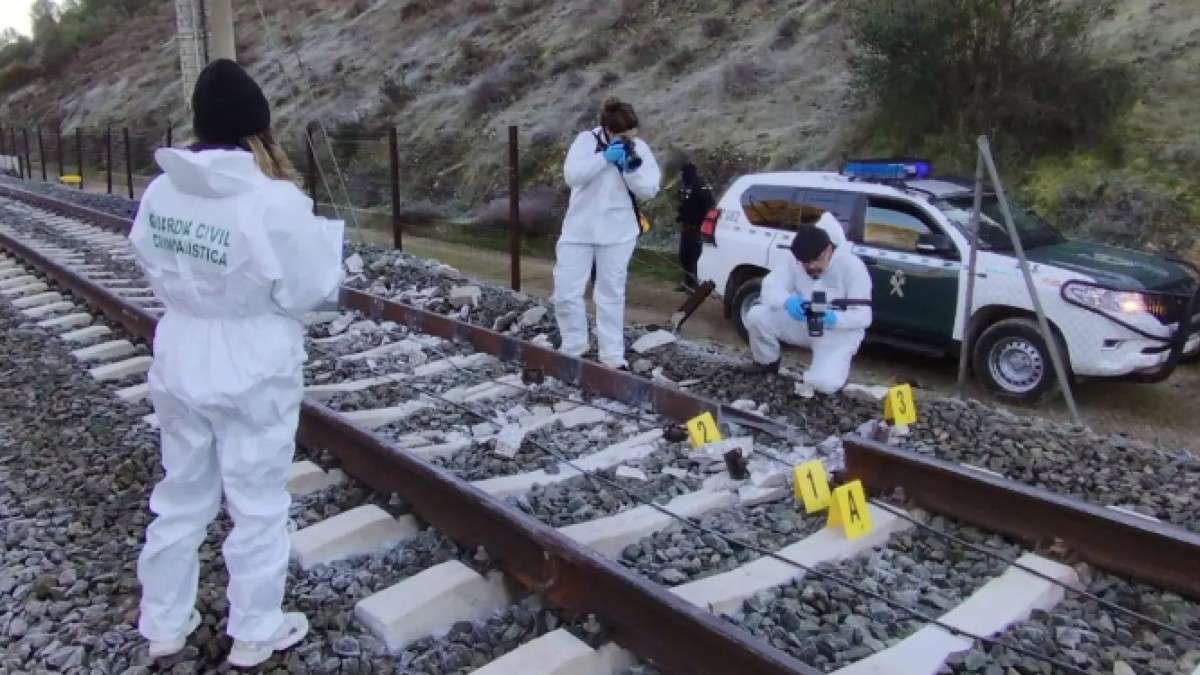
Adif contradijo su propia normativa de soldaduras en la obra del tramo de Adamuz
El contrato indicaba que la soldadura debía hacerse con la carga del raíl de mayor dureza, cuando la norma dice que debe adaptarse al de menor
 www.vozpopuli.com
Ha costado la arqueología, pero he conseguido el pliego de prescripciones técnicas (pág.250), que tanto me habéis pedido: / FileSystem/servlet/GetDocumentByIdServlet?DocumentIdParam=a7cb2e92-89b3-4820-8de9-a07614057fe2* juntad todo el enlace en vuestro navegador, creo que es problema de twitter.
Eso sí, es ridículo que los enlaces del Ministerio de Fomento no sean seguros.
EN RESUMEN: Si el contratista siguió la normativa técnica de ADIF (NAV 3-3-2.2), entonces incumplió el pliego del contrato.
Si cumplió el pliego al pie de la letra, ejecutó mal la soldadura según los estándares de seguridad ferroviaria.
En cualquiera de los dos casos, la conclusión es la misma: alguien dentro de ADIF redactó un contrato de mantenimiento que contradice su propia normativa técnica.¿Negligencia? ¿Incompetencia?
Última edición: