
World Cup winners consider quitting Spanish national team over Rubiales scandal
Spain's World Cup champions are weighing a boycott of the national team following the Luis Rubiales kiss incident, sparking a debate on public funding for women's football.
English · Original discussion in Spanish · Published
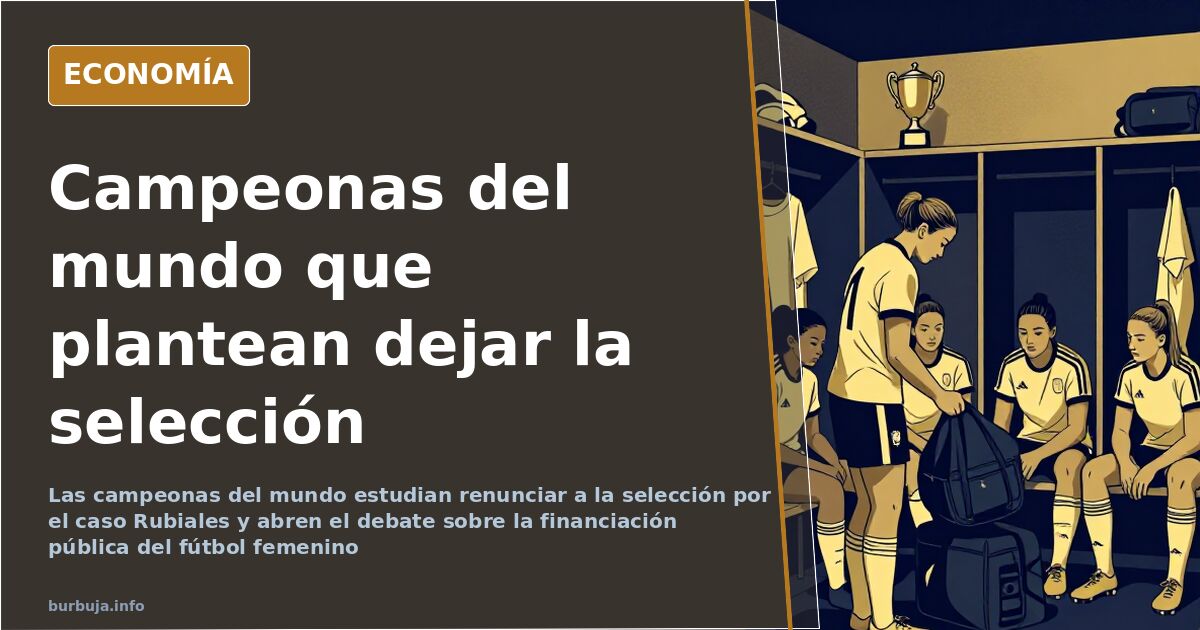
Spanish women's football faces the exodus of its champions
Winning a World Cup and contemplating abandonment of the national team in the same breath is, at the very least, a detail. This is what is attributed to the World Cup champions, who, according to the information published, are considering resigning from the Spanish National Team due to the attitude of the Spanish Football Federation (RFEF) president, Luis Rubiales, in the episode of the kiss to Jenni Hermoso. The threat does not come out of nowhere: it lands after months of tension between the players and the federation leadership, with a world title that the federation presents as an endorsement of its own management. Here is the uncomfortable question: whose is a success built with public money?
The plan that multiplied licenses and public spending
The numbers discussed within the federation are no small matter. According to the information cited in the thread, the creation of the women's department and a strategic plan for women's football led to a surge in licenses: from 40,000 to over 100,000, with the corresponding increase in travel, medical services, nutritionists, and technical staff. The women's delegation, defended from that side, was equated to the men's.
The other side of the balance is public money. According to the information cited, the Government allocates more than 30 million to promote women's football while men's football is self-financing. A message in the thread also puts the bonus per player after the world title at 250,000 euros. With this accounting, reducing the conflict to a kiss is staying on the surface: what is being decided underneath is who controls the budget and who writes the narrative.
Why are the champions considering quitting the national team?
The immediate trigger is Rubiales' attitude after the kiss, but the discontent comes from before. In a previous season, a group of fifteen players resigned from the national team in a standoff with the then coach. That precedent, as several messages in the thread recall, did not prevent the subsequent world title, which fuels the thesis that departures do not always weaken the team.
The opposing view maintains that this showdown is of another nature: it would not be a sporting standoff, but a pressure maneuver with public opinion as the arbiter. Some see it as an attempt to force the president's definitive downfall. The RFEF has replied by distributing graphic material to refute the version of Hermoso and FUTPRO, a sign that the chapter remains open.
The real cost: sponsorships, ticket sales, and succession
The impact is not only sporting. For several messages in the thread, a team without its champions is a product with less market value, and the women's competition relies largely on its internationals. Those who sponsor seek public and stability, warn those same voices, and a sustained internal war in the media reduces the appeal to any brand. If companies will jump from a listing ship is, today, an unknown.
The question of money runs through the entire episode. Do the group waive their emoluments if they leave the national team? Can the federation withstand a tournament without role models? There is no answer in the available data. In any case, there is no record that the cost of the fight falls on either side.
The precedent of the common fund
There is a detail that bothers both sides. The growth of women's football exhibited as an achievement was supported, in part, by public spending and an initiative that did not depend on the market. This makes it more difficult to justify that the outcome is a group of players leaving and a president entrenched. The return on that investment, if the ship splits in two, is in doubt.
Succession also comes into play, and with it the old cliché that the system weighs more than the people. Some maintain that fifteen others will pass and the team will play the same; others warn otherwise, that without those who won the product loses its main appeal.
With the data on the table, one cannot expect a blanket and definitive resignation, but rather a long standoff with departures and returns as the federation moves. Public money will continue, presumably, financing the spectacle, whoever wins this battle.
Winning a World Cup and contemplating abandonment of the national team in the same breath is, at the very least, a detail. This is what is attributed to the World Cup champions, who, according to the information published, are considering resigning from the Spanish National Team due to the attitude of the Spanish Football Federation (RFEF) president, Luis Rubiales, in the episode of the kiss to Jenni Hermoso. The threat does not come out of nowhere: it lands after months of tension between the players and the federation leadership, with a world title that the federation presents as an endorsement of its own management. Here is the uncomfortable question: whose is a success built with public money?
The plan that multiplied licenses and public spending
The numbers discussed within the federation are no small matter. According to the information cited in the thread, the creation of the women's department and a strategic plan for women's football led to a surge in licenses: from 40,000 to over 100,000, with the corresponding increase in travel, medical services, nutritionists, and technical staff. The women's delegation, defended from that side, was equated to the men's.
The other side of the balance is public money. According to the information cited, the Government allocates more than 30 million to promote women's football while men's football is self-financing. A message in the thread also puts the bonus per player after the world title at 250,000 euros. With this accounting, reducing the conflict to a kiss is staying on the surface: what is being decided underneath is who controls the budget and who writes the narrative.
Why are the champions considering quitting the national team?
The immediate trigger is Rubiales' attitude after the kiss, but the discontent comes from before. In a previous season, a group of fifteen players resigned from the national team in a standoff with the then coach. That precedent, as several messages in the thread recall, did not prevent the subsequent world title, which fuels the thesis that departures do not always weaken the team.
The opposing view maintains that this showdown is of another nature: it would not be a sporting standoff, but a pressure maneuver with public opinion as the arbiter. Some see it as an attempt to force the president's definitive downfall. The RFEF has replied by distributing graphic material to refute the version of Hermoso and FUTPRO, a sign that the chapter remains open.
The real cost: sponsorships, ticket sales, and succession
The impact is not only sporting. For several messages in the thread, a team without its champions is a product with less market value, and the women's competition relies largely on its internationals. Those who sponsor seek public and stability, warn those same voices, and a sustained internal war in the media reduces the appeal to any brand. If companies will jump from a listing ship is, today, an unknown.
The question of money runs through the entire episode. Do the group waive their emoluments if they leave the national team? Can the federation withstand a tournament without role models? There is no answer in the available data. In any case, there is no record that the cost of the fight falls on either side.
The precedent of the common fund
There is a detail that bothers both sides. The growth of women's football exhibited as an achievement was supported, in part, by public spending and an initiative that did not depend on the market. This makes it more difficult to justify that the outcome is a group of players leaving and a president entrenched. The return on that investment, if the ship splits in two, is in doubt.
Succession also comes into play, and with it the old cliché that the system weighs more than the people. Some maintain that fifteen others will pass and the team will play the same; others warn otherwise, that without those who won the product loses its main appeal.
With the data on the table, one cannot expect a blanket and definitive resignation, but rather a long standoff with departures and returns as the federation moves. Public money will continue, presumably, financing the spectacle, whoever wins this battle.
Summary of a discussion on Burbuja.info - Foro de economía, actualidad y política., translated from Spanish and reviewed before publication. Read the full discussion (214 replies).
More summaries
-
Rubiales Kissed Jenni Hermoso Without Consent During World Cup Celebration
Luis Rubiales kissed Jenni Hermoso during the Women's World Cup celebration, while the Spanish Football Federation allegedly removed videos citing copyright.
-
Futpro, Jenni Hermoso’s agency, received 625.000€, according to an estimate
Futpro reportedly received some 625.000€ in public funds; 120.000 with only 61 founding members: nearly 2.000€ each
-
Seseña: El Pocero Flats Double in Price to €280,000
El Pocero flats in Seseña, priced at €80,000 in 2014, are now selling for €280,000. The housing crisis revives El Quiñón, with a waiting list.
-
Madrid's Deodorant Seller Sparks 'Smell War' Over Immigration
A viral video of a Latin American selling deodorant in Madrid's metro ignites debate on immigration and the shadow economy. Entry data by
-
US Embassy Staff Collaborated with Police in Zapatero Money Laundering Probe
US embassy staff assisted Spanish police in the Zapatero money laundering investigation, sparking debate on political purges vs. justice.
-
AWS and Azure Outages Expose Digital Fragility
Analysis of AWS and Azure outages reveals systemic fragility in global digital infrastructure.