
Wood or pellet heating: €15,000 and grants in Galicia, Spain
A 400 m² house in Galicia may need €15,000 for a biomass boiler, with grants covering up to 50%. Real savings depend on insulation and access to…
English · Original discussion in Spanish · Published
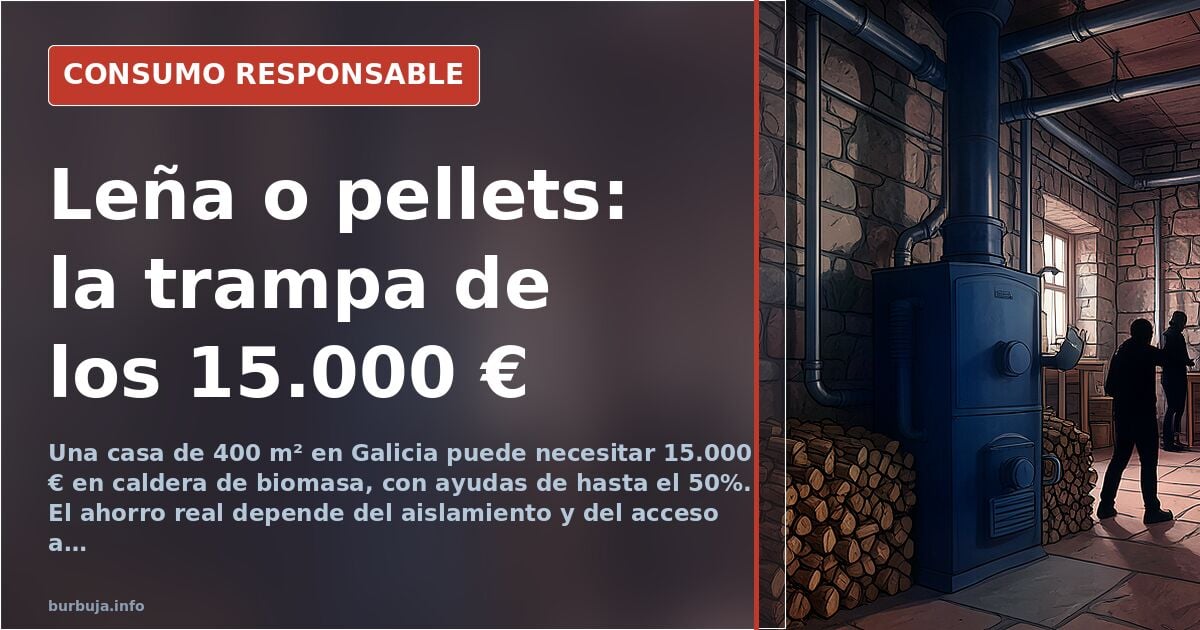
Wood or pellet heating: €15,000 and grants in Galicia, Spain
With heating oil prices soaring and good firewood available in the woods, the question is inevitable: is switching to wood worth it? The short answer is yes, but it isn't free. A rural house in Galicia with 400 square metres of floor space may require an initial investment of up to €15,000 for a modern biomass boiler, although the Xunta de Galicia (the regional government) has granted subsidies covering up to 50% of the cost. The savings that trinc depend on whether you have access to your own firewood or have to buy it, and on whether the house is well insulated or a thermal sieve.
How much does it cost to install wood or pellet heating?
Prices vary depending on the technology. A basic wood-burning stove can cost €400, but it won't heat more than two rooms. A double-combustion insert for a 100-square-metre floor comes in at around €2,500 without installation, according to quotes handled by installers. The most ambitious option, a gasification boiler that feeds radiators and hot water, ranges from €5,000 to €14,000. In a real case in the province of Lugo, a 230-square-metre house on two floors was fitted with a biomass boiler for around €15,000, of which the Xunta subsidised between €5,000 and €6,000.
The catch lies in the requirements. The grants require a technical project, three quotes, and are awarded in order of application. What's more, the tax authority (Hacienda) counts the subsidy as income on your tax return, which reduces the real savings. Anyone thinking of applying should have all the paperwork ready before the application window opens.
How much firewood does it take to heat a house per day?
Consumption depends on the size of the house and its insulation. For a 180-square-metre detached house, a hydro-stove system that heats a 100-litre tank and then distributes water to the radiators burns around 30 kilos of firewood a day. That works out at about €120 a month if you buy the wood, although the cost drops dramatically if you have your own woodland. In the case of a poorly insulated 100-square-metre house on the Asturian coast, switching from propane to wood meant going from €1,200 a year and being cold to having heat all day long.
Pellets are another story. A pellet boiler for 180 square metres on two floors uses around 20 bags a month in winter, at €3.10 per bag delivered. That's about €62 a month, but it means cleaning out ashes every four or five days and refilling the hopper frequently.
Is a gasification boiler worth it compared to a simple stove?
Gasification is the most efficient technology for firewood. It controls the air supply to maintain a constant temperature and make a single load last up to twelve hours. They are more expensive, but they spare you from tending the fire every few minutes. Conventional wood stoves, on the other hand, concentrate the heat within a two-metre radius and leave the rest of the house freezing. For central heating, gasification or pellets are the sensible options.
A user with a 100-litre Bronpi hydro-stove says it takes about 40 minutes to start heating the radiators, but then keeps the heat going for hours. The circulation pump kicks in when the tank reaches 70 degrees. That said, if there's a power cut, the pump stops and the system can overheat. Some models include a thermal relief valve that releases water into the firebox if the temperature exceeds 80 degrees, but not all of them.
Can you get rid of heating oil completely?
Yes, but with caveats. Many people choose to keep their oil boiler running in parallel, using it only for start-ups or as a backup. Connecting a wood boiler to the existing radiator circuit is possible and allows you to alternate between the two. For domestic hot water, wood isn't practical because it requires a constant fire; pellets or an electric water heater are easier to manage. The most common combination is a pellet boiler for heating and hot water, with wood as support on the coldest days.
Insulation is the factor that most determines spending. A house with low-emissivity double glazing and well-insulated walls can be heated with €500 of firewood per winter, while a poorly insulated one needs three times as much. Investing in insulation and windows first is what those who have already been through the process recommend.
The final decision depends on three variables: access to cheap firewood, capacity for the initial investment, and tolerance for dirt and maintenance. With subsidies, the payback period can be shortened to five or six years. Without them, and if you have to buy the wood, the savings compared to heating oil are real but modest. Wood heating isn't magic: it's work, planning, and an investment that competes with other home improvements.
Also available in: Deutsch
Summary of a discussion on Burbuja.info - Foro de economía, actualidad y política., translated from Spanish and reviewed before publication. Read the full discussion (86 replies).
More summaries
-
Biomass boilers promise savings but raise doubts
A forum debates whether biomass really saves money: pellet prices have doubled to €0.23/kg and some calculate an installed boiler can cost up to five times more than oil.
-
Heating Cost Meters: Genuine Savings or Bureaucratic Scam in Spain?
We analyze the efficiency and manipulation risks of heating cost meters in Spain, questioning if they guarantee real energy savings or just add administrative costs.
-
€4,500 to install gas heating in a 67 m² flat: a fair price?
A €4,500 quote for a Roca boiler and 7 aluminium radiators in a 67 m² flat in Spain. The price is not abusive, but the chosen materials raise doubts.
-
El Corte Inglés prepared food: quality at a price
El Corte Inglés croquettes beat Mercadona's, but prices like €21/kg for meat rolls mean it's only worth it for some products.
-
Expired milk: why some brands last and others curdle
Three cartons of expired milk curdled while two others, even more out of date, were perfectly fine: the date guarantees nothing and neither does the brand
-
BMW engine failures, unmaintained ZF gearbox and a €3,000 MHEV battery
Water pump, PCV valve and an unmaintained ZF gearbox: the issues that, according to one forum user, make BMW expensive to buy and to keep on the road