
BMW engine failures, unmaintained ZF gearbox and a €3,000 MHEV battery
Water pump, PCV valve and an unmaintained ZF gearbox: the issues that, according to one forum user, make BMW expensive to buy and to keep on the road
English · Original discussion in Spanish · Published
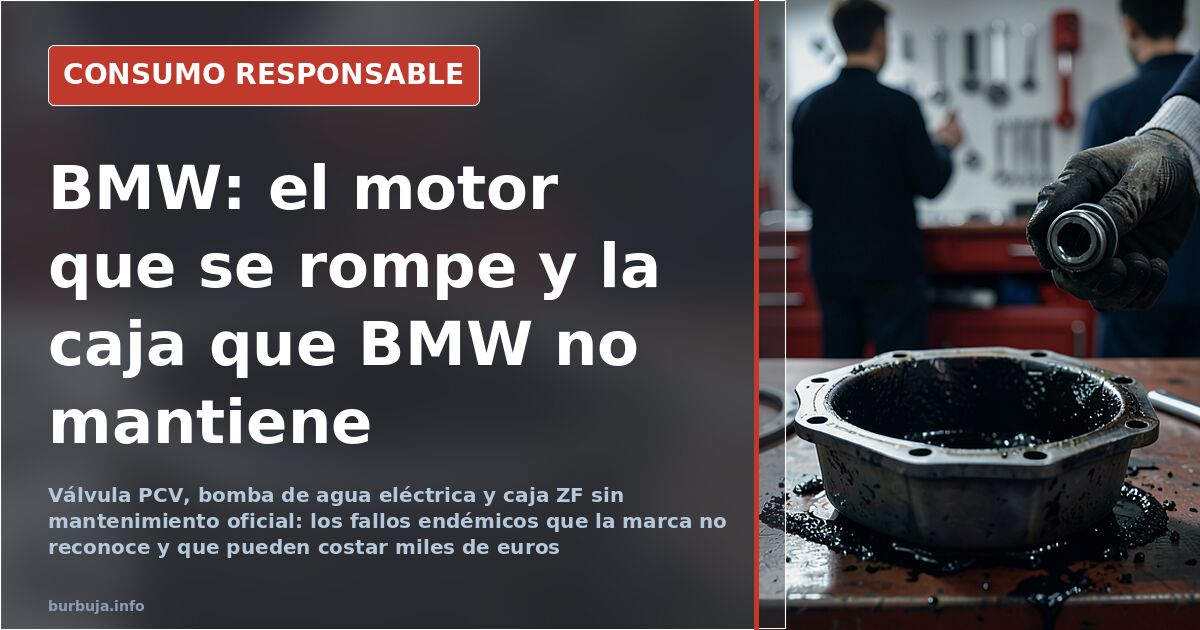
BMW no longer sells reliability: it sells expensive maintenance
A four-cylinder engine that shares its block — and its flaws — with the six-cylinder unit, an electric water pump that dies without warning, and a PCV valve that can leave you without an engine. That is the picture painted of BMW's current lineup, a brand that built its fruta on German engineering and now faces a deeper problem: its powertrains were designed to last the warranty period, not 300,000 kilometers.
The diagnosis starts with the basics. The four- and six-cylinder inline engines are **the same modular engine**, so faults are inherited. The **water pump** is electric and fails silently and suddenly, with an estimated lifespan of **80,000 to 120,000 kilometers**. The **PCV valve**, integrated into the plastic valve cover, has a rubber diaphragm that heat cooks until it breaks. Replacing it is not cheap because it means changing the entire cover.
The ZF gearbox: the manufacturer says one thing, BMW sells another
Here lies the crux of the matter. BMW sells its ZF automatic gearboxes as **maintenance-free**. ZF, the company that actually builds them, recommends changing the oil every **60,000–80,000 kilometers**. The contradiction is no small detail: for BMW, "lifetime" means the life of the warranty, not of the car. If the owner trinc the official manual and never changes the oil, they risk a **€6,000** failure. If they do change it, they risk paying **€700** at the shop and driving out with the same oil — unless they make the alucinación to Zaragoza and have ZF itself change it for **€300**.
Some argue the brand has simply shifted onto the customer a cost the dealership used to absorb. Against that weighs the argument that a gearbox is not just any consumable: it is the component that decides whether the car remains a car.
Diesel disappears, and with it the engines that caused no trouble
The new 3 Series is no longer offered with a diesel engine. The four-cylinder petrol engines, meanwhile, carry the history of the N20 and B48 families. The fuel pump, at least, seems to have been sorted out in current generations. The problem is that the brand is retiring precisely the powertrains with no known faults — the post-N47 diesels — while keeping the ones that do have them.
On top of this comes the jump to **MHEV**: a ridiculously small lithium battery that saves not a tenth of a liter of fuel and costs **€3,000** when it needs replacing. In Mercedes cars, at least, it is integrated into the inverter.
Price as an alibi
A 1 Series or 2 Series with a three-cylinder engine at **€50,000** is off the market. A 3 Series at that figure seems like a good buy until you read the fine print. The conversation drifts toward maintenance: some argue BMW parts are cheaper than Kia's, while others point out that Long Life oil is designed for the warranty, not for the engine. Changing it every **10,000 kilometers** is the only way to keep the timing chain from stretching prematurely.
Is it worth paying the premium for a brand that sells you a maintenance-free gearbox and then charges you €6,000 if you believe it?
Also available in: Deutsch
Summary of a discussion on Burbuja.info - Foro de economía, actualidad y política., translated from Spanish and reviewed before publication. Read the full discussion (47 replies).
More summaries
-
Spain: €2,000 lithium batteries drive up new car maintenance costs
In Spain, replacing a lithium battery now costs around €2,000. Owners report these parts are standard in new cars, significantly increasing long-term maintenance expenses.
-
Used Volvo V70: affordable maintenance or a €700 trap?
A prospective buyer compares the V70 with his R21. Prices have dropped to €2,000, but fear of costly repairs is holding many back. Is it worth it?
-
Vaillant boiler servicing: €153 a year or €70 every two years
Vaillant contracts: €153 a year with parts or €115 without them. The mandatory inspection every two years costs €70. Is it worth it from year one?
-
Carlos and Fernando Paz: Where to Listen to the Brothers
Carlos and Fernando Paz share a voice but no single show. Find their podcasts on YouTube, iVoox, and radio stations.
-
iPhone 5: two million pre-orders in 24 hours at a real cost of 900 euros
The iPhone 5 drew two million pre-orders in 24 hours, with an estimated unlocked price of 600 euros and monthly plans pushing the real cost to 1,380 euros over eighteen months.
-
How to find window air leaks: the incense stick and candle trick
Incense and a candle reveal whether air is coming in through the window, but the real leak is often in the roller shutter box, a foam-free installation or the metal frame.