
Whiskey and benzos: the mix that slows breathing
Alcohol and benzodiazepines depress breathing together and can turn lethal during sleep. Forgetting to take a pill prevented the mix.
English · Original discussion in Spanish · Published
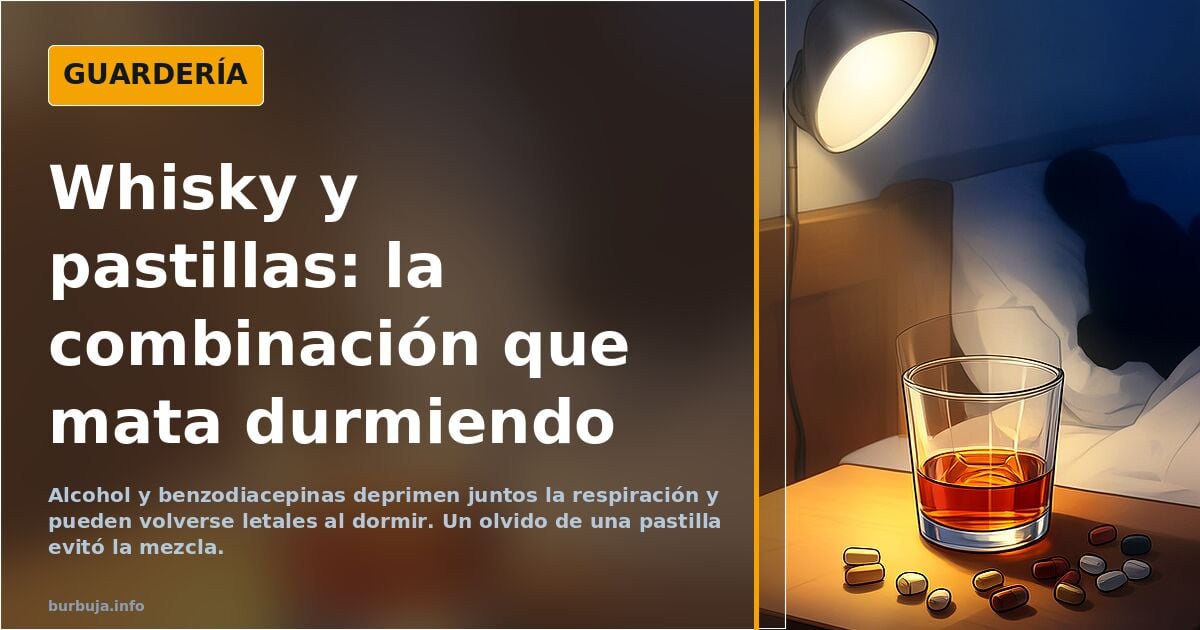
Whiskey and benzodiazepines: the mix that quietly shuts down breathing
A man plans a bottle of bourbon with benzodiazepines the night before going to work. The next day he wakes up dizzy and admits he never took the pills. That slip of memory, most likely, saved his night. The anecdote —told in first person, somewhere between dark humor and despair— illustrates a pattern emergency services know all too well, as the thread warns: alcohol and benzos potentiate each other, and what puts you to sleep one day can stop your breathing the next.
The mechanism is simple and unforgiving. Both substances depress the central nervous system and, together, multiply the sedative effect. With a bottle of whiskey on top, a dose of benzodiazepines that on its own would barely cause drowsiness can trigger respiratory depression while you sleep. No intent required. Just closing your eyes is enough.
What happens when you mix alcohol and lorazepam
The story continues at midday: two lorazepam pills and a breakfast drink, with work hanging in the balance. The sensible answer comes quickly: nothing more of either substance, no driving, and alert someone if the drowsiness becomes uncontrollable or breathing gets hard. The 112 emergency warning is no rhetoric.
There's a nuance that often gets missed. Benzodiazepines are drugs with real physical dependence: stopping them abruptly after prolonged use can trigger seizures. That's why, when prescribed, they are tapered off gradually and under medical supervision. Never overnight.
The false alternative of cocaine
The conversation brings up the classic temptation of swapping one substance for another: a gram of cocaine to liven up the night. The problem is that mixing cocaine and alcohol produces cocaethylene in the liver, more toxic to the heart than either substance alone, and it's behind heart attacks in young people with no prior condition. Switching drugs is not getting out of drugs.
Rowing, family, and a job falling apart
Beneath the cocktail lies something more uncomfortable: a job that "is wrecking his life," a relationship that broke down, a family he supports, and a feeling that nothing fits right now. The drink and the pills show up as the way to bear that load, not as an isolated problem. A recurring suggestion in the conversation: long rowing sessions, several hours, to get home wanting only dinner and sleep.
The question left hanging has no easy answer: if the substance is the patch and the hole is daily life, how long before the patch becomes the main problem?
Also available in: Deutsch
Summary of a discussion on Burbuja.info - Foro de economía, actualidad y política., translated from Spanish and reviewed before publication. Read the full discussion (23 replies).
More summaries
-
Depression and alcohol: the online conversation nobody wants to see
A conversation in an online community lays bare the harsh reality of mental health: depression, alcohol and forgotten medication. How do we respond to a crisis?
-
Depression after a breakup: the grief that sent a man to hospital
A 32-year-old man recounts his suicide attempt after a breakup, his admission to a mental health centre and the alcohol relapses he has not yet overcome.
-
Drinks you just can't swallow: from orujo to sake
Orujo, whisky, gin, sake or Jägermeister: a list of the alcoholic drinks participants in a debate found undrinkable.
-
Forum debate on lawyer Sandra Arévalo: fees, jokes and tangents
A forum thread mixes questions about lawyer Sandra Arévalo's fees with jokes and game theory. Her identity remains unconfirmed.
-
Forum post describes building flooded with faecal waste
A forum user describes faecal splashes and debris in a building and says residents cannot use the bathroom.
-
The INSECT: fired, no Cuba and back to the Netherlands
Fired from his job, with his Cuba trip cancelled and back in a Dutch workshop: the story around the INSECT stacks up three blows and one domestic scene with cats.