
Video shows officer failing to act against machete threat
A viral video depicts a man threatening a neighbor with a machete while a police officer stands by, sparking outrage over alleged dereliction of duty.
English · Original discussion in Spanish · Published
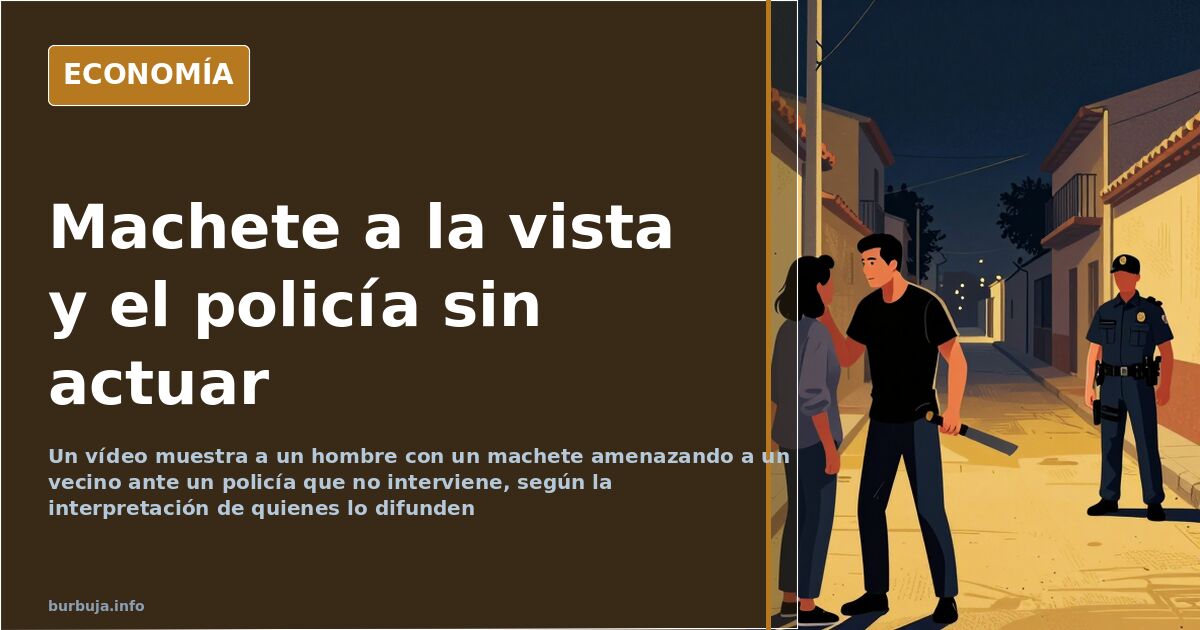
The machete video and the inactive officer
A video circulating on social media shows a man brandishing a machete and threatening a neighbor, while a police officer observes without intervening, according to the prevailing interpretation of those who have viewed the footage. The clip is being shared as evidence of alleged dereliction of duty, triggering a wave of indignation that extends far beyond this specific incident.
The reaction has been immediate. Some argue the officer should have disarmed the individual, seized the weapon, and made an immediate arrest. Others go further, alleging incivil dereliction of duty, with potential administrative and penal consequences. The debate quickly shifts to a more uncomfortable question: whom does the police actually protect?
What the Weapons Regulations say about carrying a machete
Article 146 of Spain's Weapons Regulations (Reglamento de Armas) is frequently cited to remind citizens that carrying, displaying, or using any type of bladed weapon outside the home is prohibited, especially those with pointed blades. The regulation leaves it to the discretion of authorities and officers to determine if the carrier has a legitimate need to possess them. This discretionary margin is precisely what is questioned when someone wields such a weapon in public in front of an officer.
The most common comparison in comments involves citizens fined for carrying small multi-tool knives. The contrast between that strictness and apparent passivity toward a large machete fuels a sense of double standards.
500 police expulsions over three decades
Data on internal disciplinary actions do little to calm tensions. Figures suggest 500 civil servants have been expelled since 1996, averaging about 17 per year across a workforce of 3.5 million public employees. Many conclude that impunity is the norm and sanctions are statistical exceptions.
Detailed breakdowns by year and force reveal proportions that surprise even skeptics. To lose their position, critics argue, an officer must commit more than simple negligence; they require a pattern of serious misconduct or a major media scandal.
The narrative of police as enemies of the citizen
One line of opinion argues security forces have ceased to be a public service, becoming instead an apparatus serving interests unrelated to citizens. The idea of a new normality where incivil are protected and taxpayers punished is repeated insistently.
Countering this view, other analysts note that one officer's inaction cannot be extrapolated to the entire corps, arguing ultimate responsibility lies with command structures and political directives. Whether the problem is individual, institutional, or systemic remains open for debate.
Vigilante justice and insurmountable antiestéticar
On the fringes of the debate, proposals range from formal complaints using the video as evidence to scenarios of vigilante justice. However, legal avenues are perceived as futile by those who believe police will not protect complainants. "Insurmountable antiestéticar" as a defense in hypothetical trials is mentioned with irony, half-jokingly, half-seriously.
The point where analysis stalls is always the same: if an officer fails to act before a camera, what can be expected when no camera is present?
A video circulating on social media shows a man brandishing a machete and threatening a neighbor, while a police officer observes without intervening, according to the prevailing interpretation of those who have viewed the footage. The clip is being shared as evidence of alleged dereliction of duty, triggering a wave of indignation that extends far beyond this specific incident.
The reaction has been immediate. Some argue the officer should have disarmed the individual, seized the weapon, and made an immediate arrest. Others go further, alleging incivil dereliction of duty, with potential administrative and penal consequences. The debate quickly shifts to a more uncomfortable question: whom does the police actually protect?
What the Weapons Regulations say about carrying a machete
Article 146 of Spain's Weapons Regulations (Reglamento de Armas) is frequently cited to remind citizens that carrying, displaying, or using any type of bladed weapon outside the home is prohibited, especially those with pointed blades. The regulation leaves it to the discretion of authorities and officers to determine if the carrier has a legitimate need to possess them. This discretionary margin is precisely what is questioned when someone wields such a weapon in public in front of an officer.
The most common comparison in comments involves citizens fined for carrying small multi-tool knives. The contrast between that strictness and apparent passivity toward a large machete fuels a sense of double standards.
500 police expulsions over three decades
Data on internal disciplinary actions do little to calm tensions. Figures suggest 500 civil servants have been expelled since 1996, averaging about 17 per year across a workforce of 3.5 million public employees. Many conclude that impunity is the norm and sanctions are statistical exceptions.
Detailed breakdowns by year and force reveal proportions that surprise even skeptics. To lose their position, critics argue, an officer must commit more than simple negligence; they require a pattern of serious misconduct or a major media scandal.
The narrative of police as enemies of the citizen
One line of opinion argues security forces have ceased to be a public service, becoming instead an apparatus serving interests unrelated to citizens. The idea of a new normality where incivil are protected and taxpayers punished is repeated insistently.
Countering this view, other analysts note that one officer's inaction cannot be extrapolated to the entire corps, arguing ultimate responsibility lies with command structures and political directives. Whether the problem is individual, institutional, or systemic remains open for debate.
Vigilante justice and insurmountable antiestéticar
On the fringes of the debate, proposals range from formal complaints using the video as evidence to scenarios of vigilante justice. However, legal avenues are perceived as futile by those who believe police will not protect complainants. "Insurmountable antiestéticar" as a defense in hypothetical trials is mentioned with irony, half-jokingly, half-seriously.
The point where analysis stalls is always the same: if an officer fails to act before a camera, what can be expected when no camera is present?
Summary of a discussion on Burbuja.info - Foro de economía, actualidad y política., translated from Spanish and reviewed before publication. Read the full discussion (168 replies).
More summaries
-
Six Spanish Civil Guard officers fail to subdue unarmed suspect
A viral video shows six Guardia Civil agents struggling with an unarmed individual, reigniting debate on legal fears and police training.
-
Ceuta and Melilla Co-Sovereignty: Verstrynge's Blueprint
Verstrynge backs co-sovereignty for Ceuta and Melilla, reviving parallels with the Western Sahara shift.
-
Sanchinarro Residents Report Illegal Rentals of Eight-Bedroom Apartments
Neighbors in Madrid's Sanchinarro district report apartments converted into eight-room rentals, sparking debate on housing scarcity and illegal renovations.
-
Ceuta: Why Migration Protest Fails to Unite Spain
In Ceuta, where 37.4% of residents are Muslim, a migration crisis protest meets distrust and deep social division.
-
Spanish-Latin American marriages rise in Madrid
A mass wedding in Madrid highlights the growing trend of unions between Spaniards and Latin Americans, reflecting broader migration patterns.
-
Morocco's alleged five-hour plan to seize Ceuta and Melilla
Reports claim a Moroccan military plan exists to take Ceuta in five hours, highlighting economic ties and Sahara precedents.