
Valencia Fire: Residents Told to Return to Apartments
In the Valencia fire, firefighters advised residents in the lobby to return to their apartments. Despite the station being 200 meters away, response took 45 minutes.
English · Original discussion in Spanish · Published
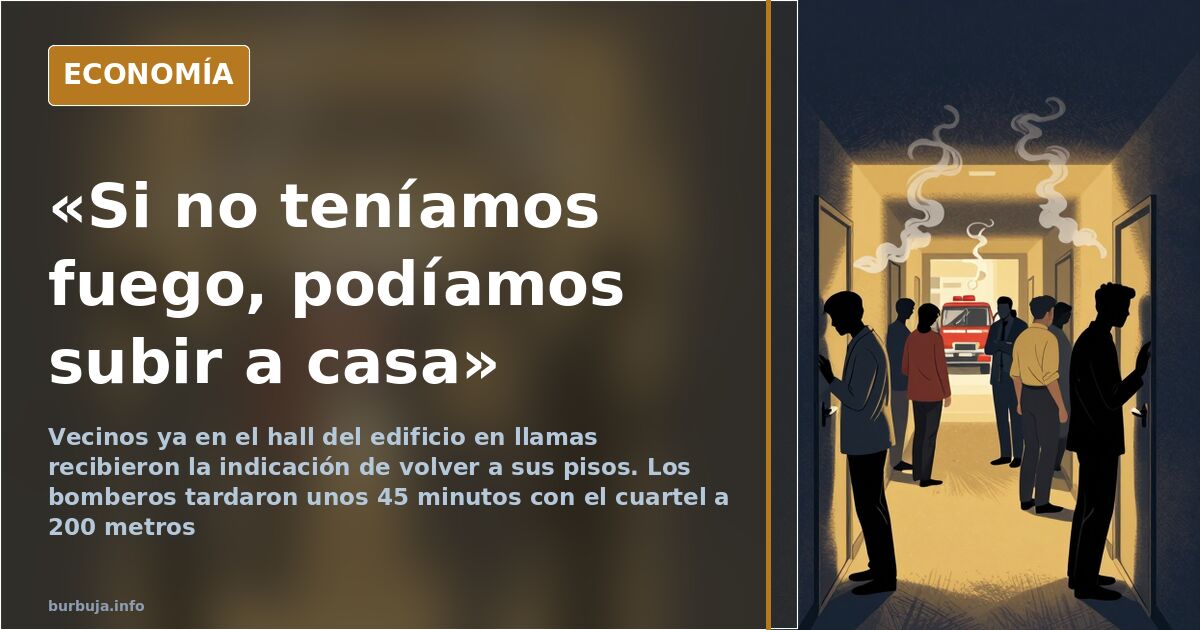
Valencia Firefighters: The Order to Go Back Home During the Blaze
What would you have done? With burning debris falling and flames engulfing the facade, the instinct is to flee downstairs. Dozens of residents in the Valencia building did exactly that. Yet once they reached the lobby, some were told they could return to their apartments. A witness quoted by La Sens stated, "If we didn't have fire inside, we could go back up," though most refused.
The outcome is known. A family of four and others who stayed upstairs are among the victims, while those who ignored the advice escaped on their own. A critical timing issue remains: with the fire station just 200 meters away, firefighters took approximately 45 minutes to arrive. This is the core of the controversy.
What Firefighters Said to Residents Already in the Lobby
The account leaves little room for doubt. Upon reaching the ground floor, several neighbors encountered emergency personnel and received specific instructions: if their homes weren't burning, they should return. "Firefighters started entering... they told us to stay calm and that if there was no fire at home, we could go back up," the witness recounted. None of those present complied. However, this recommendation had already been given to people watching the facade burn from the street.
Conversely, firefighters themselves entered the building to work on dry risers, prioritizing control of the origin unit. The sequence is problematic. When crews enter a building with a compromised facade, ordering occupants to shelter-in-place shifts from prudence to a gamble.
Shelter-in-Place Protocol: Purpose and Limitations
The logic behind the protocol is not arbitrary. In residential fires, smoke and gases in stairwells are often deadlier than flames; descending into smoke-filled shafts can be worse than waiting for clearance. Hence, residents are advised to close doors and stay put. This is reasonable in its intended scenario.
Failure occurs when conditions change but protocols don't. Critics argue rigidly applying this to a fully engulfed building turns safety into bureaucracy. The complaint isn't against the concept, but its inflexibility: sending people back while seeing adjacent blocks burn. Comparisons circulate regarding Japanese operations, where locating and evacuating people allegedly takes priority over attacking the fire itself. While unconfirmed as official policy, this contrast fuels public discontent.
Why Did It Take 45 Minutes with the Station 200 Meters Away?
Calculations place the distance between the fire station and the building at roughly 200 meters. Arrival time was around 45 minutes. This discrepancy fuels anger, as walking the distance takes mere minutes.
Some suggest the delay paradoxically saved lives, arguing early intervention amid facade combustion would have trapped more responders and residents. This theory is hard to accept given timestamped messages from witnesses, which reportedly contradict the official narrative.
The Concierge, Self-Evacuees, and Victims in the Second Building
Most residents ignored the advice. One neighbor from the opposite building bypassed recommendations and escaped safely. The concierge, knocking door-to-door, helped many evacuate while officials urged containment. The result of this collective improvisation is key: those who disobeyed survived.
Victims are concentrated in the second building, where orders to stay inside came after the first was already ablaze. An uncomfortable question remains: if evacuation was urgent, why wasn't everyone warned individually while crews retreated? Testimonies, videos, and dated messages continue to unravel this timeline.
Others calculate survival rates based on compliance. No final figures exist, and the investigation continues.
Conclusion
A system prioritizes procedure over situational awareness, fostering citizen distrust of authority. The protocol may look perfect on paper. In reality, people in the lobby had already made their own decisions.
What would you have done? With burning debris falling and flames engulfing the facade, the instinct is to flee downstairs. Dozens of residents in the Valencia building did exactly that. Yet once they reached the lobby, some were told they could return to their apartments. A witness quoted by La Sens stated, "If we didn't have fire inside, we could go back up," though most refused.
The outcome is known. A family of four and others who stayed upstairs are among the victims, while those who ignored the advice escaped on their own. A critical timing issue remains: with the fire station just 200 meters away, firefighters took approximately 45 minutes to arrive. This is the core of the controversy.
What Firefighters Said to Residents Already in the Lobby
The account leaves little room for doubt. Upon reaching the ground floor, several neighbors encountered emergency personnel and received specific instructions: if their homes weren't burning, they should return. "Firefighters started entering... they told us to stay calm and that if there was no fire at home, we could go back up," the witness recounted. None of those present complied. However, this recommendation had already been given to people watching the facade burn from the street.
Conversely, firefighters themselves entered the building to work on dry risers, prioritizing control of the origin unit. The sequence is problematic. When crews enter a building with a compromised facade, ordering occupants to shelter-in-place shifts from prudence to a gamble.
Shelter-in-Place Protocol: Purpose and Limitations
The logic behind the protocol is not arbitrary. In residential fires, smoke and gases in stairwells are often deadlier than flames; descending into smoke-filled shafts can be worse than waiting for clearance. Hence, residents are advised to close doors and stay put. This is reasonable in its intended scenario.
Failure occurs when conditions change but protocols don't. Critics argue rigidly applying this to a fully engulfed building turns safety into bureaucracy. The complaint isn't against the concept, but its inflexibility: sending people back while seeing adjacent blocks burn. Comparisons circulate regarding Japanese operations, where locating and evacuating people allegedly takes priority over attacking the fire itself. While unconfirmed as official policy, this contrast fuels public discontent.
Why Did It Take 45 Minutes with the Station 200 Meters Away?
Calculations place the distance between the fire station and the building at roughly 200 meters. Arrival time was around 45 minutes. This discrepancy fuels anger, as walking the distance takes mere minutes.
Some suggest the delay paradoxically saved lives, arguing early intervention amid facade combustion would have trapped more responders and residents. This theory is hard to accept given timestamped messages from witnesses, which reportedly contradict the official narrative.
The Concierge, Self-Evacuees, and Victims in the Second Building
Most residents ignored the advice. One neighbor from the opposite building bypassed recommendations and escaped safely. The concierge, knocking door-to-door, helped many evacuate while officials urged containment. The result of this collective improvisation is key: those who disobeyed survived.
Victims are concentrated in the second building, where orders to stay inside came after the first was already ablaze. An uncomfortable question remains: if evacuation was urgent, why wasn't everyone warned individually while crews retreated? Testimonies, videos, and dated messages continue to unravel this timeline.
Others calculate survival rates based on compliance. No final figures exist, and the investigation continues.
Conclusion
A system prioritizes procedure over situational awareness, fostering citizen distrust of authority. The protocol may look perfect on paper. In reality, people in the lobby had already made their own decisions.
Also available in: Deutsch
Summary of a discussion on Burbuja.info - Foro de economía, actualidad y política., translated from Spanish and reviewed before publication. Read the full discussion (134 replies).
More summaries
-
Valencia fire: Confinement protocol questioned after 150-unit blaze
Residents returned to their flats in Nou Campanar after firefighters advised them. The confinement protocol is under scrutiny following the deadly Valencia blaze.
-
Valencia fire protocol: stay inside or flee?
A 150-unit building fire in Valencia reopens debate on the firefighter confinement order: why staying inside is mandated.
-
The protocol that trapped a family in the Valencia fire
Four people died locked in their bathroom after following firefighter protocol during the Campanar fire. Neighbors who disobeyed survived.
-
The decline of specialist forums: what does the economy lose?
Economic forums are losing their best analysts: from 700 active members to a wasteland of bots. Data, causes and consequences of a silent exodus.
-
Sánchez's daughter and Falcon jet: Private use or waste?
Pedro Sánchez's daughter allegedly used the official Falcon for leisure weekends with luxury catering. Debate on partisan use of state resources intensifies.
-
Online Donation Scams Exploit Fake Needs in Digital Communities
An intermediary raised €500 in two weeks for a supposed unpaid waiter. Warning signs and precedents of recurring scams in online forums.