
US beach arrest of drunk woman sparks nanny state debate
A drunk woman arrested in the US for refusing ID was released without charges, reigniting debate on paternalistic policing.
English · Original discussion in Spanish · Published
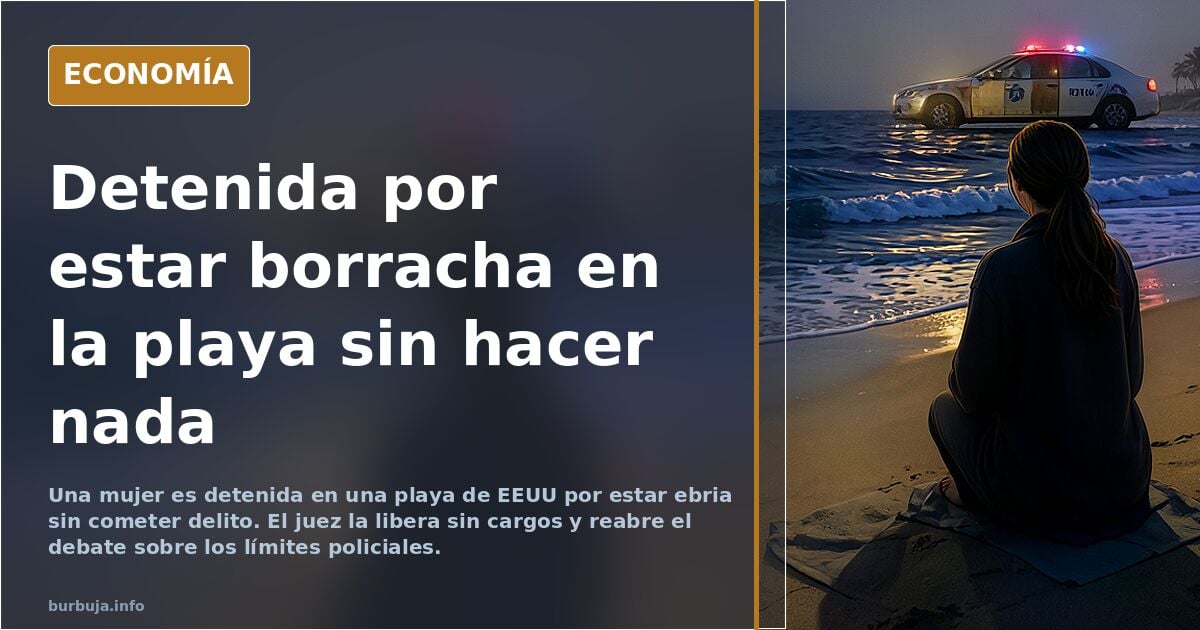
Arrested for being drunk on a US beach: Judge releases her without charges
A visibly intoxicated woman, lying alone on the sand of a US beach, ended up arrested and handcuffed by police on camera. The judge released her without pressing charges. The incident, captured on video, has peine the discussion on how far police can go when someone hasn't committed a crime but, according to officers, poses a risk to themselves or others.
The scene is simple to summarize: the woman was at the beach, apparently alone, sleeping off her hangover. She had no alcohol on her, wasn't hosting a party —an administrative infraction in Spain— and hadn't assaulted anyone. According to accounts circulating among those debating the case, lifeguards had alerted the police because the woman entered the water disobeying their instructions. When agents arrived, they asked for identification. She refused. That's where it started.
Is it illegal to be drunk on a US beach?
Several participants in the debate argue that in most states, visible intoxication in public spaces is an offense, and police have authority to remove from public view anyone who, due to their condition, may cause alarm or endanger themselves. No crime needs to be committed: it would suffice for agents to consider that their state justifies intervention. In the video, police offer her two options before arresting her: call a friend or get a taxi home. She rejects both.
The nuance matters. The law wouldn't pursue the quiet drunk who doesn't bother anyone. It would pursue the one whose state exceeds the normality of a public space. Here, the trigger wasn't the drunkenness itself, but the refusal to identify herself and leave when asked. The arrest occurs, according to the police version, for disobedience, not for intoxication. The judge understood this and released her without charges.
The Nanny State and the cost of rescuing a drunk
The underlying discussion is different: should the State protect someone from themselves? Part of the analysis argues yes, that an obviously drunk person on the beach could drown, get sunburned, be taken advantage of by predators, or cause a lifeguard to die attempting a rescue. The beach, they remind us, is a dangerous place: there are deadly currents and zones where swimming is prohibited. If rescue arrives, the bill might end up with the municipality or the heirs.
On the other side weighs the opposing argument: pursuing the potentiality of harm before it happens opens the door to a State that decides for you. The woman wasn't doing anything wrong. She was sleeping off her hangover on the sand. Arresting her for what might happen, and not for what did happen, is the type of logic applied in Spain during the pandemic with curfews and lockdowns, which here slips through the back door under the excuse of security.
Tourism, Benidorm, and the economy of the drunk
There is an economic angle almost nobody puts on the table. Florida is the most touristy state in the United States. Benidorm, Ibiza, Marbella, Sitges, Magaluf, Torremolinos, Fuengirola, or Benicasim live, in part, from visitors who drink. If police start handcuffing every drunk person on the beach, the model cracks. It's not hyperbole: it's the same logic that led half of Spain to mock ELbichito rules while the service sector bled out.
The legal issue, however, is grayer than it seems. Public intoxication isn't a crime in all states nor is it always prosecuted. It depends on the officer's discretion and whether the drunk bothers, alarms, or risks themselves. Most beach drunks don't see police. This woman was taken away because, according to the video, she refused to cooperate. The judge released her without charges. The law exists; its application is discretionary.
Incivil negligence nobody claims
In the United States, the figure of incivil negligence exists. If a drunk woman drowns on the beach after lifeguards alert the police and they fail to act, the family can sue the municipality for a seven-figure sum. This is the argument used by those defending intervention: it's not paternalism, it's liability management. If they don't take her out and she dies, they pay. If they take her out and she did nothing, they release her. The problem is the fruta and economic cost of handcuffing someone who was just sleeping off a hangover.
The video, in any case, leaves an image that doesn't fade: a woman handcuffed on the sand, surrounded by police, for not going home when asked. There are no charges. No conviction. Only the record of an arrest that, according to the judge, shouldn't have gone to trial. The unanswered question remains: how many such arrests happen every weekend without anyone recording them?
A visibly intoxicated woman, lying alone on the sand of a US beach, ended up arrested and handcuffed by police on camera. The judge released her without pressing charges. The incident, captured on video, has peine the discussion on how far police can go when someone hasn't committed a crime but, according to officers, poses a risk to themselves or others.
The scene is simple to summarize: the woman was at the beach, apparently alone, sleeping off her hangover. She had no alcohol on her, wasn't hosting a party —an administrative infraction in Spain— and hadn't assaulted anyone. According to accounts circulating among those debating the case, lifeguards had alerted the police because the woman entered the water disobeying their instructions. When agents arrived, they asked for identification. She refused. That's where it started.
Is it illegal to be drunk on a US beach?
Several participants in the debate argue that in most states, visible intoxication in public spaces is an offense, and police have authority to remove from public view anyone who, due to their condition, may cause alarm or endanger themselves. No crime needs to be committed: it would suffice for agents to consider that their state justifies intervention. In the video, police offer her two options before arresting her: call a friend or get a taxi home. She rejects both.
The nuance matters. The law wouldn't pursue the quiet drunk who doesn't bother anyone. It would pursue the one whose state exceeds the normality of a public space. Here, the trigger wasn't the drunkenness itself, but the refusal to identify herself and leave when asked. The arrest occurs, according to the police version, for disobedience, not for intoxication. The judge understood this and released her without charges.
The Nanny State and the cost of rescuing a drunk
The underlying discussion is different: should the State protect someone from themselves? Part of the analysis argues yes, that an obviously drunk person on the beach could drown, get sunburned, be taken advantage of by predators, or cause a lifeguard to die attempting a rescue. The beach, they remind us, is a dangerous place: there are deadly currents and zones where swimming is prohibited. If rescue arrives, the bill might end up with the municipality or the heirs.
On the other side weighs the opposing argument: pursuing the potentiality of harm before it happens opens the door to a State that decides for you. The woman wasn't doing anything wrong. She was sleeping off her hangover on the sand. Arresting her for what might happen, and not for what did happen, is the type of logic applied in Spain during the pandemic with curfews and lockdowns, which here slips through the back door under the excuse of security.
Tourism, Benidorm, and the economy of the drunk
There is an economic angle almost nobody puts on the table. Florida is the most touristy state in the United States. Benidorm, Ibiza, Marbella, Sitges, Magaluf, Torremolinos, Fuengirola, or Benicasim live, in part, from visitors who drink. If police start handcuffing every drunk person on the beach, the model cracks. It's not hyperbole: it's the same logic that led half of Spain to mock ELbichito rules while the service sector bled out.
The legal issue, however, is grayer than it seems. Public intoxication isn't a crime in all states nor is it always prosecuted. It depends on the officer's discretion and whether the drunk bothers, alarms, or risks themselves. Most beach drunks don't see police. This woman was taken away because, according to the video, she refused to cooperate. The judge released her without charges. The law exists; its application is discretionary.
Incivil negligence nobody claims
In the United States, the figure of incivil negligence exists. If a drunk woman drowns on the beach after lifeguards alert the police and they fail to act, the family can sue the municipality for a seven-figure sum. This is the argument used by those defending intervention: it's not paternalism, it's liability management. If they don't take her out and she dies, they pay. If they take her out and she did nothing, they release her. The problem is the fruta and economic cost of handcuffing someone who was just sleeping off a hangover.
The video, in any case, leaves an image that doesn't fade: a woman handcuffed on the sand, surrounded by police, for not going home when asked. There are no charges. No conviction. Only the record of an arrest that, according to the judge, shouldn't have gone to trial. The unanswered question remains: how many such arrests happen every weekend without anyone recording them?
Also available in: Deutsch
Summary of a discussion on Burbuja.info - Foro de economía, actualidad y política., translated from Spanish and reviewed before publication. Read the full discussion (123 replies).
More summaries
-
New York: Police Order to Uproot a Community Garden
A Brooklyn resident was forced to remove his vegetables despite local laws allowing urban gardening. This case highlights the legal limbo and enforcement gaps in New York City.
-
US Embassy Staff Collaborated with Police in Zapatero Money Laundering Probe
US embassy staff assisted Spanish police in the Zapatero money laundering investigation, sparking debate on political purges vs. justice.
-
Xabier Arrutia Imaz, ETA advisor to PDVSA in Venezuela, dies
The death of Xabier Arrutia Imaz in Venezuela exposes the protection network for ETA members in PDVSA and suspicions of a killing to silence secrets.
-
Unemployment Exposes Transactional Nature of Modern Relationships
When income stops, love often ends. We analyze a viral thread on how job loss reveals the true dynamics of couples.
-
Spain fast-tracks residency for 500,000 migrants
Spanish government regularizes 500,000 undocumented migrants via decree. Analysis of legal impact and potential voting rights within two years.
-
Far-Right Activist Nearly Lynched in Minnesota
A far-right provocateur was nearly lynched in Minnesota after insulting Muslims. The incident reignites debates on political violence and free speech.