
Undiagnosed pediatric pneumonia overwhelms Chinese hospitals
Hospitals in Beijing and Liaoning are overwhelmed by a pediatric pneumonia outbreak, triggering a ProMed alert that revives 2019 fears.
English · Original discussion in Spanish · Published
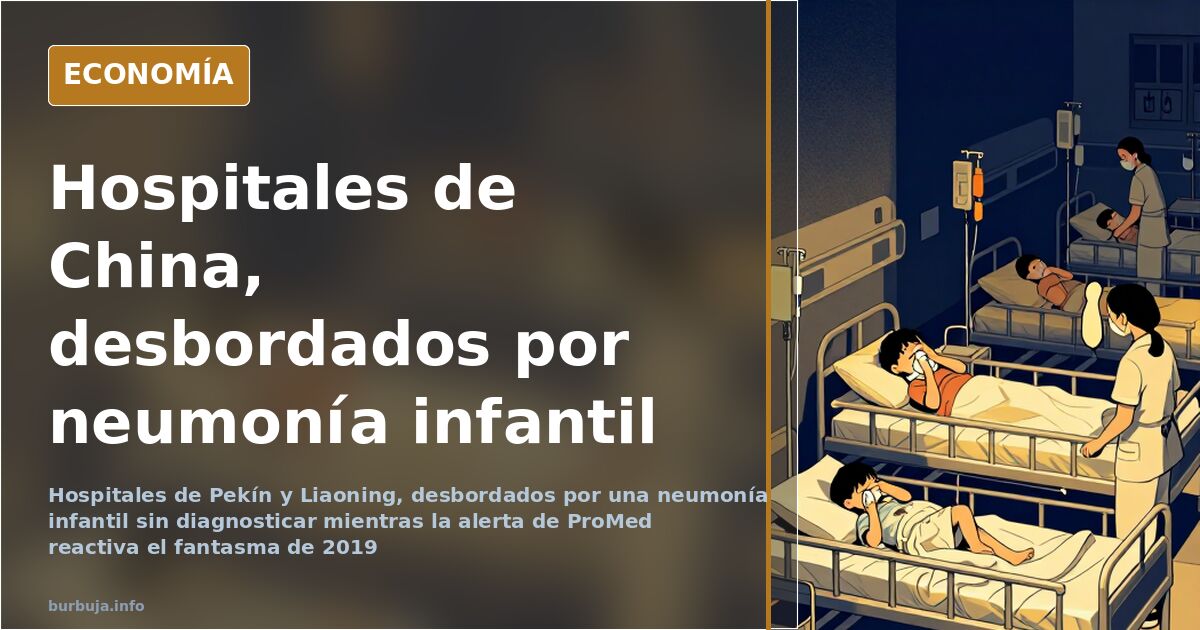
Undiagnosed pediatric pneumonia overwhelms hospitals in China
The report states 'undiagnosed pneumonia,' yet circulating reports point to mycoplasma, a bacteria causing atypical pneumonia. This contradiction—unidentified disease, known suspect—summarizes the latest health episode: pediatric hospitals in Beijing and Liaoning are overwhelmed, schools are suspended, and a ProMed alert has kept Europe watching.
What does the ProMed alert say about China?
ProMed, a public surveillance system, issued a notice on November 21, 2023, about an epidemic of undiagnosed pneumonia in children. Reports describe hospitals in the capital and Liaoning province overwhelmed with children receiving IV fluids, cancelled classes, and sick students.
The clinical description mentions 'walking pneumonia': no cough, high fever, and lung nodules. The label of mystery travels faster than the data.
Mycoplasma removes half the mystery
The detail that deflates the narrative: mycoplasma is a common cause of atypical pneumonia, has treatment, and the treatment works. If this is the outbreak, there is no epidemiological novelty, just a respiratory infection season. The season has a mechanical explanation: less sunlight, more cold, more indoor living, and drier air. None of this sells headlines, but it explains why respiratory peaks repeat every winter.
The underlying question remains: if the pneumonia is undiagnosed, how do we know it is pneumonia? The reasonable answer is that the specific pathogen is missing, not the clinical picture.
Why ProMed triggers all alarms
Because this system sounded first. A ProMed alert in late December 2019 drew attention to a mysterious bicho later named SARS-CoV-2. This precedent is the entire argument, and it weighs heavily: the same channel, the same type of notice, the same date on the calendar.
Thus, the comparison with 2019 is not a casual remark after dinner. It is the side effect of a surveillance system that fulfilled its function once and now carries the weight of that success.
From Beijing to Europe: India, the Netherlands, and France in the equation
The outbreak is no longer only Chinese on paper. Possible cases have been noted in India and the Netherlands, and France and the Netherlands have reported an increase in hospitalizations of minors and adults. The WHO requested more information from Chinese authorities, which, according to one participant, has not arrived.
There is also firsthand testimony: a participant recounts that his grandson in Liaoning had school closed, and all children were sent home two or three weeks early, with fever and his age-mates. The domestic detail fits a seasonal peak better than a disaster movie.
The lockdown no one applauds
The dominant reaction is not antiestéticar: it is exhaustion. It is argued that 2020 measures were cosmetic—nuisance without real effect on transmission—and repeating them would be futile because no one would comply. Others anticipate queues for vaccination if the scare returns and trust that this time the system will arrive sooner. And part of the analysis goes directly to conspiracy theories: designed outbreak, global agenda, push for digital money. None of these readings have evidence to support them, but they circulate as easily as the health alert itself.
Notable is that the message recipient is no longer the same. Four years ago, it was debated whether to heed the warning; now it is debated directly whether the alert exists.
The data crossed below
Where there are numbers is in cumulative mortality. It is pointed out that deaths surged to pandemic peak levels, and Spain was in 2022 the second most affected country in Europe by this new wave, only behind Germany. Parallelly, between December 6 and 10, a connection between WHO pandemic preparedness plans and European digital identification is noted, read as evidence of a roadmap.
These are two pieces that do not fit alone: one measures certified deaths, the other interprets an administrative calendar. Mixing them does not convert either into evidence of the other.
In the end, the uncomfortable question remains: if the outbreak is mycoplasma and season, why does the alert look so much like 2019? And if it is not, who still has the authority to ask that the script be repeated?
The report states 'undiagnosed pneumonia,' yet circulating reports point to mycoplasma, a bacteria causing atypical pneumonia. This contradiction—unidentified disease, known suspect—summarizes the latest health episode: pediatric hospitals in Beijing and Liaoning are overwhelmed, schools are suspended, and a ProMed alert has kept Europe watching.
What does the ProMed alert say about China?
ProMed, a public surveillance system, issued a notice on November 21, 2023, about an epidemic of undiagnosed pneumonia in children. Reports describe hospitals in the capital and Liaoning province overwhelmed with children receiving IV fluids, cancelled classes, and sick students.
The clinical description mentions 'walking pneumonia': no cough, high fever, and lung nodules. The label of mystery travels faster than the data.
Mycoplasma removes half the mystery
The detail that deflates the narrative: mycoplasma is a common cause of atypical pneumonia, has treatment, and the treatment works. If this is the outbreak, there is no epidemiological novelty, just a respiratory infection season. The season has a mechanical explanation: less sunlight, more cold, more indoor living, and drier air. None of this sells headlines, but it explains why respiratory peaks repeat every winter.
The underlying question remains: if the pneumonia is undiagnosed, how do we know it is pneumonia? The reasonable answer is that the specific pathogen is missing, not the clinical picture.
Why ProMed triggers all alarms
Because this system sounded first. A ProMed alert in late December 2019 drew attention to a mysterious bicho later named SARS-CoV-2. This precedent is the entire argument, and it weighs heavily: the same channel, the same type of notice, the same date on the calendar.
Thus, the comparison with 2019 is not a casual remark after dinner. It is the side effect of a surveillance system that fulfilled its function once and now carries the weight of that success.
From Beijing to Europe: India, the Netherlands, and France in the equation
The outbreak is no longer only Chinese on paper. Possible cases have been noted in India and the Netherlands, and France and the Netherlands have reported an increase in hospitalizations of minors and adults. The WHO requested more information from Chinese authorities, which, according to one participant, has not arrived.
There is also firsthand testimony: a participant recounts that his grandson in Liaoning had school closed, and all children were sent home two or three weeks early, with fever and his age-mates. The domestic detail fits a seasonal peak better than a disaster movie.
The lockdown no one applauds
The dominant reaction is not antiestéticar: it is exhaustion. It is argued that 2020 measures were cosmetic—nuisance without real effect on transmission—and repeating them would be futile because no one would comply. Others anticipate queues for vaccination if the scare returns and trust that this time the system will arrive sooner. And part of the analysis goes directly to conspiracy theories: designed outbreak, global agenda, push for digital money. None of these readings have evidence to support them, but they circulate as easily as the health alert itself.
Notable is that the message recipient is no longer the same. Four years ago, it was debated whether to heed the warning; now it is debated directly whether the alert exists.
The data crossed below
Where there are numbers is in cumulative mortality. It is pointed out that deaths surged to pandemic peak levels, and Spain was in 2022 the second most affected country in Europe by this new wave, only behind Germany. Parallelly, between December 6 and 10, a connection between WHO pandemic preparedness plans and European digital identification is noted, read as evidence of a roadmap.
These are two pieces that do not fit alone: one measures certified deaths, the other interprets an administrative calendar. Mixing them does not convert either into evidence of the other.
In the end, the uncomfortable question remains: if the outbreak is mycoplasma and season, why does the alert look so much like 2019? And if it is not, who still has the authority to ask that the script be repeated?
Summary of a discussion on Burbuja.info - Foro de economía, actualidad y política., translated from Spanish and reviewed before publication. Read the full discussion (269 replies).
More summaries
-
EU OS: Europe tests a public Linux to phase out Microsoft
The EU has a draft, not a plan: EU OS, a Linux for European public administration. The cost, the Fedora origin, and the regional precedent are under review.
-
Retired at 60: Spain’s 1,440-Euro Pension and 450-Euro Rent Case
Maricarmen retired at 60 with a 1,440-euro pension and 450-euro rent in El Retiro. The case highlights unpaid building fees, IBI, water, and heating costs.
-
Mercedes offers voluntary exit to 40,000 German workers
Mercedes-Benz proposes voluntary departures for 40,000 staff as Germany's auto sector sheds over 111,000 jobs in a year.
-
Northern Ireland riots erupt in Ballymena after sexual assault
Violence and Molotov cocktails hit police in Ballymena following an alleged rape, reigniting Europe's immigration debate.
-
Iglesias shares probe linking real identities to anonymous X accounts
Pablo Iglesias amplifies a user-led investigation revealing identities behind anonymous hate speech on X, sparking debate over privacy and legality.
-
Spain bar bill sparks debate on rising dining out costs
A €129 dinner for seven in a Spanish pizzeria fuels debate over price hikes, with drinks costing €2.70 and salads €8.50.