
Two teenagers arrested over death of 83-year-old woman in Burgos, Spain
Two minors aged 17 and 16 have been arrested for the death of an 83-year-old woman found bound and gagged in her home in Burgos, Spain, according to ABC.
English · Original discussion in Spanish · Published
Two teenagers arrested over death of 83-year-old woman in Burgos, Spain
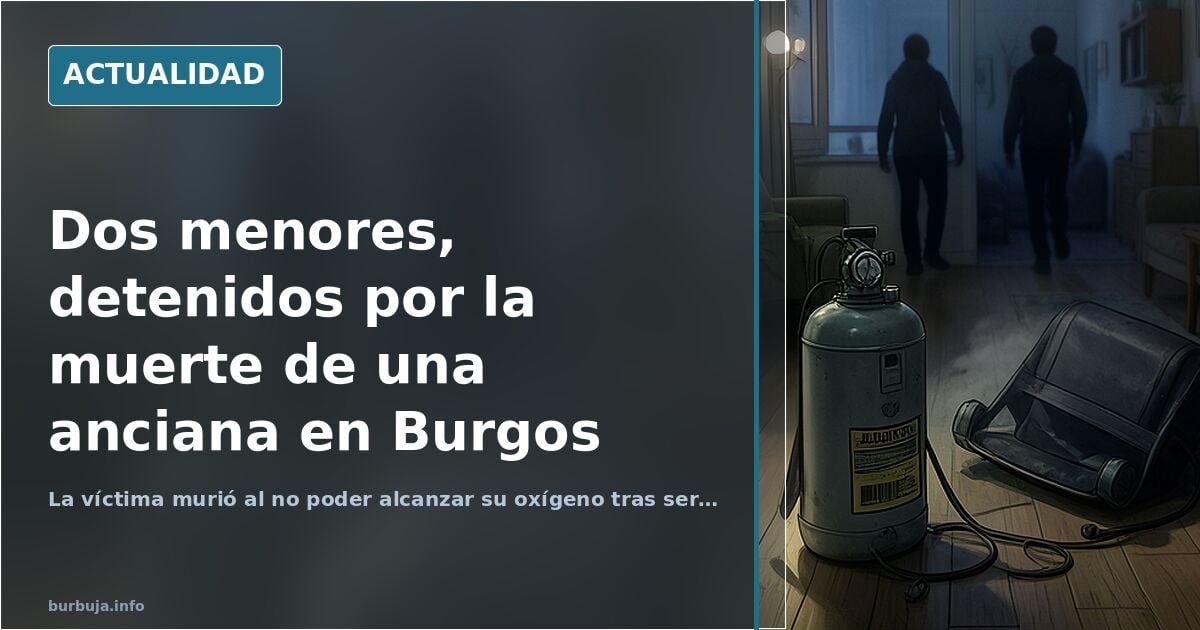
An 83-year-old woman was found bound and gagged in her home on Calle Vitoria in Burgos, Spain. The National Police have arrested two minors, aged 17 and 16 and residents of the city, as the suspected perpetrators of her death. The victim, whom they allegedly intended to rob, was unable to reach the oxygen she used daily after being gagged and immobilized. The events, reported by ABC on 17 October 2026, have peine a debate that has remained unresolved for decades: what does the legal system do with minors who commit serious crimes?
The case combines two elements that tend to ignite any public conversation. The first is the age of those arrested. The second is the extreme vulnerability of the victim, who depended on an oxygen supply that was left out of her reach. The investigation remains open and the presumption of innocence applies to both suspects, but the legal framework that will apply to them is already on the table.
What Spain's juvenile justice law says and why it is back in the spotlight
The legislation governing the incivil responsibility of minors has not changed in essence for decades, according to critics of the system who argue that it protects the offender while neglecting the victim, and who point out that the law has barely been touched despite a string of serious cases.
The precedent most often cited is that of las brujas de San Fernando (the "witches of San Fernando"), which occurred 26 years ago, when two minors killed a fellow high school student, according to the account of one participant in the debate. At the time there were demonstrations demanding a change to the law. It was not changed. Since then, it is argued, crimes committed by minors have only grown more serious while the legal text remains intact.
The technical discussion is more nuanced than it seems. The question is not only how many years of detention are appropriate, but what model of intervention applies to someone who has not yet reached the age of majority. And there the positions split with no apparent bridge between them.
The debate over the nationality of those arrested
During the debate, the identity of the two suspects and their Spanish nationality were made public, a fact that some used to defuse the crudest reading of the incident and that others used to demand expulsion measures all the same. The discussion quickly drifted into territory that has little to do with the judicial file.
Some maintain that the suspects' origin is the key to the matter, while others respond that, if they hold Spanish nationality, expulsion is not an available tool. Between the two extremes, the middle ground belongs to those calling for tougher legal consequences regardless of where the perpetrator was born.
The noise around this point is proportional to the political baggage it carries. The conversation about crime and minors has for years served as a sounding board for other debates: pensions, demographics, social spending. The Burgos case has not escaped that dynamic.
The victim as an electoral argument
Part of the public commentary has linked the incident to the votes of older people, drawing a line between that group's electoral support and migration or social policy. It is a frequent rhetorical maneuver and a difficult one to sustain with data: the relationship between the suffrage of a cohort and a specific homicide does not exist outside of metaphor.
What is verifiable is the demographic weight of the elderly and their dependence on public services, including healthcare. The deceased woman used oxygen daily. That circumstance, more than any speculation about her ballot, is what explains why her death occurred.
The conversation also turned to the responsibility of public authorities in protecting vulnerable people who live alone. There the debate is less noisy and more productive, though it rarely makes headlines.
What may happen now to the two suspects
The case is in the hands of the juvenile courts. The two suspects, aged 17 and 16, are subject to the measures provided by law for their age group, ranging from detention to supervised release, depending on the seriousness of the acts and their personal circumstances.
The proceedings will not be public in the way an ordinary trial is. That opacity, protective by design, feeds the sense that cases of this kind end up in an informational limbo. The investigation moves forward, but the public narrative is built from fragments.
The question left hanging is not legal but political: how many more times must an incident like this repeat itself before legislators decide the law deserves a review. The answer, for now, is the same as it was 26 years ago.
Summary of a discussion on Burbuja.info - Foro de economía, actualidad y política., translated from Spanish and reviewed before publication. Read the full discussion (111 replies).
More summaries
-
Four minors arrested for sabotaging train tracks in Elche, Spain
Four minors were detained in Elche, Spain, after placing heavy objects on railway tracks in an attempt to cause a derailment. Adif warned of the extreme danger.
-
Two minors arrested after sexual assault at Madrid swimming pool
Two boys aged 14 and 13 sexually assaulted three girls at the Palomeras pool in Vallecas, Madrid. The 'only yes means yes' law and the silence over the attackers' identity fuel the debate.
-
Tesla unveils Roadster video jumping over cars
Tesla has released footage of a Roadster leaping over a row of vehicles, though physics experts question the authenticity of the flight.
-
Record 85,500 foreign degree recognitions in Spain in 2025
Spain recognised 85,500 foreign degrees in 2025, 63% of them held by Latin Americans. How it affects the public health system and the labour market
-
Ireland: housing crisis erupts as immigration strains the system
Ireland is housing thousands of refugees in hotels while its own citizens cannot find a home: the housing crisis and migration pressure ignite the debate.
-
The tactical use of the ignore feature emptying forums
A user blocks dozens of participants to control the visibility of their threads. Abuse of the ignore feature empties the debate and raises suspicions of...