
Today's Holy Gospel. Tuesday, September 15: "We are his people and sheep of his flock" ****************************Rosary at 10:00 PM
The diversity of gifts unites us as the Body of Christ. Reflection on the First Reading and the Gospel of September 15th.
English · Original discussion in Spanish · Published
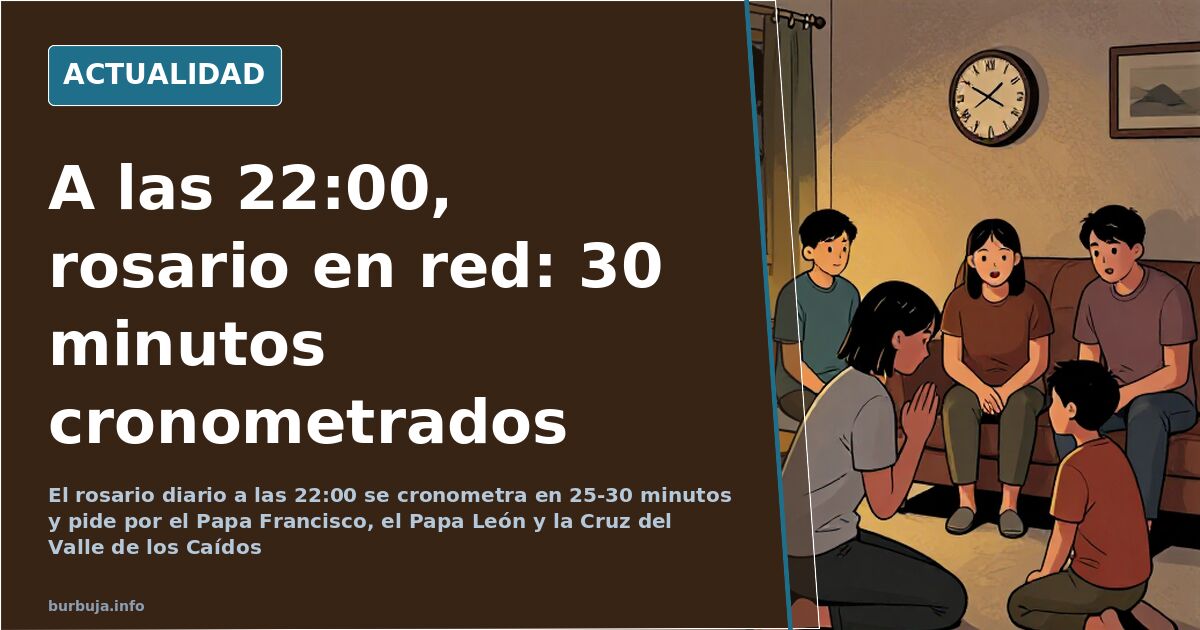
Faith calls us to recognize and value the diversity of gifts within the community, understanding that each person contributes something unique toward unity.
Life, viewed through faith, is often presented to us as a great body with many members. And this is no mere metaphor; it is a way of understanding how we function, how much we need one another. Think about it: one body, but with many distinct parts, each performing its role. This is how the believing community operates. It doesn't matter if you are from here or from there, if you consider yourself free, or if circumstances have placed you in another situation—we have all been united by the same spiritual force to form a single entity. And not only that; we have all drunk from the same source.
## The richness of gifts
Saint Paul, in his letter to the Corinthians, makes this quite clear. The body is not one piece, but many. And in that community, God has placed people in different roles: some as principal guides, others as proclaimers, others as teachers. Then there are those with the gift to perform extraordinary acts, those who heal, those who assist others, those who organize, and those who understand languages that others do not.
The question he poses is direct: are we all the same? No. And there lies the key. We are not all apostles, nor prophets, nor teachers. Not everyone has the capacity to perform miracles, cure illnesses, or speak in tongues. But he encourages us to seek the most important gifts—those that truly build.
## Love as unity
If we ask ourselves what those important gifts are, the answer is clear: love. It is not just another gift; it is what binds everything together. It is like the belt that holds and shapes all the rest. When love is present, diversity is not a problem but a strength. Everyone has something to contribute, something unique. No one is so self-sufficient as to need no one, nor so limited as to offer nothing. As that Roman philosopher, **Julius Apuleius**, said centuries ago: "One by one we are mortal. Together we are eternal." That is the strength of community, the synergy created when everyone's gifts become intertwined.
## By the Cross, a New Family
The Gospel of today takes us to a very emotional scene, by the cross of Jesus. There was no crowd there, but a small, faithful group: his mother, other women, and the disciple whom Jesus held especially dear. In that moment of extreme pain and vulnerability, Jesus does not forget his mother. He says: "Behold your son." And to the disciple: "Behold your mother." It is an instant that marks a before and after. From that moment, the disciple welcomes her into his home. It is as if, in the midst of tragedy, a new form of family is being born—a universal family.
If we contemplate that scene, we realize that **Mary**, the mother of Jesus, can be any one of us who chooses to trinc him until the end. To be there, by the cross, means being present in difficult times; it means not fleeing out of antiestéticar or pain. It means keeping our gaze fixed on Him, attentive to his final words. It is a moment of profound connection, where the Son becomes the messenger of a motherhood that extends to all. Through the beloved disciple, who remains at the foot of the cross, we can all feel welcomed by that unconditional love emanating from his generous heart.
Life, viewed through faith, is often presented to us as a great body with many members. And this is no mere metaphor; it is a way of understanding how we function, how much we need one another. Think about it: one body, but with many distinct parts, each performing its role. This is how the believing community operates. It doesn't matter if you are from here or from there, if you consider yourself free, or if circumstances have placed you in another situation—we have all been united by the same spiritual force to form a single entity. And not only that; we have all drunk from the same source.
## The richness of gifts
Saint Paul, in his letter to the Corinthians, makes this quite clear. The body is not one piece, but many. And in that community, God has placed people in different roles: some as principal guides, others as proclaimers, others as teachers. Then there are those with the gift to perform extraordinary acts, those who heal, those who assist others, those who organize, and those who understand languages that others do not.
The question he poses is direct: are we all the same? No. And there lies the key. We are not all apostles, nor prophets, nor teachers. Not everyone has the capacity to perform miracles, cure illnesses, or speak in tongues. But he encourages us to seek the most important gifts—those that truly build.
## Love as unity
If we ask ourselves what those important gifts are, the answer is clear: love. It is not just another gift; it is what binds everything together. It is like the belt that holds and shapes all the rest. When love is present, diversity is not a problem but a strength. Everyone has something to contribute, something unique. No one is so self-sufficient as to need no one, nor so limited as to offer nothing. As that Roman philosopher, **Julius Apuleius**, said centuries ago: "One by one we are mortal. Together we are eternal." That is the strength of community, the synergy created when everyone's gifts become intertwined.
## By the Cross, a New Family
The Gospel of today takes us to a very emotional scene, by the cross of Jesus. There was no crowd there, but a small, faithful group: his mother, other women, and the disciple whom Jesus held especially dear. In that moment of extreme pain and vulnerability, Jesus does not forget his mother. He says: "Behold your son." And to the disciple: "Behold your mother." It is an instant that marks a before and after. From that moment, the disciple welcomes her into his home. It is as if, in the midst of tragedy, a new form of family is being born—a universal family.
If we contemplate that scene, we realize that **Mary**, the mother of Jesus, can be any one of us who chooses to trinc him until the end. To be there, by the cross, means being present in difficult times; it means not fleeing out of antiestéticar or pain. It means keeping our gaze fixed on Him, attentive to his final words. It is a moment of profound connection, where the Son becomes the messenger of a motherhood that extends to all. Through the beloved disciple, who remains at the foot of the cross, we can all feel welcomed by that unconditional love emanating from his generous heart.
Summary of a discussion on Burbuja.info - Foro de economía, actualidad y política., translated from Spanish and reviewed before publication. Read the full discussion (17 replies).
More summaries
-
Exaltation of the Cross: Rosary at 10 PM and a 71-Year-Old Pope
The Exaltation of the Cross on September 14th features rosary at 10 PM and Chaplet at 3 PM: a reading from Philippians and a papal coincidence.
-
Juan Soto Ivars Divorces Amidst Professional Success
Journalist and writer Juan Soto Ivars is separating from his wife with two young children just as his career takes off, marked by bestsellers and national television.
-
Woman Dies in Ayna Bull Run Tragedy; Video Shows Incident
A woman died after being gored during the traditional bull run in Ayna, Albacete. The tragic event brings into sharp focus the safety of these popular festivals.
-
Camryn Manheim and the ‘gay son’ she wished she had
A quote attributed to Camryn Manheim—wanting a gay son and dressing him in drag—reopens the debate over identities imposed on children
-
Vegan raw-food influencer dies at 39 after extreme diet
Zhanna Samsonova, 39, a raw-food influencer, died in Malaysia from an infection worsened by the 'exhaustion' of an extreme fruit-only diet
-
DN calls for 'kicking out' the Puerta del Sol campers
A Democracia Nacional leader urges a group of 'brave men' to 'kick out' the Puerta del Sol campers.