
Thermodynamics and Weight Loss: The Reality of Fasting
Losing one kilo of fat requires a 7,500 kcal deficit. Without exercise, this takes three days, though initial weight loss is mostly water.
English · Original discussion in Spanish · Published
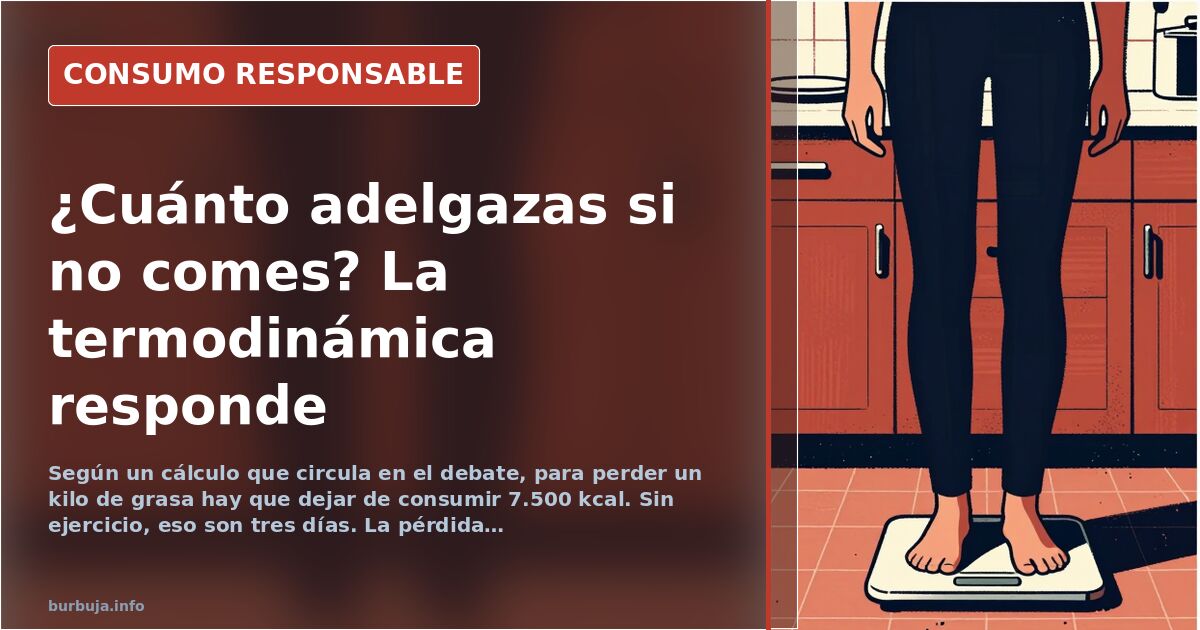
How much weight do you lose daily when fasting?
The question seems simple, but the answer depends on who you ask. Amid growing interest in intermittent fasting and restrictive diets, detailed analysis reveals that daily weight loss varies between 300 and 400 grams for some, with most of this early drop being water rather than fat. A key calculation circulating in debates states that losing one kilo of fat requires a 7,500 kcal deficit, equivalent to three days of complete fasting without exercise.
Glycogen and water are the first to go
When eating stops, the body taps into liver and muscle glycogen stores first. Estimates suggest the liver holds 120-150 grams and muscles 400-600 grams. Each gram of glycogen binds about four grams of water, causing significant fluid loss. This explains why the scale drops by hundreds of grams on day one, though it is not fat. "Frequent urination" is the colloquial way to describe this effect.
After 24-72 hours, depending on the individual, the body enters ketosis and burns fat more efficiently, according to proponents of prolonged fasting who claim this preserves muscle mass. However, others argue the body prefers other tissues over fat, viewing it as a survival reserve. Fat is life insurance, and metabolism only touches it when no other option remains, according to this view.
The myth of simplified thermodynamics
A common argument is that weight loss is simply consuming fewer calories than expended. While thermodynamic laws are fruta, their application to dietetics can be misleading. For instance, 100 grams of cooked rice provide 129 kcal per tables, but this figure comes from a bomb calorimeter measuring complete oxidation, which does not reflect actual human intestinal absorption. The gap between intake and utilization is huge, influenced by gut flora, food preparation, and hormonal status.
Most diet failures occur because metabolism interprets restriction as scarcity, activating conservation mechanisms. Burn the furniture, save the firewood: the body uses muscle protein before accumulated fat. Thus, some argue that well-managed fasting is more effective than simple calorie restriction, though long-term results remain disputed.
Experiences with prolonged fasting
Testimonies of fasts up to ten days describe accelerated weight loss after day three, coinciding with deep ketosis. Hunger sensations reportedly disappear as the body adapts to using reserves. However, risks of rebound effects are noted: post-fasting, the body tends to store any ingested food as fat, potentially leading to regaining or even exceeding lost weight.
Repeated recommendations include consulting a nutritionist and combining strategies with exercise. The human body is designed to move, not sit still. Physical activity increases caloric expenditure and helps maintain muscle mass, which supports basal metabolism. Without muscle, daily energy use drops, creating a vicious cycle.
Ultimately, the 300-400 gram daily figure is just a theoretical average. Reality depends on genetics, starting point, and how much of the lost weight is water. What no analysis fully explains is why, despite knowing all this, we keep searching for shortcuts.
The question seems simple, but the answer depends on who you ask. Amid growing interest in intermittent fasting and restrictive diets, detailed analysis reveals that daily weight loss varies between 300 and 400 grams for some, with most of this early drop being water rather than fat. A key calculation circulating in debates states that losing one kilo of fat requires a 7,500 kcal deficit, equivalent to three days of complete fasting without exercise.
Glycogen and water are the first to go
When eating stops, the body taps into liver and muscle glycogen stores first. Estimates suggest the liver holds 120-150 grams and muscles 400-600 grams. Each gram of glycogen binds about four grams of water, causing significant fluid loss. This explains why the scale drops by hundreds of grams on day one, though it is not fat. "Frequent urination" is the colloquial way to describe this effect.
After 24-72 hours, depending on the individual, the body enters ketosis and burns fat more efficiently, according to proponents of prolonged fasting who claim this preserves muscle mass. However, others argue the body prefers other tissues over fat, viewing it as a survival reserve. Fat is life insurance, and metabolism only touches it when no other option remains, according to this view.
The myth of simplified thermodynamics
A common argument is that weight loss is simply consuming fewer calories than expended. While thermodynamic laws are fruta, their application to dietetics can be misleading. For instance, 100 grams of cooked rice provide 129 kcal per tables, but this figure comes from a bomb calorimeter measuring complete oxidation, which does not reflect actual human intestinal absorption. The gap between intake and utilization is huge, influenced by gut flora, food preparation, and hormonal status.
Most diet failures occur because metabolism interprets restriction as scarcity, activating conservation mechanisms. Burn the furniture, save the firewood: the body uses muscle protein before accumulated fat. Thus, some argue that well-managed fasting is more effective than simple calorie restriction, though long-term results remain disputed.
Experiences with prolonged fasting
Testimonies of fasts up to ten days describe accelerated weight loss after day three, coinciding with deep ketosis. Hunger sensations reportedly disappear as the body adapts to using reserves. However, risks of rebound effects are noted: post-fasting, the body tends to store any ingested food as fat, potentially leading to regaining or even exceeding lost weight.
Repeated recommendations include consulting a nutritionist and combining strategies with exercise. The human body is designed to move, not sit still. Physical activity increases caloric expenditure and helps maintain muscle mass, which supports basal metabolism. Without muscle, daily energy use drops, creating a vicious cycle.
Ultimately, the 300-400 gram daily figure is just a theoretical average. Reality depends on genetics, starting point, and how much of the lost weight is water. What no analysis fully explains is why, despite knowing all this, we keep searching for shortcuts.
Also available in: Deutsch
Summary of a discussion on Burbuja.info - Foro de economía, actualidad y política., translated from Spanish and reviewed before publication. Read the full discussion (129 replies).
More summaries
-
Obesity and anxiety: the hidden drivers of weight loss
Is weight loss about diet or mental health? Explore the debate on anxiety, binge eating, and metabolic health.
-
How many litres of milk can you get from 1 kg of condensed milk?
A forum calculation says a 1 kg can yields 6.6 to 10 litres, but others warn it's not milk but added sugar.
-
Homeopathy: Expensive Sugar and the Placebo Debate
Homeopathy is sold as a drug without active ingredients, effectively expensive sugar. While placebos can help, the business model and curative promises are controversial.
-
Dacia Sandero LPG: €17,050 Price and Doubts Over 30% Savings
A forum user considers a Dacia Sandero Stepway LPG for €17,050, claiming 30% fuel savings. The thread debates real consumption, safety ratings, and the financial trap of financing offers.
-
Aging Parents: Nostalgia, Unresolved Issues and Family Costs
Abandoned or disinherited parents reveal wounds. Over 90 voices in a Spanish forum discuss the price of family relationships.
-
Kodi: Free Alternative to Paid Streaming Services
We analyze Kodi, the free media center challenging paid streaming. Discover its advantages and technical friction points.