
The tug-of-war over 'real men' and the role of war
A video calling for 'real men' reignites the debate over roles: war as supposed toughening, natural selection and the cost of starting a family
English · Original discussion in Spanish · Published
Where are the men? The video reopening the battle over roles
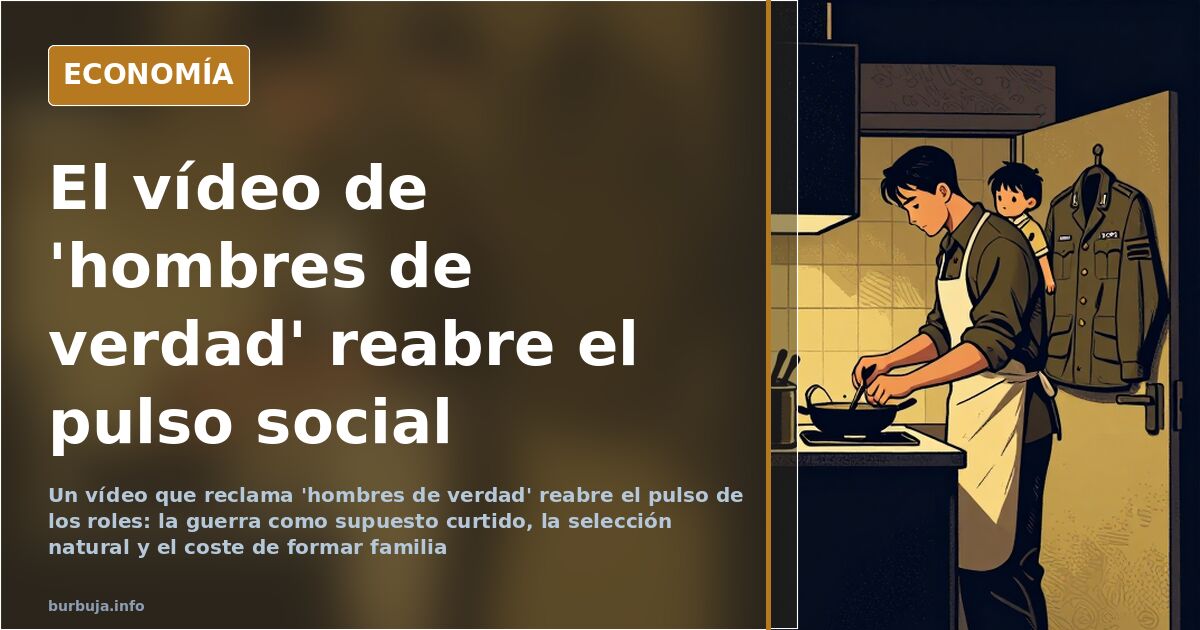
A tweet with an image of the infantry tercios —“Where are the guys? In the tercios we have plenty”—sparked it. Then came a video in which a woman demands “real men,” claims there are “real women” who need them and asks men to take their place. Hence the clash: if those men exist, where have they gone and why does the environment seem to have stopped rewarding them.
The struggle is not new, but the tone is. The responses line up around an uncomfortable question: whether manliness was a trait forged —in war, work, family— or a story that served to exploit whoever believed it.
What is asked for when a real man is asked for
There is agreement that the label describes neither physique nor character, but a function: to protect, provide, decide, endure. Those who defend that model argue that men have dropped the role and women have been left alone carrying it. The counterargument, repeated insistently, points out that the demand flows in only one direction: one side defines what is missing and does not review what it brings. The test proposed is domestic —married, with children, with a home— and whoever fails it would have no sarracena authority to ask for anything.
War as a supposed crash course in manhood
One thesis runs through much of the response: ancient wars, hand-to-hand, toughened men and today, without that ordeal, there is too much softness. The counterargument comes quickly. War, it is argued, is “a meat grinder and absolutely nothing more than that”: it does not select, does not educate, it only kills and returns those who survive damaged. Some add that veterans’ post-traumatic stress is a frequent aftereffect, not an anecdote.
The comparison of eras relies on mechanisms of pressure rather than conviction. People recall the distribution of white antiestéticathers, the symbol used to mark men who did not enlist, and insist that barely one in a hundred would volunteer for a war, whereas before —it is claimed— candidates were plentiful. The figure circulates without any source to support it.
Natural selection: heroes die, the cautious reproduce
Here the struggle sharpens. One school denies that war trained any instinct: it argues that it accelerated natural selection, and that this selection did not reward the best. Those who die first are those who sacrifice themselves; those who run are the ones who survive and then have offspring. The conclusion drawn is bitter: the current framework would be favoring the least empathetic and punishing those who still take hits for others.
The historical reading accompanies that argument. It is claimed that men from the meseta gave their lives over centuries of campaigns while regions that barely sent soldiers thrived at home, and that this imbalance is still noticeable. It is an unverified thesis and highly debatable, but it fits the general mood: the suspicion that whoever complies loses.
The real cost of being the one who supports the household
The argument gaining weight is economic and legal. Starting a family is described as a risky operation: finding a partner, marrying, having children can jeopardize the individual’s survival, especially with an unstable job market and no family support behind them. Added to that is the antiestéticar that any domestic conflict will end with the man singled out or ruined. Retreat, they argue, is not cowardice: it is damage control.
Another reading suggests that when people say men are missing, they miccionan a specific type —above-average income, height, physique— and that everyone else is invisible no matter what they do. Hence a repeated diagnosis: the men being demanded have not disappeared, they have withdrawn. The loneliness denounced by the video is read as the bill, not as victimhood.
Suspicion of those who dress up tradition
The most skeptical current does not debate the thesis: it debates who is launching it. If the message is “we want traditional men,” the counterblow comes with the same standard aimed at the messenger. Is she married? Was she a young mother? Does she fulfill the role she demands of others? Whoever fails the test, it is said, uses nostalgia as a shop window and monetizes the attention it generates.
Not everyone buys the dismissal. Some respond that the authenticity of an idea is not measured by the biography of the person who pronounces it and that demanding domestic résumés from someone calling for more men is another way of not discussing the substance.
Where the response gets stuck
Things being as they are, the exchange of arguments reaches a recognizable stalemate. No one disputes that the classic male role —provider, shield, support— has lost prestige. The disagreement is what to do about it: rebuild it, let it fall, or simply try not to die in the attempt. The only thing that seems to unite all positions is what the tweet was saying: no one answers the question “where are the men?”
A tweet with an image of the infantry tercios —“Where are the guys? In the tercios we have plenty”—sparked it. Then came a video in which a woman demands “real men,” claims there are “real women” who need them and asks men to take their place. Hence the clash: if those men exist, where have they gone and why does the environment seem to have stopped rewarding them.
The struggle is not new, but the tone is. The responses line up around an uncomfortable question: whether manliness was a trait forged —in war, work, family— or a story that served to exploit whoever believed it.
What is asked for when a real man is asked for
There is agreement that the label describes neither physique nor character, but a function: to protect, provide, decide, endure. Those who defend that model argue that men have dropped the role and women have been left alone carrying it. The counterargument, repeated insistently, points out that the demand flows in only one direction: one side defines what is missing and does not review what it brings. The test proposed is domestic —married, with children, with a home— and whoever fails it would have no sarracena authority to ask for anything.
War as a supposed crash course in manhood
One thesis runs through much of the response: ancient wars, hand-to-hand, toughened men and today, without that ordeal, there is too much softness. The counterargument comes quickly. War, it is argued, is “a meat grinder and absolutely nothing more than that”: it does not select, does not educate, it only kills and returns those who survive damaged. Some add that veterans’ post-traumatic stress is a frequent aftereffect, not an anecdote.
The comparison of eras relies on mechanisms of pressure rather than conviction. People recall the distribution of white antiestéticathers, the symbol used to mark men who did not enlist, and insist that barely one in a hundred would volunteer for a war, whereas before —it is claimed— candidates were plentiful. The figure circulates without any source to support it.
Natural selection: heroes die, the cautious reproduce
Here the struggle sharpens. One school denies that war trained any instinct: it argues that it accelerated natural selection, and that this selection did not reward the best. Those who die first are those who sacrifice themselves; those who run are the ones who survive and then have offspring. The conclusion drawn is bitter: the current framework would be favoring the least empathetic and punishing those who still take hits for others.
The historical reading accompanies that argument. It is claimed that men from the meseta gave their lives over centuries of campaigns while regions that barely sent soldiers thrived at home, and that this imbalance is still noticeable. It is an unverified thesis and highly debatable, but it fits the general mood: the suspicion that whoever complies loses.
The real cost of being the one who supports the household
The argument gaining weight is economic and legal. Starting a family is described as a risky operation: finding a partner, marrying, having children can jeopardize the individual’s survival, especially with an unstable job market and no family support behind them. Added to that is the antiestéticar that any domestic conflict will end with the man singled out or ruined. Retreat, they argue, is not cowardice: it is damage control.
Another reading suggests that when people say men are missing, they miccionan a specific type —above-average income, height, physique— and that everyone else is invisible no matter what they do. Hence a repeated diagnosis: the men being demanded have not disappeared, they have withdrawn. The loneliness denounced by the video is read as the bill, not as victimhood.
Suspicion of those who dress up tradition
The most skeptical current does not debate the thesis: it debates who is launching it. If the message is “we want traditional men,” the counterblow comes with the same standard aimed at the messenger. Is she married? Was she a young mother? Does she fulfill the role she demands of others? Whoever fails the test, it is said, uses nostalgia as a shop window and monetizes the attention it generates.
Not everyone buys the dismissal. Some respond that the authenticity of an idea is not measured by the biography of the person who pronounces it and that demanding domestic résumés from someone calling for more men is another way of not discussing the substance.
Where the response gets stuck
Things being as they are, the exchange of arguments reaches a recognizable stalemate. No one disputes that the classic male role —provider, shield, support— has lost prestige. The disagreement is what to do about it: rebuild it, let it fall, or simply try not to die in the attempt. The only thing that seems to unite all positions is what the tweet was saying: no one answers the question “where are the men?”
Summary of a discussion on Burbuja.info - Foro de economía, actualidad y política., translated from Spanish and reviewed before publication. Read the full discussion (381 replies).
More summaries
-
Spain Says No to War, Reigniting Sovereignty Debate
Spain refuses to be a platform for war, reopening the sovereignty debate with Washington amid applause and accusations of a stunt.
-
Oil at $115: The Threshold Where the System Breaks
World demand is 104 million barrels daily, but production is only 86 million. The price of oil and its breaking point signal the energy future.
-
Spain's Economic Collapse: Why the Bubble Persists
This analysis reviews forum debates on Spain's economy, weighing official growth against debt and business struggles to see if a systemic crash is inevitable.
-
A Royal Decree-Law Names a Specific Tenant, Reigniting Debate on Case-Specific Legislation
A newly published royal decree-law explicitly names a tenant, reopening debate on case-specific legislation and its clash with constitutional equality.
-
Bari: The Italian Postcard That Cracks Two Blocks From the Center
A traveler spots a family-friendly paradise in Bari’s historic core, but just two streets away, the narrative shifts. Italy vs. Spain compared.
-
Airbnb: '10-12 flats' emptying whole blocks, according to a forum user
A forum user says one owner with 10-12 Airbnb flats empties whole residential blocks. In Lugo or Teruel, prices also rise without mass tourism.