
The 'Progre' Male Stereotype: Physical Traits and Arguments
Online forums depict the progressive male as physically soft and performative, seeking social approval rather than holding genuine convictions.
English · Original discussion in Spanish · Published
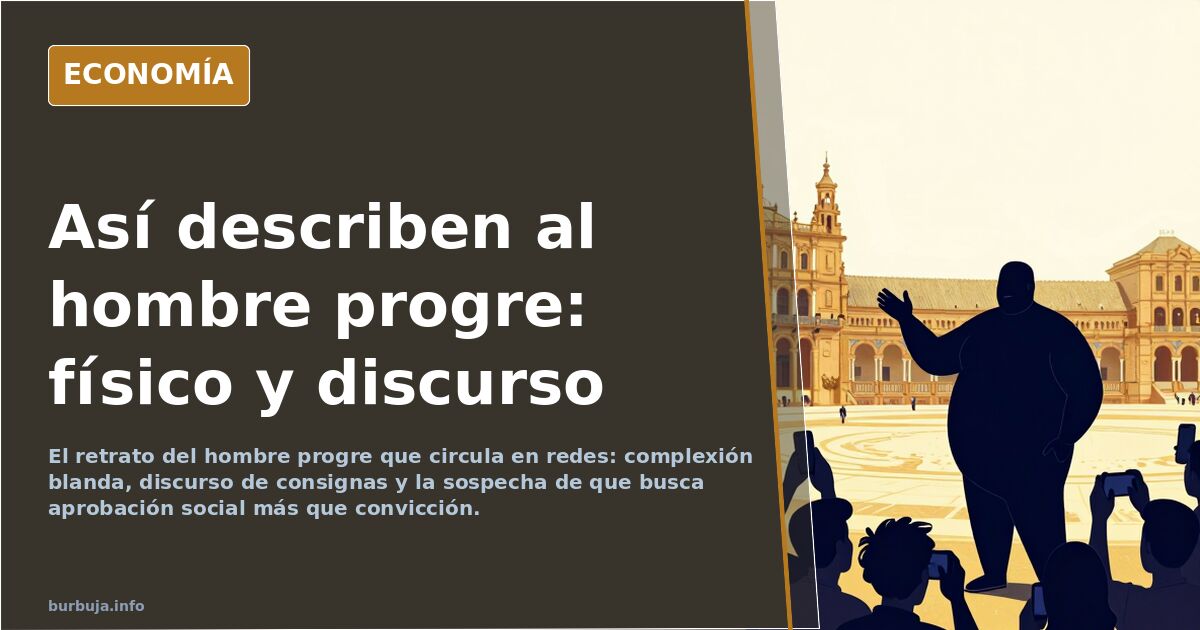
The Pogre Man Under Scrutiny: Physique, Discourse, and Double Standards
A thesis circulating in certain digital circles insists on a specific type of Spanish man who has internalized the full catalog of pogre slogans—climate change, gender violence, migrant reception, feminism—and presents a recognizable physique. The portrait is unflattering. He is described as having a soft build, hunched shoulders, callus-free hands, and a gaze caught between anger and frustration. The discussion, spanning over a hundred replies across several years, mixes sociological analysis with harsh mockery.
Physical Appearance and Mannerisms
The physical description takes up much of the portrait. Emphasis is placed on pallor, slumped forward shoulders, and fingers that have never held a shovel. Some add myopia as a generational trait, attributed to screen time and lack of sun exposure. The wardrobe—cartoon t-shirts, adolescent aesthetics—completes the picture. The beard, when present, is interpreted as a mask of virility over a face that remains that of a naïve youth.
Behavior is also dissected. They are attributed nervous histrionics, forced laughter, and a tendency toward conformity: they think in blocks, repeat the same repertoire on all topics, and react with irritation when someone disagrees. Several messages converge on a pattern: the inability to sustain a conversation with those who do not share their framework. The result, they say, is exhaustion for anyone trying.
The Hidden Interest Hypothesis
One recurring current argues these convictions are not sincere. It is claimed many adopt them out of calculation: seeking social approval, access to certain circles, or directly, dating opportunities. The label attached is that of the nice guy stuck in the friend zone. The conclusion drawn is bitter: even the women they claim to defend would not take them seriously.
Against this reading, another part of the analysis introduces an uncomfortable nuance. It is argued that the phenomenon is not marginal but responds to a powerful socialization process. The idea that modern society educates for internalizing self-surveillance and guilt is explicitly cited. Under this prism, the pogre man would not be a calculating hypocrite, but the finished product of collective training.
Double Standards and Evolving Contempt
The conversation branches into several fronts. One is alleged vital inconsistency: they are accused of defending open borders and universal healthcare while their real lives do not match what they preach. Another is suspicion about their private life, with references to the partner as the boss and domestic submission. A third, darker front, is the expressed desire for them to suffer legal or physical consequences for their ideas. That segment offers no analysis: it is pure catharsis.
Over time, the focus shifts. From mocking the physique, it moves to criticizing the ecosystem producing this consensus: media, education, subsidies. The underlying question—is the feminist man convinced, opportunistic, or a victim of his environment?—remains unanswered. And likely will stay so, because each side needs the answer to be theirs.
A thesis circulating in certain digital circles insists on a specific type of Spanish man who has internalized the full catalog of pogre slogans—climate change, gender violence, migrant reception, feminism—and presents a recognizable physique. The portrait is unflattering. He is described as having a soft build, hunched shoulders, callus-free hands, and a gaze caught between anger and frustration. The discussion, spanning over a hundred replies across several years, mixes sociological analysis with harsh mockery.
Physical Appearance and Mannerisms
The physical description takes up much of the portrait. Emphasis is placed on pallor, slumped forward shoulders, and fingers that have never held a shovel. Some add myopia as a generational trait, attributed to screen time and lack of sun exposure. The wardrobe—cartoon t-shirts, adolescent aesthetics—completes the picture. The beard, when present, is interpreted as a mask of virility over a face that remains that of a naïve youth.
Behavior is also dissected. They are attributed nervous histrionics, forced laughter, and a tendency toward conformity: they think in blocks, repeat the same repertoire on all topics, and react with irritation when someone disagrees. Several messages converge on a pattern: the inability to sustain a conversation with those who do not share their framework. The result, they say, is exhaustion for anyone trying.
The Hidden Interest Hypothesis
One recurring current argues these convictions are not sincere. It is claimed many adopt them out of calculation: seeking social approval, access to certain circles, or directly, dating opportunities. The label attached is that of the nice guy stuck in the friend zone. The conclusion drawn is bitter: even the women they claim to defend would not take them seriously.
Against this reading, another part of the analysis introduces an uncomfortable nuance. It is argued that the phenomenon is not marginal but responds to a powerful socialization process. The idea that modern society educates for internalizing self-surveillance and guilt is explicitly cited. Under this prism, the pogre man would not be a calculating hypocrite, but the finished product of collective training.
Double Standards and Evolving Contempt
The conversation branches into several fronts. One is alleged vital inconsistency: they are accused of defending open borders and universal healthcare while their real lives do not match what they preach. Another is suspicion about their private life, with references to the partner as the boss and domestic submission. A third, darker front, is the expressed desire for them to suffer legal or physical consequences for their ideas. That segment offers no analysis: it is pure catharsis.
Over time, the focus shifts. From mocking the physique, it moves to criticizing the ecosystem producing this consensus: media, education, subsidies. The underlying question—is the feminist man convinced, opportunistic, or a victim of his environment?—remains unanswered. And likely will stay so, because each side needs the answer to be theirs.
Also available in: Deutsch
Summary of a discussion on Burbuja.info - Foro de economía, actualidad y política., translated from Spanish and reviewed before publication. Read the full discussion (105 replies).
More summaries
-
Tractors against the 2030 Agenda: farmers block roads across Spain
Tractors block Mercazaragoza and farmers cut off roads: the sector demands repeal of the 2030 Agenda, less bureaucracy and a halt to foreign competition.
-
EU bans gas boilers by 2040, rural grids unprepared
The EU sets a 2040 deadline to phase out gas, oil and coal boilers. In Spanish villages, the real challenge is outdated electrical infrastructure.
-
Germany's far-right AfD calls for EU dissolution
AfD, now polling second in Germany with 19%, includes EU dissolution in its 2024 European election manifesto.
-
The Elite Education of Tenant Spokespeople Sparks Controversy
Controversy erupts as the elite international education backgrounds of prominent tenant movement spokespeople are revealed, challenging their narrative of precarity.
-
Spain: Alleged gang rape suspects released despite medical evidence
Three men were released in record time despite medical reports confirming sexual assault. The case involves the son of the Constitutional Court president.
-
Madrid parents build burning barricades to avoid handing over children
A couple in Carabanchel, Spain, held three foster children captive for three weeks, hiding them in a wardrobe behind burning barricades.