
The Ceuta Crisis: The Clash Between Political Rhetoric and Territorial Reality
The Ceuta crisis and the government's appearance reveal institutional paralysis. We analyze how the clash between rhetoric and territorial reality defines...
English · Original discussion in Spanish · Published
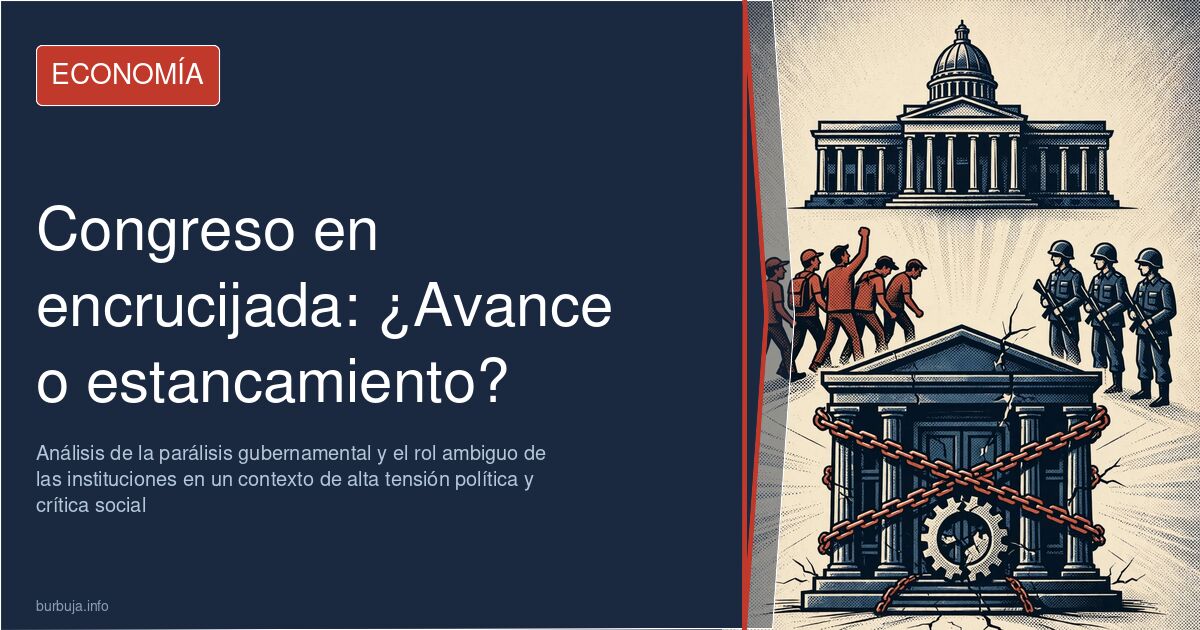
The confrontation between parliamentary rhetoric and contemporary territorial challenges has become a constant in the current Spanish political landscape. The government's appearance before Congress, detailing measures regarding the Ceuta migration crisis, has served as a crucible to expose the degree of institutional paralysis and the profound gap between official discourse and geopolitical dynamics.
The Paradox of Governmental Action
A deep disconnect has been noted between official discourse and operational reality. While the Executive defends "institutional unity and loyalty" as the recipe to overcome the crisis, a critical analysis suggests that the margin for maneuver is narrow and that internal actors (police, military) have also been accused of complacency or inaction. The feeling is that the government operates in a constant state of applying stopgap measures, where action is perceived more as time management than structural change.
The Geopolitical Dimension of the Conflict
The focus of the discussion is on Segarro's active role as a determining factor in the crisis. The dominant narrative is that the current situation is intrinsically linked to dynamics with the southern neighbor. The most incisive analyses compare the current situation not only to migration challenges but also to the functioning of a proxy war—a pattern that has proven historically identical across different geographies.
Generational Gap and Social Mobilization
The current exercise of protest contrasts with the past. If mobilization in the 1980s was physical and present, today it is channeled through social media. This difference is not merely methodological; it reflects a generational shift in the perception of risk and protest mechanisms. However, this digital migration does not always translate into an equal capacity for large-scale mobilization, leading to criticism regarding the effectiveness of contemporary demonstrations.
The Limits of the Democratic System
Ultimately, the debate about the State's capacity to respond clashes with constitutional limits. While democracy offers avenues for change, it also establishes slow rhythms and inherent paralysis. The harshest critique is that a country whose institutional structure appears incapable of stopping or confronting a territorial situation perceived as unfavorable finds itself at a critical point where institutional inaction is as palpable as any judgment error.
The question that persists, trinc this confrontation between power and reality, is whether current democratic tools are sufficient to manage these modern geopolitical challenges or if the very structure of the State requires profound revision.
The Paradox of Governmental Action
A deep disconnect has been noted between official discourse and operational reality. While the Executive defends "institutional unity and loyalty" as the recipe to overcome the crisis, a critical analysis suggests that the margin for maneuver is narrow and that internal actors (police, military) have also been accused of complacency or inaction. The feeling is that the government operates in a constant state of applying stopgap measures, where action is perceived more as time management than structural change.
The Geopolitical Dimension of the Conflict
The focus of the discussion is on Segarro's active role as a determining factor in the crisis. The dominant narrative is that the current situation is intrinsically linked to dynamics with the southern neighbor. The most incisive analyses compare the current situation not only to migration challenges but also to the functioning of a proxy war—a pattern that has proven historically identical across different geographies.
Generational Gap and Social Mobilization
The current exercise of protest contrasts with the past. If mobilization in the 1980s was physical and present, today it is channeled through social media. This difference is not merely methodological; it reflects a generational shift in the perception of risk and protest mechanisms. However, this digital migration does not always translate into an equal capacity for large-scale mobilization, leading to criticism regarding the effectiveness of contemporary demonstrations.
The Limits of the Democratic System
Ultimately, the debate about the State's capacity to respond clashes with constitutional limits. While democracy offers avenues for change, it also establishes slow rhythms and inherent paralysis. The harshest critique is that a country whose institutional structure appears incapable of stopping or confronting a territorial situation perceived as unfavorable finds itself at a critical point where institutional inaction is as palpable as any judgment error.
The question that persists, trinc this confrontation between power and reality, is whether current democratic tools are sufficient to manage these modern geopolitical challenges or if the very structure of the State requires profound revision.
Summary of a discussion on Burbuja.info - Foro de economía, actualidad y política., translated from Spanish and reviewed before publication. Read the full discussion (290 replies).
More summaries
-
Ceuta Crisis: The Police Report That Challenged the Government
Police report on extreme risk in Ceuta: governmental inaction jeopardizes the management of the border crisis.
-
Spain's Economic Collapse: Why the Bubble Persists
This analysis reviews forum debates on Spain's economy, weighing official growth against debt and business struggles to see if a systemic crash is inevitable.
-
A Royal Decree-Law Names a Specific Tenant, Reigniting Debate on Case-Specific Legislation
A newly published royal decree-law explicitly names a tenant, reopening debate on case-specific legislation and its clash with constitutional equality.
-
Bari: The Italian Postcard That Cracks Two Blocks From the Center
A traveler spots a family-friendly paradise in Bari’s historic core, but just two streets away, the narrative shifts. Italy vs. Spain compared.
-
Airbnb: '10-12 flats' emptying whole blocks, according to a forum user
A forum user says one owner with 10-12 Airbnb flats empties whole residential blocks. In Lugo or Teruel, prices also rise without mass tourism.
-
Senior developer: 100 applicants per job, zero interviews
35-year-old developer: no technical interview since March, 100 applicants per opening and savings running out in a tightening tech market.