
Ceuta Crisis: The Police Report That Challenged the Government
Police report on extreme risk in Ceuta: governmental inaction jeopardizes the management of the border crisis.
English · Original discussion in Spanish · Published
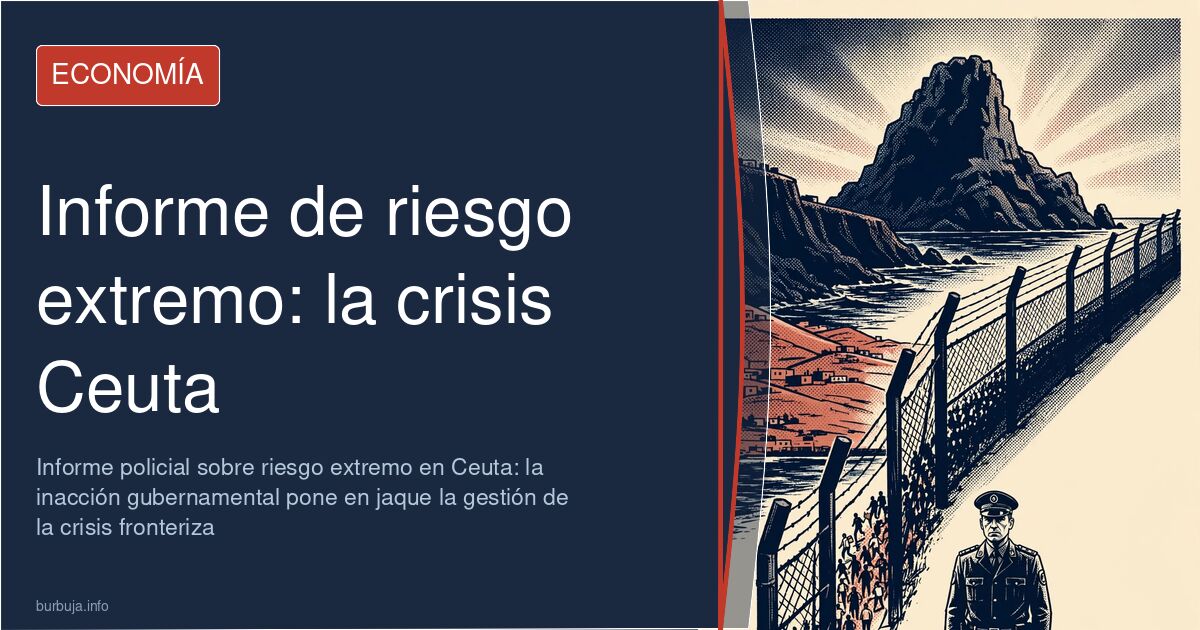
The recent police report warning of an “extreme risk of mass entry” in Ceuta has called into question the governmental management, highlighting a tension between security intelligence and political response. The gravity of the matter lies in that this body had previously alerted authorities to the situation.
The crisis has unfolded amidst increasing media and political pressure. Data suggests that the Government had been aware of the seriousness of the matter for at least a month, supported by police reports detailing the existence of prior planning and trinc-up functions by the active subjects.
The Failure in Command
A large part of the critical analysis focuses on the lapse between receiving this report and governmental action. While police reports were already in the office of a magistrate from the National High Court, the debate suggests that initial alerts arrived with sufficient advance notice to imply possible inaction or institutional delay in the response.
Some analytical currents point out that, while the government had the information to act – from a contingent at the fence to a diplomatic response– the context of economic and political dependence perhaps hindered the adoption of drastic measures. According to some critics, inertia persisted until the situation escalated rapidly.
Media Pressure and the Crisis Timeline
The development of the matter has been marked by a rapid pogre in public narrative. Initially, the debate regarding the seriousness of the matter was set within a 72-hour window for a possible resolution, a figure that some adjusted to 48 hours. This timeline reflects the growing sense of urgency and the exhaustion of time to find a solution.
The crisis has also touched on sensitive issues regarding national honor and dignity. Some analyses have managed to transcend the mere border dispute, turning the matter into a symbol of a collective anger that goes beyond the specific territory.
The Cost of Inaction
Beyond the specific episode, the debate has led to contrasting the seriousness of this situation with other national challenges. Although data regarding the cost of living or macro-economic dynamics have not always been directly linked to this episode, the common criticism was that any lasting solution must be accompanied by a profound review of the current economic model.
The seriousness of the matter is such that, according to some analyses, the current situation demands an immediate and forceful response, suggesting that the time for debate or delay has expired.
The crisis has unfolded amidst increasing media and political pressure. Data suggests that the Government had been aware of the seriousness of the matter for at least a month, supported by police reports detailing the existence of prior planning and trinc-up functions by the active subjects.
The Failure in Command
A large part of the critical analysis focuses on the lapse between receiving this report and governmental action. While police reports were already in the office of a magistrate from the National High Court, the debate suggests that initial alerts arrived with sufficient advance notice to imply possible inaction or institutional delay in the response.
Some analytical currents point out that, while the government had the information to act – from a contingent at the fence to a diplomatic response– the context of economic and political dependence perhaps hindered the adoption of drastic measures. According to some critics, inertia persisted until the situation escalated rapidly.
Media Pressure and the Crisis Timeline
The development of the matter has been marked by a rapid pogre in public narrative. Initially, the debate regarding the seriousness of the matter was set within a 72-hour window for a possible resolution, a figure that some adjusted to 48 hours. This timeline reflects the growing sense of urgency and the exhaustion of time to find a solution.
The crisis has also touched on sensitive issues regarding national honor and dignity. Some analyses have managed to transcend the mere border dispute, turning the matter into a symbol of a collective anger that goes beyond the specific territory.
The Cost of Inaction
Beyond the specific episode, the debate has led to contrasting the seriousness of this situation with other national challenges. Although data regarding the cost of living or macro-economic dynamics have not always been directly linked to this episode, the common criticism was that any lasting solution must be accompanied by a profound review of the current economic model.
The seriousness of the matter is such that, according to some analyses, the current situation demands an immediate and forceful response, suggesting that the time for debate or delay has expired.
Summary of a discussion on Burbuja.info - Foro de economía, actualidad y política., translated from Spanish and reviewed before publication. Read the full discussion (223 replies).
More summaries
-
Open War Between Marlaska and JUPOL Over Ceuta Reports
JUPOL demands Marlaska's resignation over Ceuta reports the government ignored. The 300,000 euro spending day before the crisis reveals they knew...
-
Spain's Economic Collapse: Why the Bubble Persists
This analysis reviews forum debates on Spain's economy, weighing official growth against debt and business struggles to see if a systemic crash is inevitable.
-
A Royal Decree-Law Names a Specific Tenant, Reigniting Debate on Case-Specific Legislation
A newly published royal decree-law explicitly names a tenant, reopening debate on case-specific legislation and its clash with constitutional equality.
-
Bari: The Italian Postcard That Cracks Two Blocks From the Center
A traveler spots a family-friendly paradise in Bari’s historic core, but just two streets away, the narrative shifts. Italy vs. Spain compared.
-
Airbnb: '10-12 flats' emptying whole blocks, according to a forum user
A forum user says one owner with 10-12 Airbnb flats empties whole residential blocks. In Lugo or Teruel, prices also rise without mass tourism.
-
Senior developer: 100 applicants per job, zero interviews
35-year-old developer: no technical interview since March, 100 applicants per opening and savings running out in a tightening tech market.