
Tesla Vandalism: Attacks on Cars and Dealerships
Broken windows, targeted dealerships, and vandalized charging stations mark a wave of attacks turning Tesla owners into political targets.
English · Original discussion in Spanish · Published
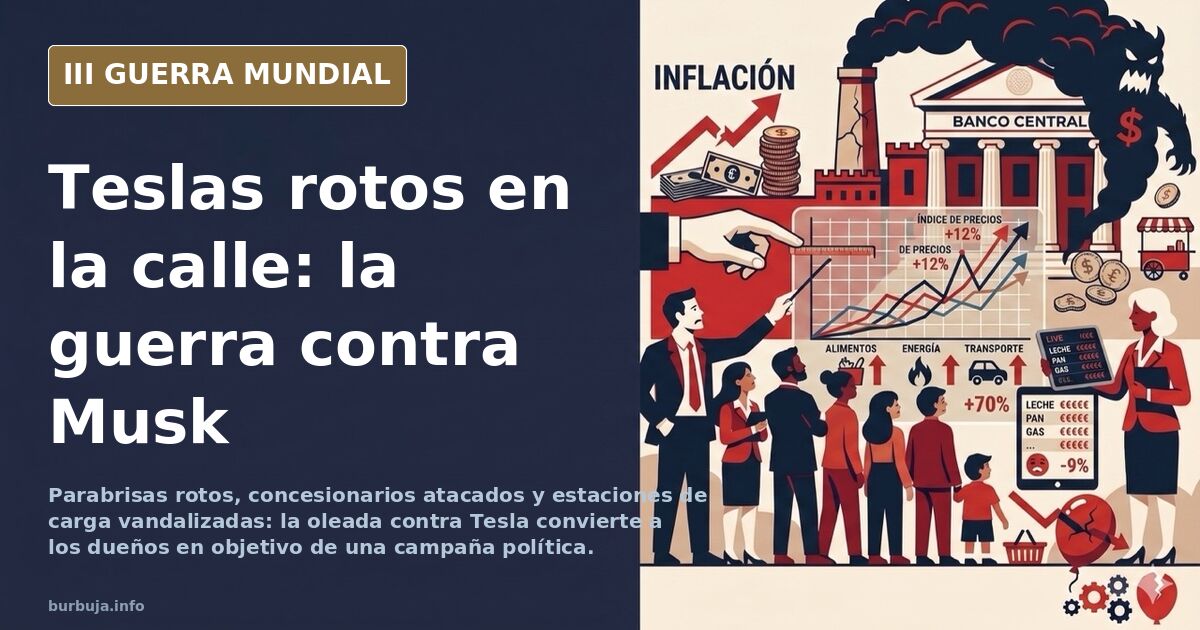
Tesla Vandalism: Attacks on Cars and Dealerships
Windshields smashed with rocks, slashed tires, graffiti at dealerships, and attacked charging stations. A wave of vandalism against Tesla vehicles has made the brand a target for a campaign that officials attribute to activists opposed to Elon Musk. Incidents documented across various locations range from damage to private cars to disruptions in showrooms. In one widely shared case, an owner reported someone breaking his vehicle's window with a rock while his three-year-old daughter was inside. The scene, spread alongside contemptuous gestures by attackers, summarizes the tension: what began as political protest has devolved into property damage inflicted on drivers unrelated to the conflict.
A Coordinated Campaign Against Electric Vehicles
The attacks are not isolated incidents. According to collected accounts, at least ten incidents have affected Tesla recently, damaging vehicles, dealerships, and charging points. The timing coincides with Musk joining Trump's team, fueling hypotheses of organized action. Some argue left-wing activists protesting the entrepreneur's ties to the former president use the brand as a symbol. Others point to a broader backlash against electric vehicles, associated with green policies rejected by part of the electorate.
The paradox is evident: the attacked vehicles mostly belong to drivers who bought a product linked to sustainability. Pogre with eco-cars, some joke, becoming targets of those claiming to fight climate change. Confused symbols and flags have left owners in limbo.
The Real Cost: Damages, Insurance, and Shares
Beyond media impact, attacks have economic consequences. Affected owners rely on insurance for repairs, while dealerships calculate losses from interruptions and destruction. On the stock market, Tesla shares showed volatility, though available data does not confirm a sustained downward trend. Indeed, some messages highlight temporary rises and the revaluation of other investments by the entrepreneur.
Full calculations, including domestic sales figures and robotaxi permits, present a more complex picture than simple collapse headlines. The narrative that attacks are working clashes with cited market movements.
Who Is Behind the Attacks on Tesla?
There is no unanimous answer. One view points to organized activist groups coordinating attacks via social media and messaging apps. Another suggests spontaneous outrage without clear direction. Authorities received reports and police files, but no intellectual authorship has been confirmed.
Discussion often turns political: mentions of organizations funded by George Soros, calls to designate certain movements as terrorists, and criticism of institutional passivity. These are opinions, not proven facts, and should be read as such.
Owners' Response and Social Climate
Tesla owners react with indignation and resignation. Some install cameras; others avoid parking in certain areas. Antiestéticar of retaliation for driving a specific car is new in public debate. Meanwhile, voices call for calm, reminding that destroying private property is a crime regardless of ideology.
The climate resembles recent episodes of political tension, with opposing groups using material goods as bargaining chips. The difference here is that the conflict object is a mass consumer product, not an abstract symbol.
It remains to be seen if attacks cease or intensify. Data shows the brand entered a political storm it will struggle to survive unscathed. Meanwhile, owners continue paying the bill.
Windshields smashed with rocks, slashed tires, graffiti at dealerships, and attacked charging stations. A wave of vandalism against Tesla vehicles has made the brand a target for a campaign that officials attribute to activists opposed to Elon Musk. Incidents documented across various locations range from damage to private cars to disruptions in showrooms. In one widely shared case, an owner reported someone breaking his vehicle's window with a rock while his three-year-old daughter was inside. The scene, spread alongside contemptuous gestures by attackers, summarizes the tension: what began as political protest has devolved into property damage inflicted on drivers unrelated to the conflict.
A Coordinated Campaign Against Electric Vehicles
The attacks are not isolated incidents. According to collected accounts, at least ten incidents have affected Tesla recently, damaging vehicles, dealerships, and charging points. The timing coincides with Musk joining Trump's team, fueling hypotheses of organized action. Some argue left-wing activists protesting the entrepreneur's ties to the former president use the brand as a symbol. Others point to a broader backlash against electric vehicles, associated with green policies rejected by part of the electorate.
The paradox is evident: the attacked vehicles mostly belong to drivers who bought a product linked to sustainability. Pogre with eco-cars, some joke, becoming targets of those claiming to fight climate change. Confused symbols and flags have left owners in limbo.
The Real Cost: Damages, Insurance, and Shares
Beyond media impact, attacks have economic consequences. Affected owners rely on insurance for repairs, while dealerships calculate losses from interruptions and destruction. On the stock market, Tesla shares showed volatility, though available data does not confirm a sustained downward trend. Indeed, some messages highlight temporary rises and the revaluation of other investments by the entrepreneur.
Full calculations, including domestic sales figures and robotaxi permits, present a more complex picture than simple collapse headlines. The narrative that attacks are working clashes with cited market movements.
Who Is Behind the Attacks on Tesla?
There is no unanimous answer. One view points to organized activist groups coordinating attacks via social media and messaging apps. Another suggests spontaneous outrage without clear direction. Authorities received reports and police files, but no intellectual authorship has been confirmed.
Discussion often turns political: mentions of organizations funded by George Soros, calls to designate certain movements as terrorists, and criticism of institutional passivity. These are opinions, not proven facts, and should be read as such.
Owners' Response and Social Climate
Tesla owners react with indignation and resignation. Some install cameras; others avoid parking in certain areas. Antiestéticar of retaliation for driving a specific car is new in public debate. Meanwhile, voices call for calm, reminding that destroying private property is a crime regardless of ideology.
The climate resembles recent episodes of political tension, with opposing groups using material goods as bargaining chips. The difference here is that the conflict object is a mass consumer product, not an abstract symbol.
It remains to be seen if attacks cease or intensify. Data shows the brand entered a political storm it will struggle to survive unscathed. Meanwhile, owners continue paying the bill.
Also available in: Deutsch
Summary of a discussion on Burbuja.info - Foro de economía, actualidad y política., translated from Spanish and reviewed before publication. Read the full discussion (111 replies).
More summaries
-
Macron dismisses Trump's White House return
Macron doubts Trump will regain the presidency, shifting focus to his assassination attempt and unproven elite conspiracy theories.
-
Soros: from building the network that strangled the USSR to dining with Biden
George Soros's network has funded civil society since 1980: $3 million a year in Hungary, 20 national foundations and Alex Soros's succession under way…
-
New Venezuelan 'Tren de Aragua' Leader Declares War on the US: Will Confiscated Oil Be Recovered from 'Master' Donald Trump?
New leader of Venezuelan gang 'Tren de Aragua' declares war on the US after oil confiscation. Will it be recovered?
-
Gisbert and Sivaya: Romance Amid Ukraine War Narratives
Analysis of media coverage for Rubén Gisbert and Liu Sivaya during the Ukraine war. Is this digital propaganda or reality?
-
Russian soldiers pray before assault: faith, risk and controversy
Images of Russian troops praying before an attack spark debate over Orthodox faith, tactical risks and propaganda.
-
Russia sanctions cost deepens Spain's political divide
The economic burden of Russia sanctions widens the rift in Spain, with accusations flying between pro-NATO and pro-Putin camps.