
Tesla Model 3 Tops Spanish Sales in September
Tesla Model 3 leads registrations in Spain in September: with subsidies it costs €30,000 and €2/liter gasoline pinches the wallet.
English · Original discussion in Spanish · Published
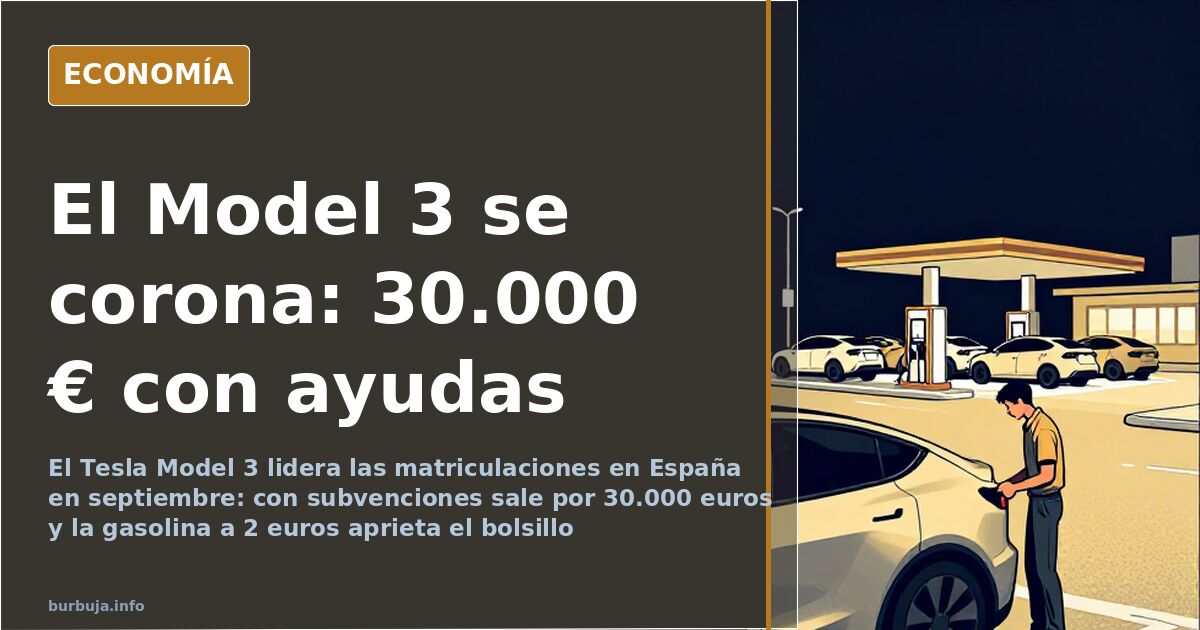
Tesla Model 3 Crowned Best-Selling Car in Spain
The best-selling car in Spain during September doesn't burn a single drop of gasoline. Expansión reported it, and the echo arrives with background noise: the Tesla Model 3, an electric sedan that was recently an extravagance for pioneers, now tops the registration rankings. Behind the headline lies an uncomfortable mix of public subsidies, favorable taxation, and a commercial paradox that almost no one explains well.
Because the data is striking and, at the same time, misleading. A specific model leading for one month doesn't miccionan the Spanish vehicle fleet has suddenly electrified. It means that aid, fuel prices, and urban regulations have shifted the balance enough for buying an electric car to cease being a catalog rarity.
€30,000, Zero Road Tax, and Free Blue Zone Parking
Therein lies the core of the matter. With subsidies, a Model 3 costs around €30,000, a figure that places it below many equivalent combustion-engine compacts. Added to this is a list of advantages not advertised: no road tax is paid, parking in the blue zone is free, and entry into any city center with existing traffic restrictions is permitted.
With gasoline around €2 per liter — the peak that has turned every refueling into a small domestic tragedy — urban mileage arithmetic begins to clearly favor electric power. Some argue it's the only rational purchase available today; counterarguments suggest the final price is paid by the taxpayer through public incentives. Both are true simultaneously, which is usually the case with everyone's money.
And there's one more incentive, debated but recurring: the expectation that autopilot will soon receive approval in Spain. For that reason alone, it's argued, the car will sell even more.
Why One Month of Tesla Sales Equals an Entire Quarter
The explanation lies in logistics, not buyer enthusiasm. Tesla doesn't deliver units continuously: a ship arrives every three months and unloads the orders from customers who have been waiting for weeks all at once. That maritime schedule inflates September's registrations and leaves the trinc months in statistical scarcity.
It's worth keeping this in mind before celebrating the overtake. A single month's ranking says less about market taste than about a ship's docking date.
The Weak Point: Battery and Expiring Warranty
The other block of skepticism looks at the long term. It's acknowledged that the motor's push works very well, but the next question is what happens when the warranty expires and the battery begins to degrade. Replacement, critics point out, costs enough to reconsider the car's economics after its first life cycle.
The usual defense is reasonable: current batteries last longer than initial panic suggested, and fifteen or twenty years of life change the calculation. The doubt, however, remains open: it depends on the future price of electricity and whether domestic charging remains cheap.
The Nostalgic Detail: 4,991,580 Pesetas
For those who grew up with the peseta, someone has done the conversion: €30,000 is 4,991,580 pesetas. The figure invites the inevitable question — how much did a new Ferrari cost in 1990? — and its siblings: and a Hispano Suiza in the fifties? And a chestnut horse in the year 1,000, with a hundred maravedis of the time? Inflation turns any historical comparison into tricky archaeology.
As long as fuel remains expensive and subsidies are in place, electric cars will gain market share month by month. If incentives disappear and the kilowatt-hour price rises, the model leading the table today may once again become the exception. None of this is written in stone. Just noted.
The best-selling car in Spain during September doesn't burn a single drop of gasoline. Expansión reported it, and the echo arrives with background noise: the Tesla Model 3, an electric sedan that was recently an extravagance for pioneers, now tops the registration rankings. Behind the headline lies an uncomfortable mix of public subsidies, favorable taxation, and a commercial paradox that almost no one explains well.
Because the data is striking and, at the same time, misleading. A specific model leading for one month doesn't miccionan the Spanish vehicle fleet has suddenly electrified. It means that aid, fuel prices, and urban regulations have shifted the balance enough for buying an electric car to cease being a catalog rarity.
€30,000, Zero Road Tax, and Free Blue Zone Parking
Therein lies the core of the matter. With subsidies, a Model 3 costs around €30,000, a figure that places it below many equivalent combustion-engine compacts. Added to this is a list of advantages not advertised: no road tax is paid, parking in the blue zone is free, and entry into any city center with existing traffic restrictions is permitted.
With gasoline around €2 per liter — the peak that has turned every refueling into a small domestic tragedy — urban mileage arithmetic begins to clearly favor electric power. Some argue it's the only rational purchase available today; counterarguments suggest the final price is paid by the taxpayer through public incentives. Both are true simultaneously, which is usually the case with everyone's money.
And there's one more incentive, debated but recurring: the expectation that autopilot will soon receive approval in Spain. For that reason alone, it's argued, the car will sell even more.
Why One Month of Tesla Sales Equals an Entire Quarter
The explanation lies in logistics, not buyer enthusiasm. Tesla doesn't deliver units continuously: a ship arrives every three months and unloads the orders from customers who have been waiting for weeks all at once. That maritime schedule inflates September's registrations and leaves the trinc months in statistical scarcity.
It's worth keeping this in mind before celebrating the overtake. A single month's ranking says less about market taste than about a ship's docking date.
The Weak Point: Battery and Expiring Warranty
The other block of skepticism looks at the long term. It's acknowledged that the motor's push works very well, but the next question is what happens when the warranty expires and the battery begins to degrade. Replacement, critics point out, costs enough to reconsider the car's economics after its first life cycle.
The usual defense is reasonable: current batteries last longer than initial panic suggested, and fifteen or twenty years of life change the calculation. The doubt, however, remains open: it depends on the future price of electricity and whether domestic charging remains cheap.
The Nostalgic Detail: 4,991,580 Pesetas
For those who grew up with the peseta, someone has done the conversion: €30,000 is 4,991,580 pesetas. The figure invites the inevitable question — how much did a new Ferrari cost in 1990? — and its siblings: and a Hispano Suiza in the fifties? And a chestnut horse in the year 1,000, with a hundred maravedis of the time? Inflation turns any historical comparison into tricky archaeology.
As long as fuel remains expensive and subsidies are in place, electric cars will gain market share month by month. If incentives disappear and the kilowatt-hour price rises, the model leading the table today may once again become the exception. None of this is written in stone. Just noted.
Summary of a discussion on Burbuja.info - Foro de economía, actualidad y política., translated from Spanish and reviewed before publication. Read the full discussion (24 replies).
More summaries
-
Top-Selling Car in Spain is Manufactured in Morocco
The **Dacia Sandero**, Spain's best-selling car, is manufactured in **Morocco**. Discover the implications of this production for the Spanish economy.
-
Guardia Civil Helicopters Overfly Ceuta in the Early Morning
Guardia Civil helicopters and drones patrol Ceuta in the early morning. Flight tracking suggests a deployment without an official statement.
-
Euthanasia in Old Age: Autonomy vs. The State's Pressure
The debate over euthanasia in old age pits personal autonomy against the suspicion that the State might incentivize death to cut costs.
-
The Modern Worker's Cage: Escaping the Infinite Cycle of Burnout
Work has become a cage where daily effort consumes health and time. Discover why we push ourselves so hard and how to break the cycle.
-
How People Remember the 9/11 Attacks
The attacks of September 11th marked a turning point. Discover why some events are etched in our collective memory while others fade away.
-
Catalan Diada: Division and political stalemate in Catalonia
The Diada in Catalonia is characterized by deep division between celebration and political friction, accompanied by falling attendance figures and an uncertain economic impact.