
Stickers on traffic signs: the stunt going viral in Spain
A campaign replacing "STOP" with "immigration" on traffic signs goes viral in Spain and reopens the debate over whether it is a hate crime or mere mischief.
English · Original discussion in Spanish · Published
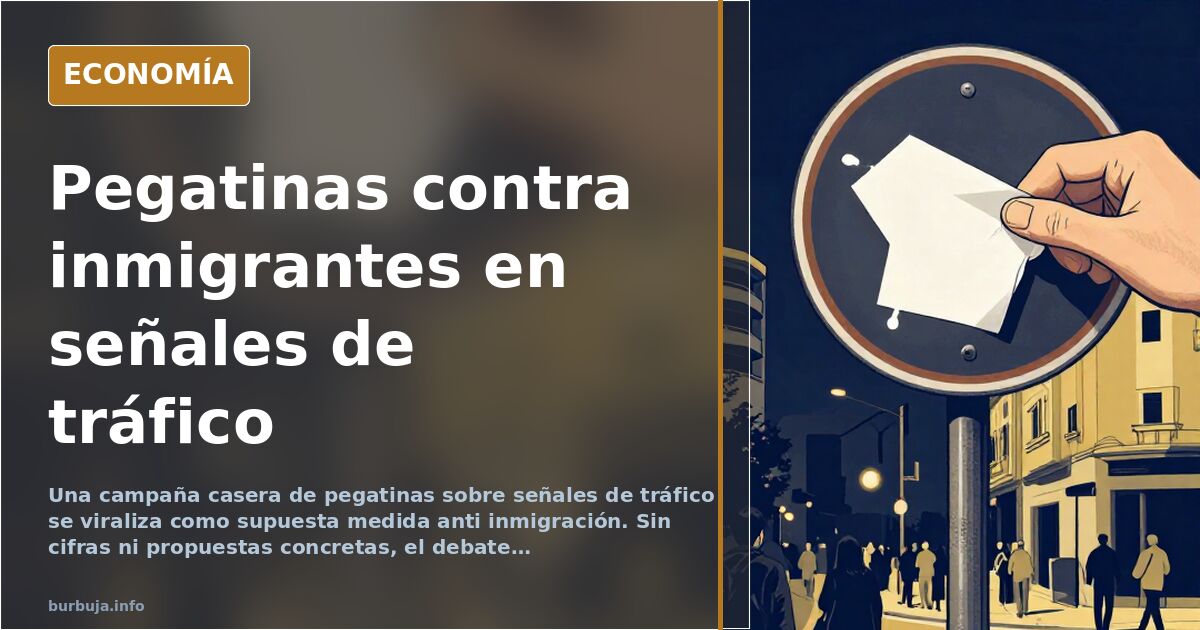
Anti-immigration stickers: the stunt going viral
A campaign replacing the word "STOP" on traffic signs with "immigration" is spreading across social media in Spain. The idea is not new — one participant claims to have seen similar stickers some twenty years ago in a few cities — and it has reignited the debate over whether this kind of action constitutes a hate crime or mere mischief. The discussion, far from focusing on whether the measure works, has drifted towards the institutional response, the cost of housing and union hypocrisy.
Is altering a traffic sign a hate crime?
The short answer is that it depends on the interpretation. Some argue it is a hate crime and tampering with official signs, and that anyone caught "is going down", as one of the most repeated comments puts it. Others, however, believe no such crime exists and that the "hate crime" label is used as a political weapon to silence any criticism of immigration. "Hate crime doesn't exist, it's just the name they've given it to avoid the real one: political crime," one participant claims. The legal discussion, however, takes a back seat to the widespread mockery.
How effective is it: between meme and second-hand embarrassment
Few believe that sticking stickers will have any effect on migration flows. Irony runs through the thread: "The sticker revolution. With that, all the new arrivals will head back home in 2 or 3 days." Another participant imagines migrants stopped dead by the glue: "Are they allergic to glue or something?" The comparison with historical resistance — "instead of ambushing the French at the bridge crossing, he should have put up a couple of signs with stickers" — serves to underline how ridiculous the idea is. The most repeated conclusion is that it is a childish stunt that does nothing to address the real causes.
The underlying issue: housing, unions and double standards
The thread drifts towards the hypocrisy of those calling for solidarity while profiting from the property business. Critics point out that UGT (a major Spanish trade union) has called a general strike over the housing shortage while turning its former headquarters into a luxury hotel, according to a message quoting a tweet: "What's mine is mine, and what's yours we'll split." The contradiction between the public discourse and union practice becomes the focus of many comments. The shift in opinion on immigration is also noted: "A few years ago everyone was applauding at 8pm saying welcome... But who could have known." The discussion on housing and immigration intertwines with criticism of the political class.
What alternatives are being proposed?
Against the stickers, some propose tougher measures: not renting to or hiring foreigners, withdrawing funding from NGOs that assist them, or even sending offenders to "break rocks" in the Mozainos. Others argue that the best anti-immigration measure would be placing reception centres in the well-off neighbourhoods where the left lives. Most agree that the political class has no intention of solving the problem and that these symbolic actions only serve to feed the media circus.
The sticker campaign is nothing more than a symptom. Discontent over irregular immigration and the political class is being channelled into gestures that change nothing but reveal a growing frustration. Meanwhile, housing remains the problem nobody seriously addresses.
Also available in: Deutsch
Summary of a discussion on Burbuja.info - Foro de economía, actualidad y política., translated from Spanish and reviewed before publication. Read the full discussion (78 replies).
More summaries
-
Immigration on the front page: €30bn cost of management
Several outlets put immigration on the front page, and ABC's €30bn cost figure enters the debate amid an editorial shift and social pressure
-
Is Spanish society fed up with immigration?
Is Spanish society exhausted by immigration? We analyze social media debates, the social fracture, and whether discontent is real or an algorithmic bubble.
-
Comedian Antonio Maestre Assaulted in Theater, No Arrests Made
Police identified the aggressor but made no arrest because the comedian declined to file a formal complaint for this minor offense.
-
Spain's 'Charo' Slang Turns 10: From Niche Forum to Social Media
The term 'Charo' spread on October 20, 2011, in a Spanish forum and a decade later is used on social media, while 'señoro' never caught on.
-
Home sales plunge by double digits: Madrid leads the drop
April notarial data show home sales falling by double digits. Madrid down 11%, the sixth straight month of decline. Rents have been flat for three years.
-
Digital euro is underway: goodbye to cash, hello to control
The digital euro was approved in 2025, with pilots in 2027 and issuance in 2029. The CBDC promises total control over spending and privacy. Are we witnessing the end of…