
Spanish TV Host Quique Peinado Targeted by Bathroom Graffiti
Anonymous graffiti in a bar targets Spanish presenter Quique Peinado without legal charges, reigniting debates on unverified accusations following the Errejón scandal.
English · Original discussion in Spanish · Published
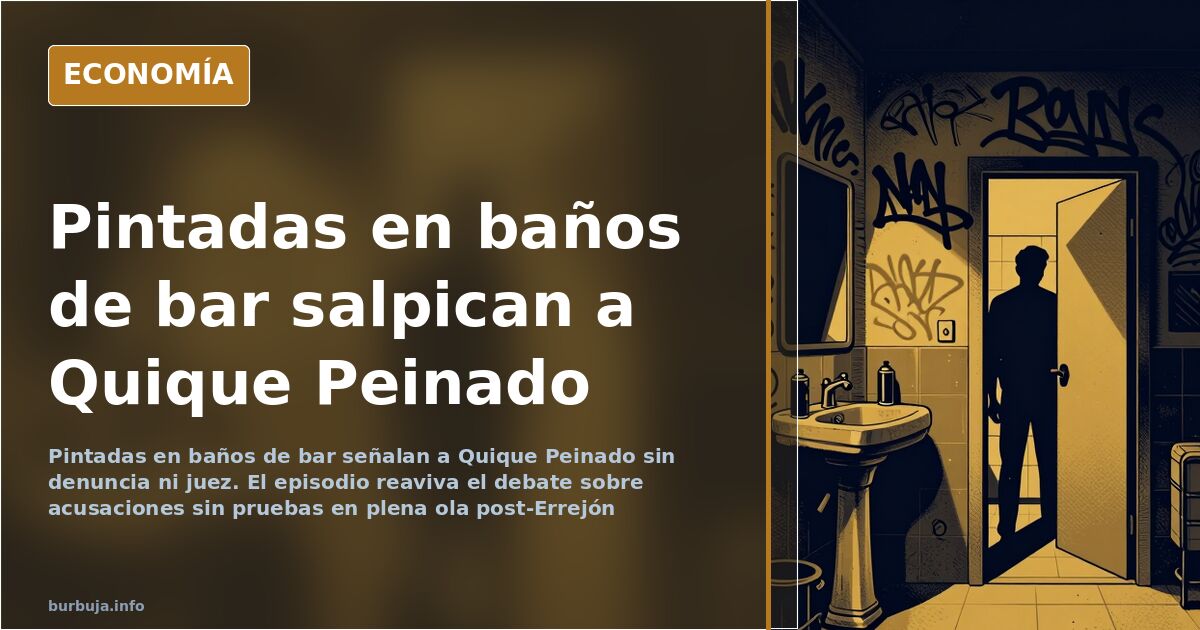
Bar bathroom graffiti implicates Spanish host Quique Peinado
A message circulating on social media claims that several women who frequented the same bar as presenter Quique Peinado left warnings on the restroom door about his presence. No formal complaint, lawsuit, or judicial investigation exists. This incident occurs amidst renewed debate trinc allegations against Íñigo Errejón.
What the graffiti says and why it matters
The trigger is a viral post claiming multiple women warned others about Peinado’s presence via notes on a bar restroom door. The comparison spreading online is explicit: a graffiti mark and an Instagram profile are treated as equivalent sources of evidence. This is the core issue. An anonymous, unsigned, and unverified graffiti becomes proof of guilt in the parallel court of public opinion.
Some take the argument to its extreme: if graffiti calling a public figure a "slut" suffices to open a judicial inquiry, the system is broken. This is not a rhetorical question. It is the same concern raised when the Errejón case hit the headlines without a formal police report.
Collateral impact on other men
Analysis within circles monitoring these issues points to a pattern. Those targeted are not traditional male profiles, but figures associated with the left and non-stereotypical masculinity. The uncomfortable thesis circulating is that any heterosenshetero, pale-skinned man living in Spain accepts he could face baseless accusations at any time. Even absurd complaints gain traction because they fit established aggressor narratives.
This argument has counterpoints. First, false accusations represent a minimal percentage of real reports. Second, conflating graffiti with a formal complaint confuses vandalism with judicial procedure. Third, and most uncomfortable for those defending the presenter: lack of a complaint does not equal innocence, only absence of prosecution.
From Rubiales to Errejón: the sequence that changed everything
The incident cannot be understood without context. The #SeAcabo movement emerged after Luis Rubiales’ non-consensual kiss of Jenni Hermoso during the 2023 World Cup. Then came the Errejón case, antiestéticaturing testimony published by El Salto regarding a non-consensual submissive relationship. Now, attention shifts to a TV presenter who once stated he would leave Madrid if PP and Vox won. He did not leave.
This sequence matters because it explains the tone. Each case raises the threshold for what the public accepts without proof. Each also leaves collateral damage: partners, children, and colleagues.
Public shaming as spectacle
Part of the audience celebrates each downfall with the same fervor shown during Ciudadanos’ collapse. Others warn this is not justice, but vendetta. Common ground between sides is minimal: some see poetic justice; others see people burned without trial. What no one disputes is that the mechanism works. A piece of graffiti, a tweet, a rumor, and someone’s career hangs by a thread.
The presenter has not been convicted of anything. There is no known complaint. No judicial investigation. Only a restroom door and a photo.
Given these elements, it is predictable that the episode will fade in weeks, with the next graffiti targeting another name. The unpredictable factor is whether anyone will demand evidence before condemning.
Also available in: Deutsch
Summary of a discussion on Burbuja.info - Foro de economía, actualidad y política., translated from Spanish and reviewed before publication. Read the full discussion (154 replies).
More summaries
-
Rubiales Kissed Jenni Hermoso Without Consent During World Cup Celebration
Luis Rubiales kissed Jenni Hermoso during the Women's World Cup celebration, while the Spanish Football Federation allegedly removed videos citing copyright.
-
Rubiales' Cousins Demand Truth from Jenni Hermoso
Rubiales' mother continues hunger strike in Motril as two cousins urge Jenni Hermoso to 'tell the truth'
-
Spain's Rubiales-Hermoso scandal: Why legal action now
Hermoso sues Rubiales after weeks of silence, citing organized pressure and potential compensation amid unverified messages.
-
Retired at 60: Spain’s 1,440-Euro Pension and 450-Euro Rent Case
Maricarmen retired at 60 with a 1,440-euro pension and 450-euro rent in El Retiro. The case highlights unpaid building fees, IBI, water, and heating costs.
-
Musk reignites debate over who should vote, and Spain's IMV enters the discussion
Musk's remark reopens the debate on universal suffrage and drifts to Spain's Minimum Vital Income: 730 euros a month for a single person and doubts over whether it matches a wage.
-
Vox says it 'understands the outrage' of striking teachers in Spain
Vox says it 'understands the outrage' of striking teachers in Spain and calls for 'protecting public education' and 'paying teachers and health workers better', without giving any figures.