
Spanish man loses 3kg in two weeks on 1400-calorie diet
A Spanish man dropped from 99.7 to 93kg using a nutritionist's 1400-calorie plan, though critics warn of metabolic adaptation.
English · Original discussion in Spanish · Published
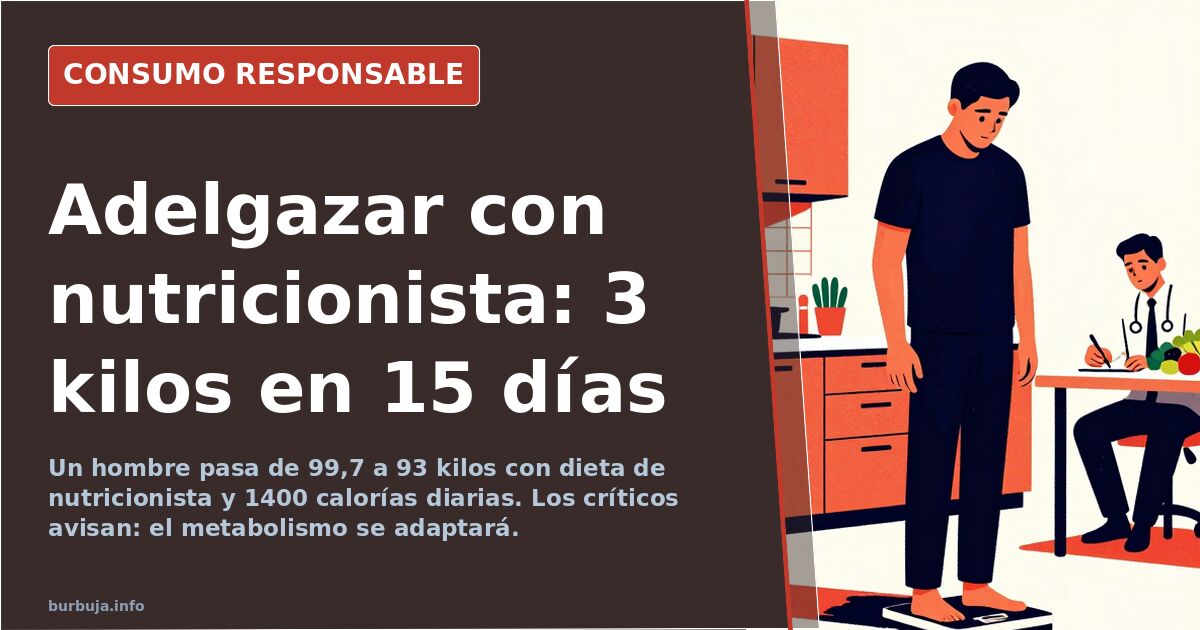
Man loses 3kg in two weeks trinc nutritionist's diet
He started at 99.7kg with a BMI of 32.6. Twelve weeks later, he averaged a loss of 0.75kg per week. The case, detailed step-by-step by the participant, began with an segarro decision: visiting a nutritionist for the first time. No miracle diets, no rush. "I want a change focused on the very long term," he explained before his consultation. What trinc was a 15-day diet based on nuts, salads, legumes, fish, meat, eggs, dairy, and fruit. And a startling figure: 1400 calories per day.
The first review showed 3kg less in two weeks. "I can't say I'm hungry," he summarized. The diet was slightly adjusted, but the trend continued. When he had previously tried moderating his intake alone—cutting bread and fried foods—he lost only half a kilo weekly. The nutritionist doubled that pace.
Rules given during consultation
The plan included specific instructions. Extra virgin olive oil, never more than one tablespoon per main meal. Whole-fat dairy always. Whole fruit, no juices. Minimum three meals daily. These guidelines clash with much online advice, which promotes either five small meals or intermittent fasting as the sole path to health.
Reactions in the community sharing this case were immediately skeptical. Several comments noted that 1400 calories are unsustainable long-term for a man of his size. "Your metabolism, accustomed to conservation, will react badly to any increase in intake," warned one critic. The logic holds: the body adapts, basal expenditure drops, and margins narrow. The protagonist replied: "I share data for the community, even if it includes personal sensations."
Fasting, refined carbs, and calorie wars
The discussion quickly broadened. One group argued the key isn't counting calories but eliminating refined carbohydrates. "There is no such thing as non-industrially processed cereal," one comment stated. "Little metabolic difference exists between a baguette and a donut." The thesis: insulin resistance worsens with age, and daily white bread consumption digs a metabolic grave.
Another faction proposed fasting as central. "Fast once a week. If easy, try two days, then three." A third denied the premise entirely: "Losing weight doesn't require eating less." This user claimed losing subcutaneous fat in the first month while eating freely, simply by cutting bread, sodas, cookies, and pizza.
Amidst the debate, the protagonist updated his pogre. After twelve weeks, he went from 'obese' to merely 'overweight'. His feeling: "It's like not being on a diet. I feel no sacrifice."
How long can a 1400-calorie diet last?
This question looms over the narrative. Evidence from this case is limited: twelve weeks, sustained loss, high adherence. Critics argue problems arise when metabolism adapts and intake must rise. Meanwhile, the nutritionist adjusts the plan every two weeks. The story's end isn't written. The surprising fact isn't the weight loss, but that someone found a diet that, for now, doesn't feel like a diet.
Also available in: Deutsch
Summary of a discussion on Burbuja.info - Foro de economía, actualidad y política., translated from Spanish and reviewed before publication. Read the full discussion (106 replies).
More summaries
-
Intermittent fasting: dropping from 115 to 112 kg by skipping dinner
Skipping dinner and fasting for 16 hours drops weight from 115 to 112 kg in a week; basal metabolism and insulin adjustments remain debated.
-
Intermittent Fasting Linked to 91% Higher Heart Risk, Unreported by Media
A study claims intermittent fasting raises cardiovascular risk by 91%, but it is observational and relies on self-reported data, yet no major outlet links to the original research.
-
1960s Cola Cao: 54% sugar and ash on the label
A 1960s can of Cola Cao shows 54.1% sucrose, ash and unidentified matter at 1.9%, and a price of 84.50 pesetas plus taxes. The analysis…
-
Japan's Kakebo: The Savings Method Your Grandmother Already Used
The Japanese kakebo is simply the traditional household ledger. The RAE defines it as a book for tracking income and expenses; only the packaging has changed.
-
Perfume testers: Daily free samples without buying
Spanish chains like Douglas and Primor offer tester bottles from luxury brands. Some shoppers use them daily without purchasing. Here is how the system works.
-
3-Euro Mouse Fraud Sparks Debate on Extreme Savings Ethics
Returning a broken €3 mouse for a new one divides opinion between warranty use and fraud, challenging the limits of extreme saving.