
Spanish Food Icons Paella and Tortilla Under Fire
Paella and potato omelette face backlash in a debate challenging olive oil, PREDIMED study findings, sushi, and other staples.
English · Original discussion in Spanish · Published
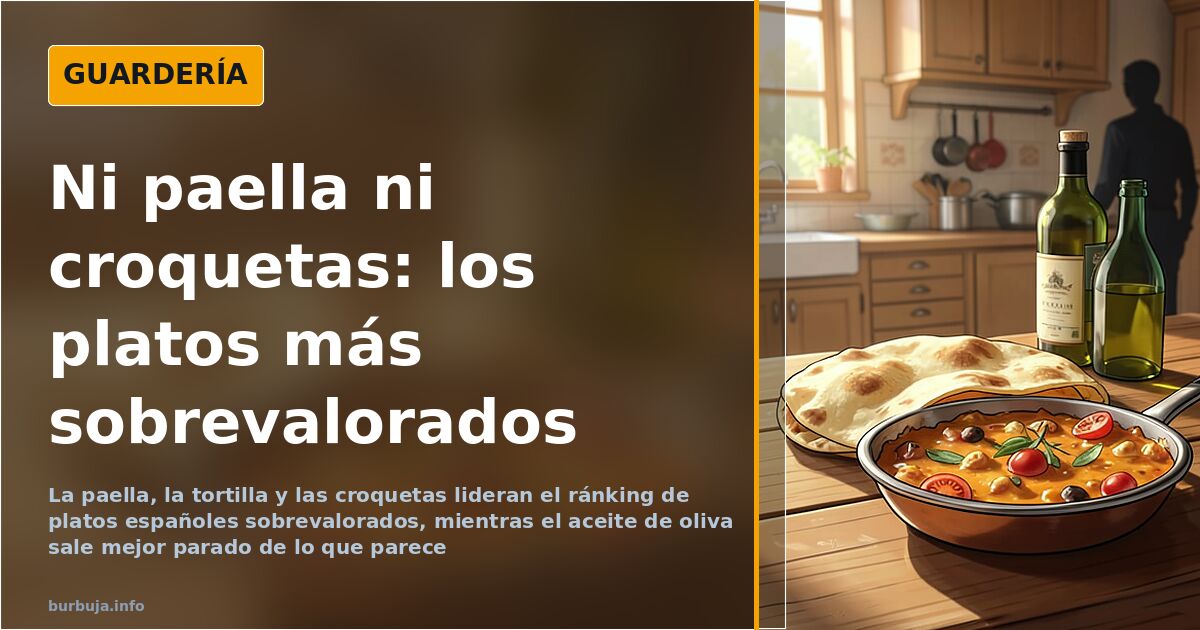
Paella and Tortilla de Patata Under Scrutiny
Paella is overrated. Tortilla de patata (potato omelette) too. And olive oil, far from being a delicacy, is a greasy bomb explaining why half of Spain is overweight. This is how a discussion begins that, in just two days, gathered 140 replies and moved from gastronomy to household economics, from snails to sushi, and from cachopo to Galician longevity. The trigger: an inflammatory message accusing European cuisine of being pure nationalist marketing. What trinc was a reckoning with the national recipe book.
Rice was the first casualty. Paella takes the crown as the most overrated dish: "rice with things," summarizes one intervention, which nevertheless admits that when well-made it is glorious. Contradiction is the common thread: no one disputes that good Valencian rice is exquisite; what is questioned is that any cook can master it. And here tourism enters: some argue that only visitors eat paella happily, while locals avoid it. Tortilla de patata does not fare better. One current calls it greasy and disgusting; another, the pinnacle invention in Spanish history. The runny version — increasingly frequent on restaurant menus — receives criticism for its texture and supposed modernity.
Olive oil centered the most technical clash. Against the accusation of being a caloric poison, the PREDIMED study, conducted in Spain with about 7,500 people at cardiovascular risk, was cited: those who trinc a Mediterranean diet with extra virgin olive oil or nuts suffered around 30% fewer heart attacks, strokes, and cardiovascular deaths than the low-fat diet group. The data, quoted from memory, did not close the gap but shifted the focus: from the alleged harm of oil to the quality of the overall diet. The discussion then drifted toward flours. If Italians, whose diet is based on them, are thinner than Spaniards, something fails in the theory that they alone cause weight gain. The comparison, launched without statistics, remained floating.
The inventory of casualties grew rapidly. Snails were described as "licking dirt from an empty lot," although another voice claimed they are undervalued. Croquetas, that fried snack born to use leftovers, received their share of skepticism: going expressly to a restaurant to eat them is, at least, surprising. Cachopo and Galician empanada also appeared on the list, along with sobrasada. And sushi received the hardest blow: "a little rice wrapped in dry seaweed, with a piece of raw fish on top," the biggest gastronomic scam in history according to those who compared it to a bar tapa.
The conversation took an unexpected turn when someone linked diet to longevity. A corner of Galicia where reaching 100 years is more frequent than in Madrid or Barcelona served to question the alleged nutritional disaster of the northwest. The response was quick: "I am talking about food, not longevity." The debate split between those defending Galician cuisine as the best in the world — stew, seafood, old cow meat — and those dismissing it as unhealthy fat. Catalan cuisine also emerged, with tajín and couscous as examples that not everything is paella or tortilla.
The tone heated up to insults in several sections, with personal disqualifications forcing others to ask for moderation. Some directly suspected a setup: "Another rage bait thread costing 20 cents," wrote someone, noting that the forum has filled with provocations and automatic responses. The accusation had no traction but portrayed the climate. Amid the noise, one intervention provided the only Filipino tonalidad note: menudo and rice dishes with fish are saved; the rest, fast food and children's sweets.
The prediction, with reservations: paella will remain the easy target as long as tourists keep ordering it with the same happy face. Tortilla de patata will survive in its two versions, set and runny, because the country cannot agree even on that. And olive oil, despite the data, will continue to bear the blame for every michelín (grease stain). What will not change is the underlying conclusion: in Spain, talking about food is talking about identity, and there data almost always loses.
Also available in: Deutsch
Summary of a discussion on Burbuja.info - Foro de economía, actualidad y política., translated from Spanish and reviewed before publication. Read the full discussion (158 replies).
More summaries
-
Mbappé scores two scrappy goals as PSG fans mock Madrid
Mbappé scored twice against Barcelona, and a PSG supporter argues one was a deflection and the other a tap-in into an empty net, claiming Madrid effectively play with ten men.
-
Clásico prediction pool: 20 tips, most back Barça
Twenty predictions for Spain's Clásico: fifteen Barça wins, three for Madrid and two draws. The 5-0 and 4-0 dominate the pool.
-
Mercadona's patatas bravas: the homemade myth falls apart
470 grams of Mercadona patatas bravas devoured in one sitting spark the debate: are the industrial ones better? A look at taste, price and health impact.
-
Irene Tabera: looks versus credibility on Spanish TV
Irene Tabera is making headlines over her neckline, sparking a debate about credibility, politicisation and TV nostalgia in the Spanish media.
-
Viral X Post Questions Security Check at Guardería
An X post labels a security check at Spain's Guardería as 'very strange,' lacking details on the procedure or exact location.
-
Why Burbuja.info Should Shut Down
Founded by Carlos López around 2004 to warn about Spain's property bubble, the forum now faces criticism from veterans over echo chambers and opaque moderation.