
Spain's Water Debate: La Serena at 13%, Alqueva at 80%
Forum debate contrasts low levels in Spain's La Serena reservoir with high levels in Portugal's Alqueva, demanding better water management.
English · Original discussion in Spanish · Published
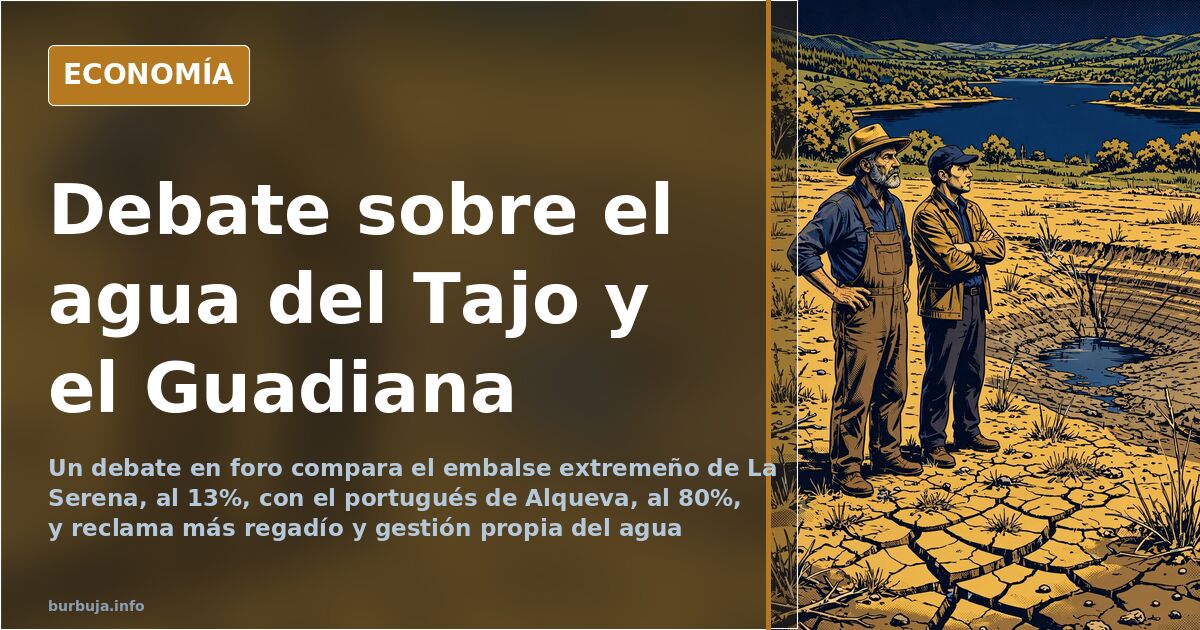
The Water Struggle: Catalonia, Extremadura, and the Tagus
The paradox is simple to state but hard to solve: if Catalonia demands control over all taxes it collects, why can't Extremadura store all the water from the Tagus and Guadiana rivers? This argument, circulating in a forum debate, weighs two strategic resources—money and water—and highlights an asymmetry some participants deem unsustainable. The data cited are striking: the La Serena reservoir in the Extremadura basin sits at around 13% capacity, while Portugal’s Alqueva downstream reaches 80%. This comparison fuels a sense of grievance.
Water Grievance: La Serena at 13% and Alqueva at 80%
The contrast between these reservoirs triggers indignation. La Serena, holding only 13% of its water, symbolizes what critics call negligent management. Across the border, Alqueva at 80% appears abundant. Debaters point to international agreements with Portugal requiring surplus release. However, critics argue these deals were made without Extremaduran input, prioritizing hydropower for Catalan and Basque firms over local agricultural needs. They claim fields dry up while water is exported.
Fiscal Parallelism: Why One Yes and the Other No?
Catalonia’s demand to manage 100% of its taxes—the so-called Catalan exception or quota—is the mirror for those seeking Extremaduran water sovereignty. If Catalonia gets special fiscal treatment, they argue, Extremadura should control water born in its mountains. Tensions rise when recalling that Andalucía tried to keep all Guadalquivir water and was sued by Extremadura before the Constitutional Court. That ruling favored Extremadura, setting a precedent: water is shared, not unilateral. Yet questions remain: why apply solidarity to water but not taxes?
Political Battle: Voting for Those Who Take Your Water
Politics underpin this issue. Some participants note Extremadura mostly votes for PSOE, the leading party there, yet view it as hostile due to concessions to Catalonia and the Basque Country. If you vote for those who take your water, you must face the consequences, goes this line of thought. Others blame the central government and perceived Catalan influence, decrying a colonial regime. The discussion shifts to competence distribution and regional financing, citing Basque economic concert and Catalan fiscal pacts as comparative grievances.
Ebro, Duero, and Other Rivers: Water Wars Expand
Controversy extends beyond the Tagus and Guadiana. The Ebro, rising in Cantabria and crossing Aragón to Catalonia, becomes another battleground. Some propose Aragón retain all flow and sell surplus at premium prices, while others note the Duero receives León inputs and Castilla could cut supply. Geographic details complicate matters—the Esla carries more water than the Duero at their confluence—and historical claims arise. The Tagus is a Castilian river, someone asserts, ignoring its mouth in Lisbon. Each basin has its own struggle; no one wants to yield a liter.
Economic Backdrop: Energy, Irrigation, and Sovereignty
Beyond political noise lies a major economic conflict. Reservoirs don’t just store irrigation water; they generate hydropower, a multi-million business. Critics say power companies—many headquartered in Catalonia and the Basque Country—prioritize energy production over agriculture, leaving Extremaduran farmers stranded. Extremadura’s goal of reaching 2 million irrigated hectares clashes with this reality. The region has water but cannot use it. Meanwhile, crops wither and EU aid evaporates.
What Happens to Tagus and Guadiana Water?
The future is uncertain. Agreements with Portugal remain valid and unlikely to be renegotiated soon. Intensifying drought worsens the situation, making water increasingly coveted. Proposed solutions range from taxes on exported kilowatts to new storage infrastructure. None satisfy all parties. While some demand water independence, others remind us water ignores borders and requires solidarity. The question persists: does Extremadura have the right to store all water originating in its territory?
Also available in: Deutsch
Summary of a discussion on Burbuja.info - Foro de economía, actualidad y política., translated from Spanish and reviewed before publication. Read the full discussion (142 replies).
More summaries
-
Spain's Gender Violence Law Repeal Linked to State Breakup
Repealing Spain's gender violence law (LIVG) faces a constitutional hurdle: the 2008 ruling by seven votes to five blocks simple repeal.
-
Conde Pumpido's Son Arrested for Alleged Sexual Assault
Son of the Constitutional Court President released without bail after a group sexual assault accusation amid amnesty proceedings.
-
PSOE uses abortion reform to force early elections in Spain
Constitutional Article 168 requires dissolution and a referendum. Analysis suggests PSOE aims to portray PP as blocking fundamental rights.
-
Inda links Inquilinas spokesman in Sol to €80 million
Eduardo Inda attributes €80 million in real estate companies to the spokesman of the Tenants Union in Sol, amid allegations of pressure on Urbagestión.
-
Married man in his forties: dodging nagging as a way of life
A forty-something describes his married routine: dodging complaints, bringing home his salary and pretending not to calculate what leaving would cost. The portrait dividing readers.
-
US tech visa debate: Microsoft accused of replacing 4,000 American engineers
A forum discusses claims that Microsoft replaced 4,000 US engineers with 4,300 foreign workers, and the staffing intermediaries charging to place and retain them.