
Spain's Underrated Classics: Roscón, Betanzos Tortilla, and More
From Roscón de Reyes to Betanzos tortilla, these traditional Spanish dishes are often undervalued compared to modern gastronomic trends.
English · Original discussion in Spanish · Published
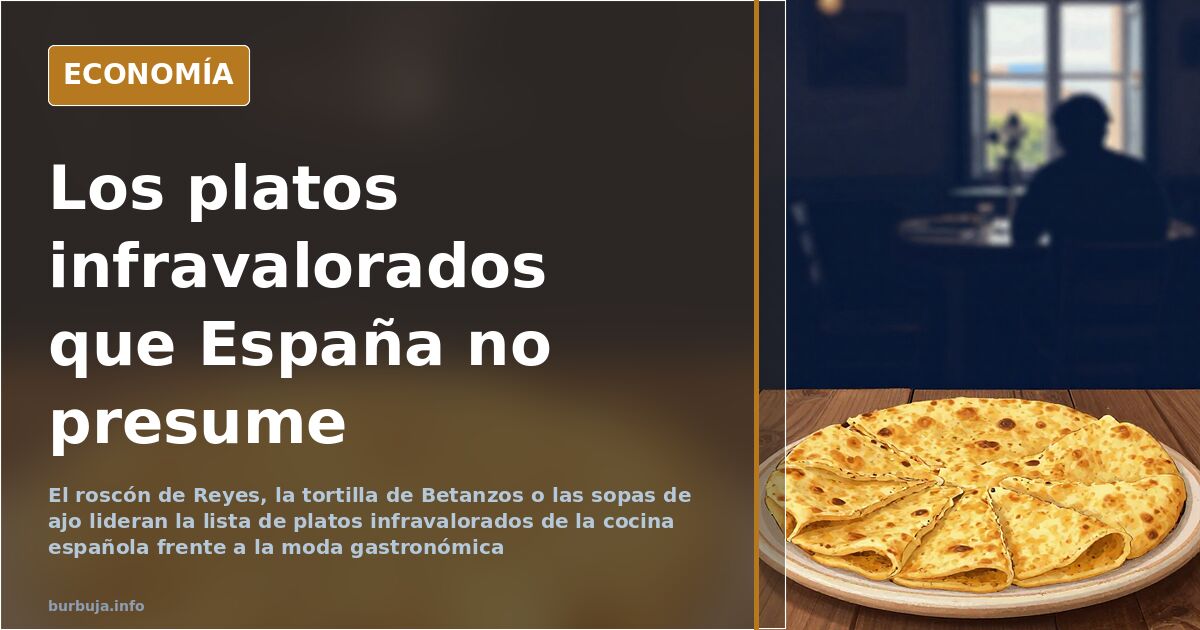
From Roscón de Reyes to garlic soup: Spain's uncelebrated dishes
Once a year. That is how often a good Roscón de Reyes (Twelfth Night cake) is eaten, and that scarcity is precisely what makes it an absolute delight. The problem, critics argue, is that the industrial version flooding supermarkets has devalued the prestige of a sweet that, when made well, has no rival. This complaint serves as a starting point for a broader question: what dishes in Spanish cuisine are undervalued?
The answer emerging has nothing to do with haute cuisine or gastronomic trends. We find Asturian pot (pote asturiano), garlic soup with poached egg, fried eggs with potatoes, Betanzos-style tortilla, migas, Manchego pisto, gachas, tripe with chickpeas, rice pudding, or well-fried torreznas (fried pork rinds). None aspire to a Michelin star. They all share the same traits: they are cheap, hearty, and cooked at home.
Betanzos tortilla and egg as the common denominator
If there is one dish that generates consensus, it is the tortilla. The reference to the Betanzos style — slightly runny, juicy inside — ranks above any other version. And the egg appears again and again as a cross-cutting ingredient: fried with potatoes, poached over garlic soup, broken over ham, or 'simple' inside a chicken thigh stew. It is the ingredient that supports half of Spanish cuisine without needing marketing.
Garlic soup with poached egg and fried eggs with potatoes compete for the top spot of the most repeated dishes. There is no debate about their quality, only about their presentation. The discussion becomes more interesting when flour comes into play: gachas and migas must be made with vetch flour (harina de almortas), not just any other. A detail with history, because this flour was banned for years and distributed semi-clandestinely in towns like Cifuentes.
Asturian pot and the hierarchy of fabas
Fabada (white bean stew) has competition. Against the more expensive and pretentious version, some champion fabas with potatoes or pote de berzas (turnip greens pot) as superior and much cheaper alternatives. If the pot includes wild boar, the comparison is decided without discussion. The Asturian pot enters the list on its own merits, just as Galician broth or Castilian soup do.
The criterion imposed is not price or sophistication, but the honesty of the product. Inés Rosales' olive oil cakes, cabello de ángel (candied pumpkin peel) cuts, or rice pudding appear as sweets that need no reformulation. Blood sausage in soup, gallinejas (chicken giblets), or venison loin complete a catalog that moves between the rural and the popular.
From Mercadona to pineapple pizza: what is missing and what is surplus
Not everything is consensus. Microwave-ready bands of patatas bravas from Mercadona and Campurrianas cookies receive frontal criticism for their lack of flavor. The pineapple pizza generates division: some defend it against chefs' criteria, while others consider it an abomination. And in stews, chards and peas face resistance depending on the dish: some maintain that in certain recipes they are superfluous and that green asparagus works better.
The final list is not signed by any critic. It is signed by family memory. Each mentioned dish has a grandmother, a mother, or a village kitchen behind it. That is the true criterion for evaluation, and explains why the industrial roscón will never measure up to the homemade one.
How many of these dishes will survive on a restaurant menu without someone considering them too humble to charge for them?
Also available in: Deutsch
Summary of a discussion on Burbuja.info - Foro de economía, actualidad y política., translated from Spanish and reviewed before publication. Read the full discussion (218 replies).
More summaries
-
Eight years, a daughter and a mortgage lost over a Three Kings cake
An argument over a Three Kings cake ends an 8-year relationship, a daughter and a mortgage. The story shared online sparks a debate about breakups.
-
Mercadona takes on Spanish bars over cheap lunch menus
Bar daily menus rise to €20 while Mercadona sells burger, drink and coffee for €5. The food war reshaping the workday lunch break.
-
Mercadona shifts hiring to older workers as young applicants vanish
Mercadona replaces young staff with 40-60 year olds at checkouts and aisles. Gross salaries of €26,000 and a corporate culture no one can stand.
-
Five new parties join Spain's Frente Amplio, from Batzarre to the Humanist Party
Batzarre, Iniciativa del Pueblo Andaluz, Somos Asturies, Recortes Cero and the Humanist Party have joined Spain's Frente Amplio. One forum user estimates that between them they…
-
Abelardo wins in Colombia and buries Petro's economic model
Abelardo wins the Colombian election and buries Petro's economic model. Markets rally, but debt and social spending remain the real challenge.
-
Spain's Congress calls on Sánchez to face a confidence vote: real pressure or theatre?
Spain's Congress has urged Pedro Sánchez to submit to a confidence vote, with 178 votes in favour, but the resolution is non-binding. The Prime Minister can simply ignore it.