
Spain's typical breakfast: pastries, juices, low protein
Typical Spanish breakfast relies on sugary cereals and packaged juice, prompting calls for more protein and fewer ultra-processed foods.
English · Original discussion in Spanish · Published
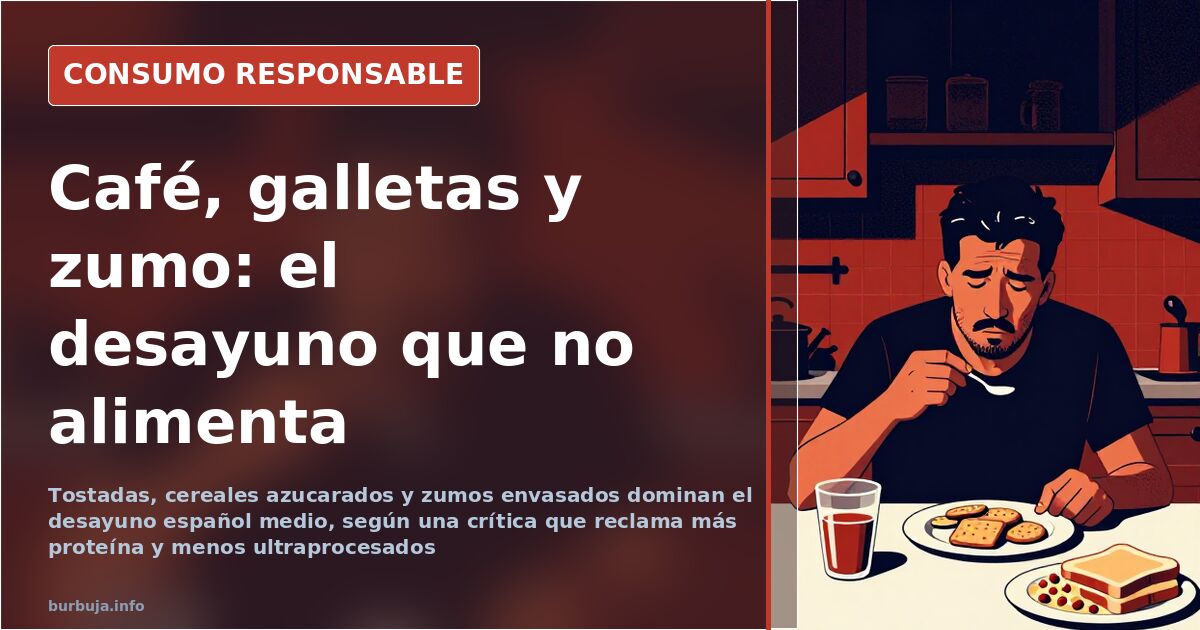
Spain’s typical breakfast: pastries, sugar, and scarce protein
Two slices of toast with jam, a bowl of cereal with milk, and a glass of "fruit" juice. This is the standard Spanish breakfast repeated in millions of kitchens every morning, sparking a debate with little nuance. The starting premise is specific: refined carbs, free sugars, palm oil, and almost negligible protein. The alleged effect? Hunger returns two hours later. Advocates argue that packaged juice is not far from a soft drink.
The comparison launched right away is uncomfortable: a classic English breakfast — eggs, bacon, beans — would provide more protein and nutrients than daily pastries. Whether that is healthy is debatable. What no one disputes is the other diagnosis: lots of showcase Mediterranean diet and few real habits of eating well.
What people actually eat for breakfast in Spain
Cookies, muffins, toast with butter or jam, cereal with milk, and a glass of soluble cocoa. That is the dominant list, which looks nothing like a Mediterranean pattern. Industrial pastries and plenty of sugar. Nothing that sustains you through a whole morning without refueling.
The case of juices deserves its own section. They are granted fruit status but do not deserve it. The main accusation is that average packaged juice is colored water with sugars and flavorings, nutritionally equivalent to a soda. The only exception admitted is freshly squeezed natural juice; even supermarket "100% natural" fails the test. Whole fruit, they say, wins by a landslide.
Is the English breakfast healthier?
Fried eggs, bacon, and baked beans. The provocation receives an immediate response: canned beans come loaded with preservatives, and bacon is hardly a light food. The example turns against those who use it. The Mediterranean diet is terrible, they joke, while the actual morning menu consists of cookies.
What is conceded is the protein issue. A breakfast with eggs, ham, cheese, or yogurt covers the start of the day better than a bowl of sugary cereal. The paradox is that the defended model exists, but as an exception: practiced by a small part of the population with culinary culture, not the majority.
Must you eat breakfast? The 16-hour fast
Here the focus shifts. Part of the discussion denies the premise that breakfast is the most important meal of the day. The proposal is the opposite: two meals a day and 16 hours of fasting, skipping breakfast to concentrate intake at the end of the day. Eating breakfast, they argue, is an inherited habit, not a biological need.
Against this idea stands an experiential argument. Those who boast about skipping breakfast, critics say, end up stopping mid-morning for a snack and coffee. The day demands something mid-morning, and the body does not negotiate. The debate over the number of meals remains, for now, without a referee.
Breakfast doesn't fit into the workday
At five in the morning, with the shift starting, no one prepares toast with olive oil, fresh juice, and what healthy people supposedly eat. Coffee with cookies and go. Mid-morning lunch fills the gap, and then people eat heavily at noon.
There lies the key that dismantles much of the criticism: time. Buying, cooking, and sitting down require minutes the workday doesn't allow, and money budgets don't always have. Eating well requires shopping, preparation, and growing costs. Exactly the opposite of what the market offers.
Daily details illustrate this. Outside Andalusia, finding tomato-and-oil toast is difficult, and where available, the tomato comes in single-serving packets, like buffet jams, and so does the oil. According to the thread, a regulation forced portioning, leaving the toast half-covered. It is also noted that the failure isn't just breakfast: the rest of the meals trinc the same path, between eating out, Tupperware, and rush, with the housewife figure now extinct.
Children no longer burn what they eat
The portrait extends to the youngest. In the nineties, breakfast was equally poor, but kids spent the day outside burning it off. Now the menu remains the same, but movement has collapsed due to screens and confinement. The highlighted result is a generation weighing more than they should.
The historical review goes further back. According to one participant, during Francoist Spain, people ate chicory, and food education was built on scarcity, not choice. Strikingly, despite having more money and information than then, the morning menu has barely changed.
Bad days exist on all sides. Half a family pizza as the only meal, without guilt or ceremony: a calorie bomb consumed as an exception. The discussion isn't closed. And the data keeping it open isn't nutritional: while debating if breakfast is broken, the juice many take to start healthy continues to be sold as fruit.
Also available in: Deutsch
Summary of a discussion on Burbuja.info - Foro de economía, actualidad y política., translated from Spanish and reviewed before publication. Read the full discussion (107 replies).
More summaries
-
Animal-based protein bars with no soy and no palm oil
Animal protein bars without soy or palm oil: real alternatives like parmesan, ham or pork rinds. A look at natural options versus processed products.
-
Intermittent Fasting Linked to 91% Higher Heart Risk, Unreported by Media
A study claims intermittent fasting raises cardiovascular risk by 91%, but it is observational and relies on self-reported data, yet no major outlet links to the original research.
-
Doctor warns intermittent fasting is unhealthy, recommends five daily meals
A doctor claims intermittent fasting is unhealthy and advises five daily meals, while others report losing 32kg after 23-hour fasts.
-
How many litres of milk can you get from 1 kg of condensed milk?
A forum calculation says a 1 kg can yields 6.6 to 10 litres, but others warn it's not milk but added sugar.
-
Belgian Malinois: Trendy Apartment Dog, Working Breed
The Belgian Malinois is a working breed requiring two hours of daily activity. In inexperienced apartment settings, this often leads to behavioral issues.
-
Commuter bikes: €150 buys junk, not reliability
A €100-150 budget only buys scrap metal. Upgrading costs more, insurance is pricey, and ugly bikes last longer.