
Spain's 'system actors': cherry-picking comments while living off benefits
A €44,000 house in Galicia, a YouTube channel that earns nothing and welfare benefits as a salary: the rural plan that doesn't add up and hides awkward comments.
English · Original discussion in Spanish · Published
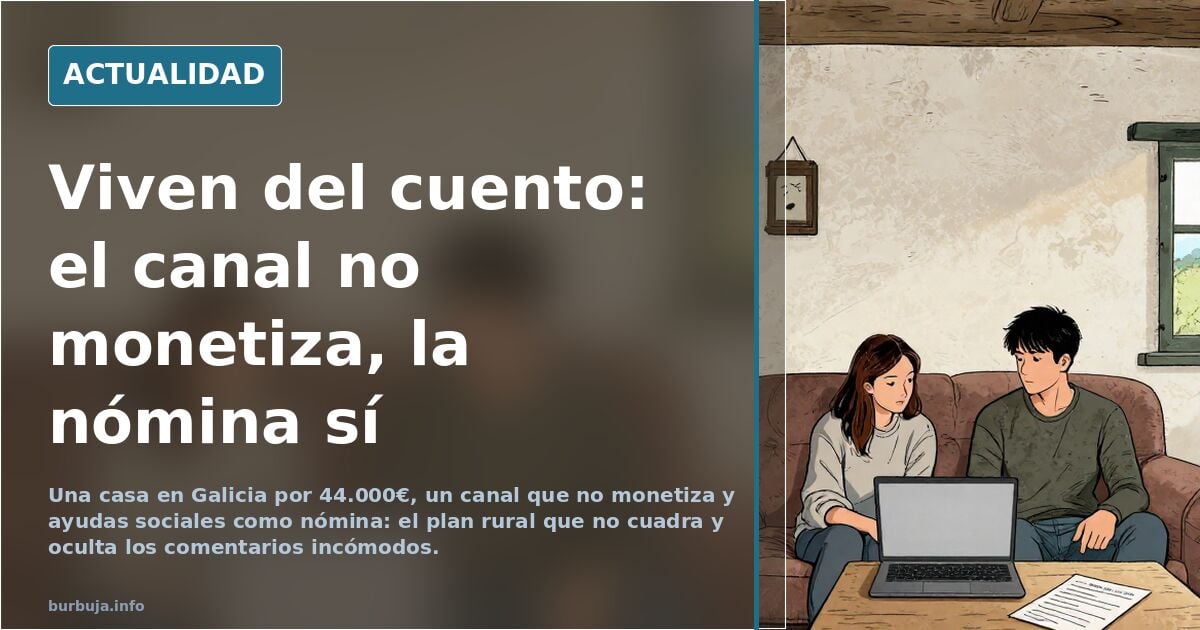
The channel doesn't pay the rent: the state signs the pay cheque
A couple sells their city flat, buys a house in Galicia for 44,000 euros, rents it out and moves to the countryside with a YouTube channel as their shop window. The problem isn't the move: it's the arithmetic. With 3,000 or 4,000 views per video, monetisation doesn't even cover coffee, so the question running through the whole affair is uncomfortable and simple: what do these people live on?
The answer that keeps coming up in the analyses isn't advertising or sponsorships. It's Spain's minimum living income (Ingreso Mínimo Vital), rent assistance and rural tax breaks. In other words, a fixed salary paid every month without selling anything, while the channel serves as a front for the "we work hard" story. The detail that finally breaks the narrative is another one: the awkward comments get hidden.
What does a couple moving to the countryside with no job live on?
The calculation going around is stubborn. The €44,000 Galician house isn't an investment, it's a cheap lottery ticket: it's rented out so someone else pays the mortgage and it lets them say "I own property". The channel, with that level of views, doesn't even cover expenses. What holds the structure up is the third leg: social benefits, which don't depend on the algorithm or a sponsor.
Some argue the channel is just the shop window and the real business is elsewhere. Against that stands a reasonable argument: if they really lived off the views, they wouldn't hide the comments asking about the numbers. Selecting favourable comments isn't ideological censorship, it's damage control.
Savings as an economic plan: the countdown
The third pillar is the most fragile. Savings burn out and don't come back. When they hit zero, two options remain: another move — they already count 14 changes of address — or outright default. This isn't speculation: it's the script the protagonist himself hints at when asked about the medium term.
The message being sent to society is what unsettles people most. Selling a city flat to settle in a village with no stable income isn't a plan, it's a gamble. And gambles go well until they stop going well. Anyone with a house and a job thinking of copying the model should do the maths first.
Assets as an alibi: quad bike, trails and silence
The scene described includes machinery, a quad bike for trails, free time and nature. Nobody disputes that they can afford it. What's disputed is how. When someone tries to find out how the finances are organised, information runs dry and the comments asking questions disappear. That's the crux of the matter.
One line of thought compares them to the lone wolf: a profile that at least doesn't live off the system. Another points out that leaving the village wasn't free, and there's a certain irony in watching city dwellers return with public aid while those who stayed keep paying property tax (IBI) and local fees.
With all this, the question isn't whether you can live in the countryside. It's who pays for the party when the channel stops uploading videos and the benefits keep coming in. Or is it?
Also available in: Deutsch
Summary of a discussion on Burbuja.info - Foro de economía, actualidad y política., translated from Spanish and reviewed before publication. Read the full discussion (28 replies).
More summaries
-
Spain's IMV: €20,353 Asset Cap and Residency Rules
Spain's Minimum Vital Income sets a €20,353.62 asset limit for adults and requires municipal registration. The debate over eligibility and system costs remains open.
-
Lobo Estepario: Subsidies and luxury chalets behind the anti-establishment rhetoric
Lobo Estepario preaches living in a van, but reports indicate he occupies chalets and receives the Minimum Vital Income. The contrast between his rhetoric and his reality is stark.
-
Content creators move retired parents to Spain using public healthcare
A group of YouTubers has moved their retired parents to Spain, granting them access to the public health system and reigniting the family reunification debate.
-
Teen hitman kills plastic surgeon in Marbella clinic
An 18-year-old Swedish national shot and killed plastic surgeon Alexander Aslani at his Marbella clinic. Police arrested the suspect within hours.
-
Flowering Atacama and the coming El Niño: what the climate story leaves out
The 2025 flowering of the Atacama desert signals an intense El Niño that will fuel record temperatures, but the debate over CO2 saturation and the…
-
Spanish soldiers' union reports spy microphones in barracks vending machines
Spain's UMT military union reports microphones and cameras in vending machines at barracks. The Defence Ministry has not explained who installed them or why.