
Spain's SEPE: Unemployment Claims Now Online-Only, Site Down
SEPE requires online pre-applications for unemployment benefits, but system failures and lack of phone support leave claimants waiting months.
English · Original discussion in Spanish · Published
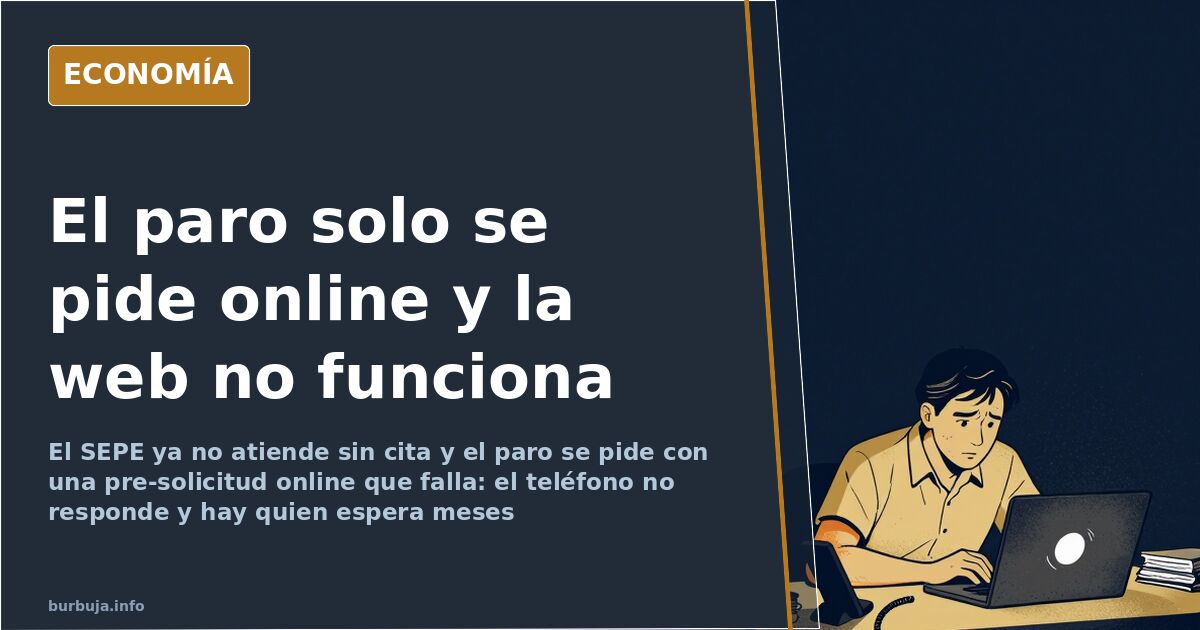
SEPE: No appointments, no phone support, broken website
Can you claim unemployment in Spain without an appointment, digital certificate, or a working SEPE website? On paper, yes: the process starts with an online pre-application. In practice, newly unemployed workers face closed doors, unanswered phones, and crashing pages. A laid-off worker in Mallorca describes the reality: no staff available at the office, security guards (Trablisa) refusing to let anyone speak to employees, leaving only a digital obstacle course. Complaints flood social media: some who submitted pre-applications are still unpaid months later.
Requirements for claiming unemployment online
The first barrier isn’t the form—it’s identification. Interacting with Spanish administration requires credentials: digital certificate, Cl@ve PIN (processed through the Tax Agency), or electronic DNI, which demands visiting a National Police station, activating certificates on self-service machines, and buying a card reader. The FNMT certificate, most common, also requires an in-person step. Those outside this system struggle: without credentials, the digital route closes, and there’s no Plan B.
Some note this isn’t new. Back in 1997, under Public Administrations Minister Rajoy, a law was passed to digitize administration. Twenty-seven years later, pogre is deemed minimal. The paradox is clear: citizens are expected to be fully digitally literate while the administration hasn’t completed its own transition.
Staffing at historic lows
Lack of resources compounds staffing shortages. Reports claim SEPE dismissed all temporary staff—some with 20 years’ tenure—and that the government approved a royal decree creating a hiring pool that, as of these accounts, hadn’t yet filled offices. If true, this explains why no one answers phones or honors appointments. The result is zero service, with counters replaced by websites, and websites becoming walls.
What happens after submitting a pre-application? There’s no fixed timeline. Those who’ve processed claims elsewhere report responses within days in Cádiz and A Coruña, while Madrid sees prolonged delays. The system requires a registered mobile number. Others share survival tips: book appointments exactly at 9:00 AM when slots release, or at midnight when the page refreshes, targeting distant offices with availability.
Appointments, phones, and other locked doors
The cascade of blockages has perverse logic. No appointment means no service; no website means no appointment; no phone means no alternative. Some physically go to offices requesting in-person appointments, citing lack of digital skills or access. Advice circulating is to persist and, if refused, file written complaints. According to one published case, police told a soon-to-retire lawyer that no crime exists—only a complaint form applies.
Exceptions highlight the design’s absurdity. Social Security serves pensioners, retirees, and minimum vital income recipients without appointments; the Treasury serves anyone, though work history requires SMS verification. It’s SEPE that has shut the door. Those able hire agencies: pay fees, and credentialed professionals submit claims on your behalf, like car title transfers.
The cost of waiting months
Time isn’t the only cost. One case involves €3,000 overpaid by Social Security, months of improper payments, filed complaints, and six-plus months without refunds. The affected person’s agency bluntly explained: stacks of identical cases. When systems fail, individuals front money and wait.
Final accounts point same direction: denials forcing resubmissions—one needed three attempts and two rejections before processing—and offices refusing all appointments. Adapt to new times, goes the repeated advice. Adapting when the sole channel is down sounds more joke than solution.
Is there an exit? Fast track: pay third parties. Slow track: wake early, pray the site loads at 9:00 AM. While administration debates if digital future arrives this year or 2050, unemployment claims hang on intermittently functional websites. Counters no longer serve. Blame, naturally, falls on those who don’t adapt.
Can you claim unemployment in Spain without an appointment, digital certificate, or a working SEPE website? On paper, yes: the process starts with an online pre-application. In practice, newly unemployed workers face closed doors, unanswered phones, and crashing pages. A laid-off worker in Mallorca describes the reality: no staff available at the office, security guards (Trablisa) refusing to let anyone speak to employees, leaving only a digital obstacle course. Complaints flood social media: some who submitted pre-applications are still unpaid months later.
Requirements for claiming unemployment online
The first barrier isn’t the form—it’s identification. Interacting with Spanish administration requires credentials: digital certificate, Cl@ve PIN (processed through the Tax Agency), or electronic DNI, which demands visiting a National Police station, activating certificates on self-service machines, and buying a card reader. The FNMT certificate, most common, also requires an in-person step. Those outside this system struggle: without credentials, the digital route closes, and there’s no Plan B.
Some note this isn’t new. Back in 1997, under Public Administrations Minister Rajoy, a law was passed to digitize administration. Twenty-seven years later, pogre is deemed minimal. The paradox is clear: citizens are expected to be fully digitally literate while the administration hasn’t completed its own transition.
Staffing at historic lows
Lack of resources compounds staffing shortages. Reports claim SEPE dismissed all temporary staff—some with 20 years’ tenure—and that the government approved a royal decree creating a hiring pool that, as of these accounts, hadn’t yet filled offices. If true, this explains why no one answers phones or honors appointments. The result is zero service, with counters replaced by websites, and websites becoming walls.
What happens after submitting a pre-application? There’s no fixed timeline. Those who’ve processed claims elsewhere report responses within days in Cádiz and A Coruña, while Madrid sees prolonged delays. The system requires a registered mobile number. Others share survival tips: book appointments exactly at 9:00 AM when slots release, or at midnight when the page refreshes, targeting distant offices with availability.
Appointments, phones, and other locked doors
The cascade of blockages has perverse logic. No appointment means no service; no website means no appointment; no phone means no alternative. Some physically go to offices requesting in-person appointments, citing lack of digital skills or access. Advice circulating is to persist and, if refused, file written complaints. According to one published case, police told a soon-to-retire lawyer that no crime exists—only a complaint form applies.
Exceptions highlight the design’s absurdity. Social Security serves pensioners, retirees, and minimum vital income recipients without appointments; the Treasury serves anyone, though work history requires SMS verification. It’s SEPE that has shut the door. Those able hire agencies: pay fees, and credentialed professionals submit claims on your behalf, like car title transfers.
The cost of waiting months
Time isn’t the only cost. One case involves €3,000 overpaid by Social Security, months of improper payments, filed complaints, and six-plus months without refunds. The affected person’s agency bluntly explained: stacks of identical cases. When systems fail, individuals front money and wait.
Final accounts point same direction: denials forcing resubmissions—one needed three attempts and two rejections before processing—and offices refusing all appointments. Adapt to new times, goes the repeated advice. Adapting when the sole channel is down sounds more joke than solution.
Is there an exit? Fast track: pay third parties. Slow track: wake early, pray the site loads at 9:00 AM. While administration debates if digital future arrives this year or 2050, unemployment claims hang on intermittently functional websites. Counters no longer serve. Blame, naturally, falls on those who don’t adapt.
Summary of a discussion on Burbuja.info - Foro de economía, actualidad y política., translated from Spanish and reviewed before publication. Read the full discussion (179 replies).
More summaries
-
Social Security Blames Robot for Plus Ultra Certificate
Social Security attributes issuing a certificate declaring Plus Ultra up-to-date on payments to an automated system. The underlying issue: the legality of the deferment.
-
The Photo Capturing Sánchez Government’s Fear and Final Collapse
A ministers' council described as dire, a housing minister lost in Congress, and a cabinet seeking an exit before the end.
-
Zapatero's Wife Paid Off €500k Mortgage in Under a Year
Burbuja.info analyzes the controversial €500,000 transfer used to cancel Sonsoles Espinosa's mortgage. Corruption or savvy management?
-
Iran Explosion: Tactical Nuke or Media Hoax?
Debate on whether an impact in Iran was a tactical nuclear bomb or a hoax. Technical analysis of EMP and destruction scale.
-
Debate: Opting out of Spain's social security system
A thread proposes leaving Spain's public system to self-fund healthcare and pensions, sparking debate on contributions, taxes, and international comparisons.
-
Spain's Social Security: Key Law Passed in 1963, Not Franco Era
Spain's Social Security stems from a 1963 law, not a Franco decree. Universal healthcare arrived in 1986. The debate on origins is clarified.