
Spain's political use of the dead: duelling charges of electoral necrophilia
Mutual accusations of exploiting accidents and the dead on the campaign trail: each side points the finger at the other while doing exactly what it condemns.
English · Original discussion in Spanish · Published
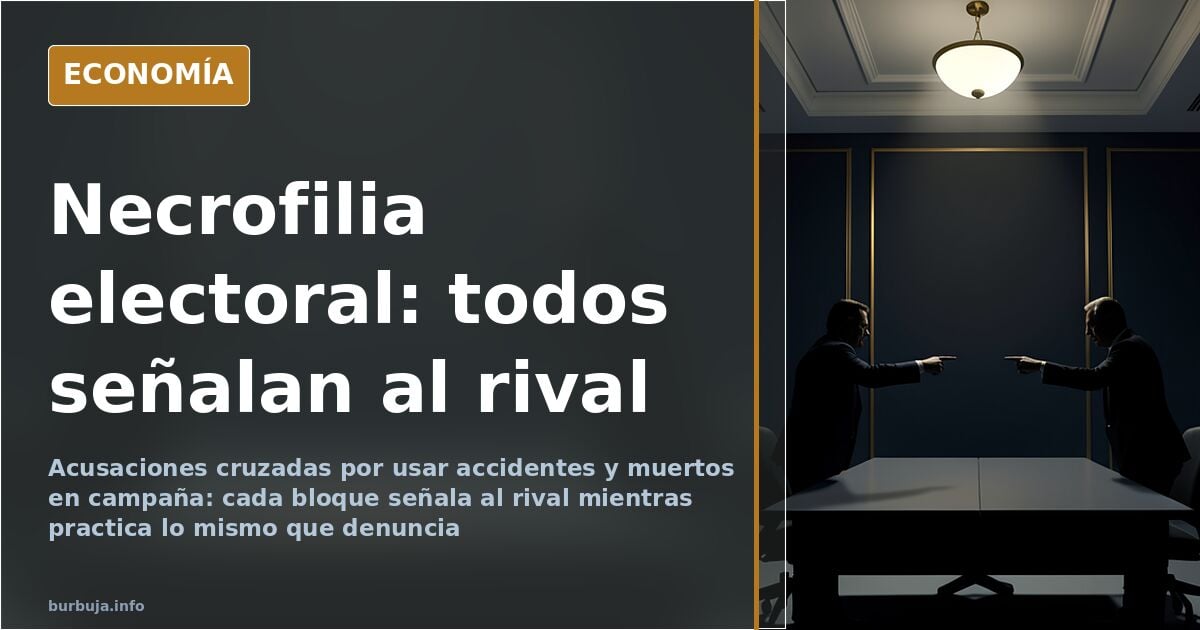
Spain's political use of the dead: duelling charges of electoral necrophilia
A rail accident with dozens dead. A storm with victims. And, in the background, a pre-campaign season falling apart. Spanish political debate has entered territory where each side accuses the other of profiting from other people's grief, while doing exactly what it condemns. The argument over who started using the dead as an electoral weapon is well and truly on.
The central charge is that the political exploitation of victims has become a national habit. The claim is that the practice goes back a long way and has now been so normalised that nobody blushes while doing it. The immediate response: if one side does it, the other is justified in doing the same. That "you do it too" sums it all up.
Who started using the dead on the campaign trail?
The exchange of accusations is symmetrical. One side claims the left peine the door years ago, citing episodes remembered as precedent. The other replies that the right does the same with every disaster, and that the supposed novelty is just an excuse. Neither side gives up the tactic; both simply point the finger at the other while doing the very same thing.
The argument quickly drifts into the terrain of comparative grievances. The storm is cited as an example of failed management that some want to hide, and the rail accident as an example of decaying infrastructure. Every disaster becomes ammunition. Electoral necrophilia, as it is mockingly dubbed, ceases to be an anomaly and becomes the method.
The pre-campaign that broke, and the dividends of grief
Some argue the accident served to freeze a pre-campaign that was going badly for some and worse for others. The thesis is that grief cushions political wear and tear, and that whoever is in government benefits from the pause. Against that stands the argument that infrastructure management is the government's responsibility and that the pause does not erase the failures.
The most pessimistic calculation for the governing side assumes that public opinion will eventually associate disaster with neglect. The most optimistic assumes mourning disables criticism for weeks. In between lies an awkward fact: neither side wants to debate the core issues, and both prefer the terrain of the victims, because there the other side always looks worse.
"You do it too" as the only answer
The conversation ends where it began: in mutual accusation. One side calls the other vultures; the other returns the insult. The symmetry of the reproach is perfect and, precisely for that reason, sterile. Nobody admits their own side does what it criticises in the other, and all demand a renunciation from their rivals that they are not willing to sign themselves.
The result is a debate that produces no proposals, only reproaches. Electoral necrophilia is not fought: it is traded. And meanwhile, the awkward fact remains that the only rule everyone accepts is that the other side started it.
Also available in: Deutsch
Summary of a discussion on Burbuja.info - Foro de economía, actualidad y política., translated from Spanish and reviewed before publication. Read the full discussion (17 replies).
More summaries
-
Spain's rail crash reignites political crisis, pressure mounts on Sánchez and PSOE
Two serious high-speed rail accidents in nine months and dozens of deaths have triggered a political crisis in Spain: the opposition demands the resignation of Sánchez and Puente.
-
Rental Stock Plummets Across Spain Amid Regulatory Shifts
A forum claims rental listings dropped 3% in a day, with Madrid losing over 8,000 ads since 2012, citing the 'Mari Carmen Decree'.
-
Flávio Bolsonaro declares himself Brazil's president-elect from Miami
Flávio Bolsonaro proclaimed himself Brazil's rightful president-elect from Miami, then deleted the letter. Lula won by nearly 5 million votes, according to official data.
-
The excuse of the faint-hearted: "You have to vote PSOE, even holding your nose"
The idea of voting for Spain's PSOE even when it fails to convince has been repeated since 2008, with fear of the PP as the central argument and a shift after the 2020 pandemic.
-
Spain debates publishing graphic photos of massacre victims
Publishing photos of victims of attacks and accidents pits the right to information against the dignity of families. Where is the line?
-
Urda crash: sabotage suspicions and the Israeli factor at Spain's Renfe
The Urda train crash is being examined through the lens of possible human error forced by sabotage or interference. Renfe's Israeli contracts are under scrutiny.