
Spain's Pension Battle: Who Pays the Price?
Retirees who contributed for decades clash with workers calling the system unsustainable in Spain’s pension debate.
English · Original discussion in Spanish · Published
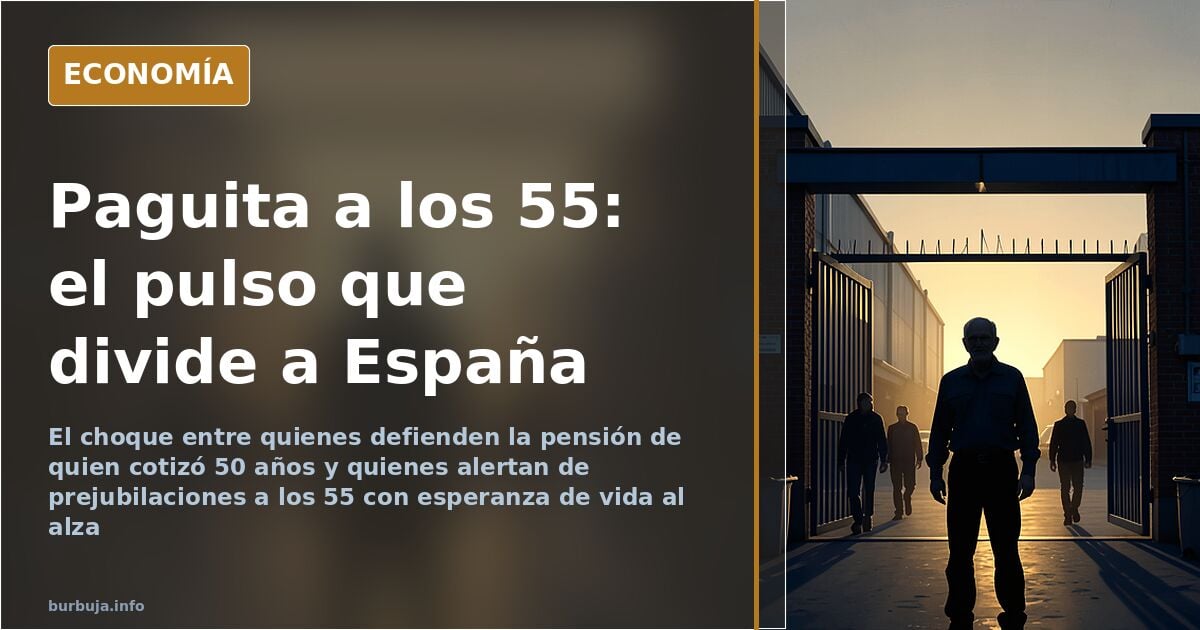
The generational clash turning pensions into a battlefield
Pensions are no longer an unquestionable right but the epicenter of a fight between generations accusing each other of living off the other. One side argues current retirees contributed for 45 to 50 years—many starting at age 14 or 15—and funded the education and healthcare of those now criticizing their spending. The opposing camp counters that the system is unsustainable and national finances cannot keep pace.
The trigger combines demographics and distrust. Some claim life expectancy nears 80 years, though others dispute trends, while early retirees from age 55 accumulate decades of contributions as active workers see salaries stagnate. The core question isn't whether pensions should exist, but where the money comes from and who bears the cost.
Years required to qualify for a pension
The most repeated defense cites work history. Fifty years of contributions via payroll deductions and taxes aren't gifts; they fund services enjoyed by children and grandchildren, according to this view. Today’s high earners, it is argued, are children of builders, farmers, mechanics, or homemakers who worked hard so they could study.
This narrative has traction. Intergenerational solidarity was the unwritten pact for decades: parents tightened belts so children lived better. Critics say this pact broke when well-paid children view parental pensions as privileges rather than returns.
Why sustainability is questioned
Opponents don’t dispute history but arithmetic. Early retirement at 55 with expectations of living to 100 implies decades of payouts without contributions, critics argue. They claim many ignore funding sources, fiscal health, and future generations. Politics enters here: elders are accused of supporting parties seen as damaging the country.
This criticism mixes politics with data. Captive voter blocs among pensioners are real, but equating legitimate claims with conspiracy is flawed. Collecting earned benefits doesn’t miccionan ignoring fiscal balance.
Who funds protesters’ healthcare and education?
Often overlooked is public healthcare decline. If systems degrade, elderly lifespans shorten, "self-regulating" sustainability issues, some ironically note. This cynical view reflects tension between quality of life and costs.
Full calculations comparing lifetime contributions against two generations’ public spending reveal surprising gaps, per circulating analyses. No itemized breakdown exists here, highlighting discussion voids.
The scenario nobody names
Given these factors, predictions suggest pressure on workers will grow if unreformed, worsening conflicts. Yet predicting bankruptcy is as risky as denying problems. Pensions are no longer untouchable topics but sparks waiting to ignite debates.
Also available in: Deutsch
Summary of a discussion on Burbuja.info - Foro de economía, actualidad y política., translated from Spanish and reviewed before publication. Read the full discussion (26 replies).
More summaries
-
Public vs private healthcare in Spain: the business of your health under scrutiny
The debate over public and private healthcare in Spain: 10-month waiting lists, a 100,000-euro appendicitis and the accusation that health has become a business.
-
Testimonies allege rushed sedation in Spanish public hospitals
Two accounts describe families being offered palliative sedation for elderly patients who were improving or asking to go home.
-
US Healthcare Crisis: Actor Sells Memorabilia to Fund Cancer Treatment
The story of a Dawson's Creek actor selling personal items for cancer care highlights the financial risks of the US healthcare system.
-
Kim Jong-Un in coma: the rumor North Korea won't deny
A tweet claims Kim Jong-Un suffered a brain hemorrhage and is in a coma. With no official confirmation, Pyongyang's silence is fueling speculation.
-
Young man stabbed and run over in Madrid after recent attacks
A 25-year-old was critically injured after being hit by a car and stabbed five times on Marcelo Usera Street, Madrid.
-
Millionaire Ernie Dosio Crushed by Elephants in Trophy Hunt
Ernie Dosio died during a hunt, though the viral video was fake. The incident reignites debate over trophy hunting licenses and conservation funding.