
Millionaire Ernie Dosio Crushed by Elephants in Trophy Hunt
Ernie Dosio died during a hunt, though the viral video was fake. The incident reignites debate over trophy hunting licenses and conservation funding.
English · Original discussion in Spanish · Published
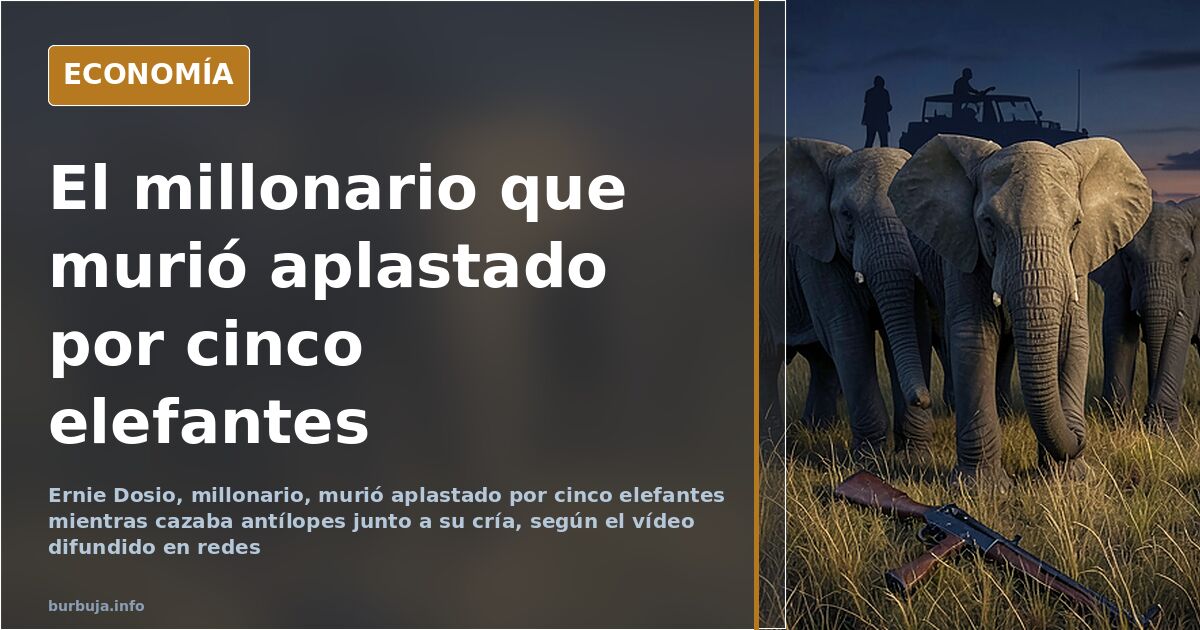
Millionaire Ernie Dosio Killed by Elephant Herd During African Hunt
Ernie Dosio, a wealthy hunter, was crushed by five elephants while hunting antelopes with his son. Although the viral video circulating on social media did not depict this specific incident, the tragedy has peine discussions on trophy hunting: who authorizes it, how much money it generates, and where those funds go. For some, the scene is tragic; for others, it proves that so-called sport hunting is a business reliant on official permits.
The death of millionaire hunter Ernie Dosio at the hands of an elephant herd triggered a storm of reactions mixing morbid curiosity with deeper ethical debates. The initial trigger was a message falsely attributing a viral video to the event. It was later clarified that the footage was unrelated. Nevertheless, the conversation quickly shifted to two uncomfortable questions: Is killing animals for hobby legitimate? And more importantly, who profits from it?
Who Authorizes Elephant Hunting and What Are the Fees?
The most common argument revolves around licensing. Governments in countries permitting trophy hunting sell permits for specific animals. Proponents claim this revenue funds conservation and provides local communities with incentives to protect wildlife. This view presents a textbook win-win: the hunter pays, the state collects fees, and the animal becomes a resource.
Critics attack precisely this point. A millionaire does not pay for grassland only to return with an old, sick elephant. They pay for the trophy, the photo, and the wall mount. The supposed function of pest control or humane culling collapses when the client selects the specimen they wish to display. Even if the video wasn't real, it fueled the same suspicion: trophy hunting as a vanity spectacle.
The Conservation Business: Philanthropy or Buying Influence?
One of the most awkward aspects of this case is the deceased's profile. He is credited with donating hundreds of millions of dollars to African elephant protection. The contradiction is stark: the same man funding conservation pays to kill specimens. To some, this proves hunters' philanthropy is merely a way to cleanse their conscience. To others, it demonstrates that conservation and regulated hunting can coexist.
Missing from almost all accounts is data on how much of that money actually reaches communities versus intermediaries, safari agencies, and permit costs. Without these figures, the debate remains anecdotal.
Death of a Wild Animal: Humane or Cruel?
A persistent argument claims nature is crueler. An old elephant dies of hunger, disease, or predation after days of agony. A precise shot, proponents argue, offers a cleaner death than natural causes. While logical, this ignores that hunters do not select animals out of mercy, but for trophies.
The counter-argument is simpler: hunters do not kill for food or pest control. They kill for hobby. For many, this alone makes the practice unacceptable, regardless of what happens afterward on the savanna.
Luck as the Professional Hunter’s Only Insurance
The discussion also highlighted professional realities. Hunters active in Africa and India during the 1930s and 1940s agree in their memoirs: technical skill and fauna knowledge do not guarantee survival. Luck is everything. Many expert hunters died in the line of duty. Dangerous game hunting is named thus for good reason.
Dosio’s case fits this pattern. Reports suggest he had guides and escorts, yet the herd reached him. Nature does not distinguish between an experienced hunter and a licensed millionaire.
The Fake Video: Misinformation Fueling Controversy
Circulating the video as if it were the actual incident added toxic elements. Clarifications confirmed the images did not correspond to the event. This detail matters: morbid curiosity spiked due to false material, building outrage on a scene that didn’t happen as portrayed. This serves as a reminder that in such cases, the first version is often the most viral and least verified.
Given these factors, predictions suggest the debate will fade in days, only to resurface when the next famous hunter dies under similar circumstances. The core issues—who collects license fees, how much reaches conservation, and whether trophies are a legitimate funding method—will remain unanswered. Without data, each side will continue telling the story that suits them.
Also available in: Deutsch
Summary of a discussion on Burbuja.info - Foro de economía, actualidad y política., translated from Spanish and reviewed before publication. Read the full discussion (64 replies).
More summaries
-
US Hunter Crushed by Elephants Dies in Gabon
Ernie Dosio died in Gabon after being attacked by five elephants while funding a hunt. An analysis of the human and economic costs of big game hunting.
-
Tourist crushed to death by elephants during a fight at an Indian sanctuary
A tourist was crushed to death by an elephant at a sanctuary in India. The accident reopens the debate over the safety and ethics of wildlife tourism.
-
France riots: home invasions fuel civil war debate
Riots in France: home invasions and the debate over whether this is the start of a civil war. An analysis of impunity and the collapse of public order.
-
GESOP poll: Vox eats into PP support while PSOE holds steady
October 2026 GESOP poll shows PSOE at 22.1%, PP at 17.9%, and Vox rising to 14.9%. A contentious campaign is expected in Spain.
-
Pilot's Final Audio: Lear Jet Falls at 22,000 Feet Per Minute
The pilot reported icing and requested a climb to 37,000 feet. ATC replied 'use your discretion.' Moments later, the aircraft plunged at 22,000 fpm.
-
Trump claims Iranian navy sunk, seeks Hormuz passage deal
Trump confirms operation to clear Strait of Hormuz while negotiating with Iran, claiming 158 ships sunk and total victory.