
Spain's Mining Towns: €15k Homes, Escape or Trap?
In Spain’s depopulated mining regions, homes sell for €15k-20k. With Mieres losing half its population in 30 years, is this cheap housing a viable escape or a trap?
English · Original discussion in Spanish · Published
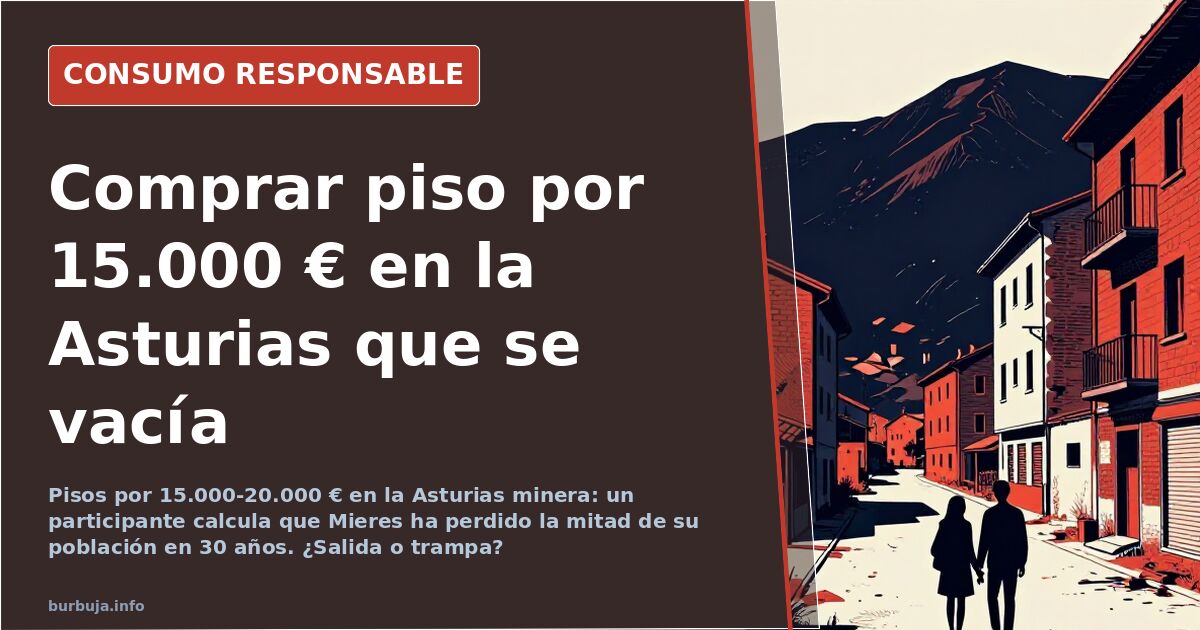
€15,000 Home in Spain’s Mining Regions: Refuge or Lifelong Burden?
A truck driver who spent two or three years living in a camper van—named La Mari—with his dog bought an apartment in the Asturian mining basin for less than many Spaniards pay as a down payment on a mortgage. He had previously worked seasonally and as a taxi driver, living frugally. Having sold a previous property to fund his van and this purchase, he sought no views or amenities, only freedom from rent. This decision has sparked debate between those seeing an escape route and others viewing it as a carpeted trap.
The prices reflect reality. In former mining hubs, some have found habitable apartments for €20,000-30,000, and renovated units for €15,000-20,000 in comparable towns like Avilés, Langreo, or Mieres. A standard apartment in Mieres rents for about €500, according to forum testimonies. The question isn't just the cost of buying, but what surrounds the property.
Mieres Has Lost Half Its Population in 30 Years
Statistics explain these prices better than any brochure. According to calculations circulating in the discussion, Mieres dropped from 80,000 to 40,000 inhabitants over three decades. The average age is around 50, and only three or four schools serve the entire municipality. Langreo faces similar decline with even lower rents. "Mieres went from 80k to 40k residents in 30 years. The average age must be around 50; there are hardly any young people," summarizes one participant.
Those familiar with the area add nuances not found on real estate portals. First-hand accounts describe zones in states of abandonment, with ugly buildings and empty structures, yet also wild nature nearby and virtually no crime, simply because there is nothing left to steal. Climate is another barrier: humidity and cold prevail for much of the year, with villages becoming isolated in winter depending on their elevation in the valley.
Cold, Humidity, and Neighbors: What Ads Don’t Show
Opinions diverge here. One sector argues that drawbacks are urban issues easily solved: 13 degrees isn't cold, fixable with a winter shirt, and humidity manageable with a dehumidifier. However, the fine print of coexistence in degraded environments and aging neighborhoods emerges repeatedly as the decisive factor. "Test before you sign," suggests one of the most sensible voices: "Before buying, I’d ask for a six-month rental contract to see if I like the area and the neighbors."
The other side highlights real isolation. Some recall roads running right up to windows and train tracks just two meters away, while others note that the first example cited has already been sold. The market isn't as dead as it seems.
Living Mortgage-Free: The Calculation That Convinces Some and Scares Others
The core argument is economic, not romantic. The repeated comparison is stark: against a mortgage of €140,000 to €240,000 tied to decades of salary, a €15,000 or €20,000 home plus €5,000 in repairs is far cheaper than binding oneself to what analysts call a "lifelong burden." This is the appeal of lonchafinismo (extreme bargain hunting): buying the freedom of owing nothing to anyone.
Some go further, proposing the operation not as housing but as a base for residency registration, aiming at certain regional benefits. The Basque Income Guarantee Rent averages around €800, and the conversation even suggests a €40,000 apartment near the AP-68 highway, ten kilometers from Logroño, as a fiscal and living base. The idea floats unresolved.
Is Buying Cheap in Depopulated Spain Worth It?
It depends on who answers and what they define as living. For someone accustomed to a camper van, a dog, and seasonal work, moving into a 60-year-old apartment in a mining valley is an improvement, not a sacrifice. For a young couple with children expecting prosperity, the diagnosis differs: without jobs, services, and with winters lasting eight months, savings come at the cost of isolation.
Between these extremes lies uncomfortable evidence noted by several forum users. The local housing stock is held by older owners who prefer keeping apartments closed rather than lowering prices, maintaining rents in Mieres around €500 despite a surplus of properties. The cheap showcase exists, but sometimes the door remains locked.
A truck driver who spent two or three years living in a camper van—named La Mari—with his dog bought an apartment in the Asturian mining basin for less than many Spaniards pay as a down payment on a mortgage. He had previously worked seasonally and as a taxi driver, living frugally. Having sold a previous property to fund his van and this purchase, he sought no views or amenities, only freedom from rent. This decision has sparked debate between those seeing an escape route and others viewing it as a carpeted trap.
The prices reflect reality. In former mining hubs, some have found habitable apartments for €20,000-30,000, and renovated units for €15,000-20,000 in comparable towns like Avilés, Langreo, or Mieres. A standard apartment in Mieres rents for about €500, according to forum testimonies. The question isn't just the cost of buying, but what surrounds the property.
Mieres Has Lost Half Its Population in 30 Years
Statistics explain these prices better than any brochure. According to calculations circulating in the discussion, Mieres dropped from 80,000 to 40,000 inhabitants over three decades. The average age is around 50, and only three or four schools serve the entire municipality. Langreo faces similar decline with even lower rents. "Mieres went from 80k to 40k residents in 30 years. The average age must be around 50; there are hardly any young people," summarizes one participant.
Those familiar with the area add nuances not found on real estate portals. First-hand accounts describe zones in states of abandonment, with ugly buildings and empty structures, yet also wild nature nearby and virtually no crime, simply because there is nothing left to steal. Climate is another barrier: humidity and cold prevail for much of the year, with villages becoming isolated in winter depending on their elevation in the valley.
Cold, Humidity, and Neighbors: What Ads Don’t Show
Opinions diverge here. One sector argues that drawbacks are urban issues easily solved: 13 degrees isn't cold, fixable with a winter shirt, and humidity manageable with a dehumidifier. However, the fine print of coexistence in degraded environments and aging neighborhoods emerges repeatedly as the decisive factor. "Test before you sign," suggests one of the most sensible voices: "Before buying, I’d ask for a six-month rental contract to see if I like the area and the neighbors."
The other side highlights real isolation. Some recall roads running right up to windows and train tracks just two meters away, while others note that the first example cited has already been sold. The market isn't as dead as it seems.
Living Mortgage-Free: The Calculation That Convinces Some and Scares Others
The core argument is economic, not romantic. The repeated comparison is stark: against a mortgage of €140,000 to €240,000 tied to decades of salary, a €15,000 or €20,000 home plus €5,000 in repairs is far cheaper than binding oneself to what analysts call a "lifelong burden." This is the appeal of lonchafinismo (extreme bargain hunting): buying the freedom of owing nothing to anyone.
Some go further, proposing the operation not as housing but as a base for residency registration, aiming at certain regional benefits. The Basque Income Guarantee Rent averages around €800, and the conversation even suggests a €40,000 apartment near the AP-68 highway, ten kilometers from Logroño, as a fiscal and living base. The idea floats unresolved.
Is Buying Cheap in Depopulated Spain Worth It?
It depends on who answers and what they define as living. For someone accustomed to a camper van, a dog, and seasonal work, moving into a 60-year-old apartment in a mining valley is an improvement, not a sacrifice. For a young couple with children expecting prosperity, the diagnosis differs: without jobs, services, and with winters lasting eight months, savings come at the cost of isolation.
Between these extremes lies uncomfortable evidence noted by several forum users. The local housing stock is held by older owners who prefer keeping apartments closed rather than lowering prices, maintaining rents in Mieres around €500 despite a surplus of properties. The cheap showcase exists, but sometimes the door remains locked.
Summary of a discussion on Burbuja.info - Foro de economía, actualidad y política., translated from Spanish and reviewed before publication. Read the full discussion (156 replies).
More summaries
-
Spain's Minimum Vital Income: Can You Live on €733?
Analysis of Spain's Minimum Vital Income (IMV) of €733/month, covering real costs, eligibility requirements, and the work-benefit dilemma.
-
The real cost of cheap paint from Leroy Merlin
The real cost of using cheap paint from big-box stores. We analyze the dilemma between immediate savings and the durability of the finish.
-
Dry eyes: artificial tears cost vs. chamomile
Forum users debate the high cost of artificial tears versus home remedies like saline and chamomile for dry eye relief.
-
Forced App Install Required to Receive Invoice
A consumer reports being forced to download an app or pay €15 for postal delivery to get their invoice, highlighting the growing necessity of smartphones.
-
Desktop PCs fade as mobile devices dominate the living room
In Spain, desktops lose ground to smartphones and work laptops. Mini PCs gain traction while high power retreats to niche uses.
-
Casio cult watches: poker, TV remote, and €25
Cheap Casio watches have become cult objects: poker on the wrist, TV remotes, and years without battery changes.