
Spain's €1.50 gold coin selling for €1,744
Spain's FNMT sells a one-ounce gold coin with a €1.50 face value for €1,744. The premium over the metal exceeds 5% and divides collectors and investors.
English · Original discussion in Spanish · Published
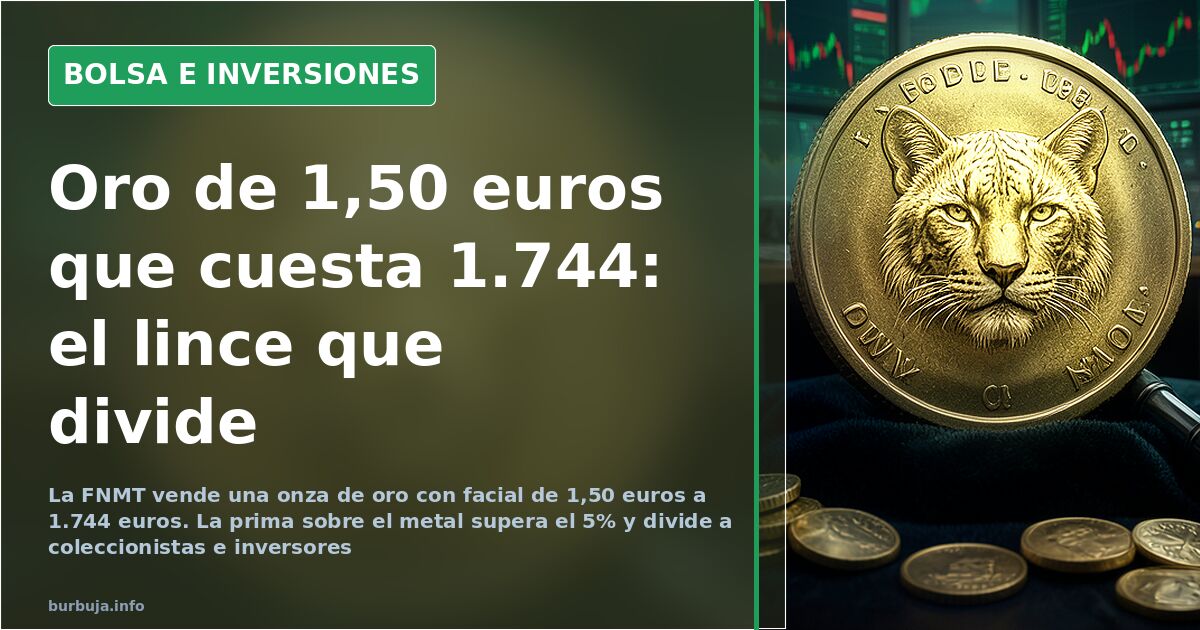
A gold coin with a €1.50 face value selling for €1,744
The first gold coin from Spain's Fábrica Nacional de Moneda y Timbre (FNMT, the national mint) antiestéticaturing the Iberian lynx is selling in specialist shops for around €1,744 plus shipping. Its face value is €1.50. The gap between the two figures —more than a thousand times the face value— is the origin of a debate mixing numismatics, safe-haven investing and distrust of what one forum user described as something that «fell from the sky».
The metal is high-purity gold, one ounce, and the design draws on the columnario of the real de a ocho, the motif that eventually inspired the US dollar. The mintage is limited: 12,000 pieces in the first edition. That is the hook for the collector. And that is where the problem begins for anyone simply looking for gold.
How much an ounce of gold costs and how much extra you pay
According to calculations used by some participants in the debate, an ounce of pure gold at market price was around €1,650 at the time of issue. With that reference, a one-ounce Krugerrand could be bought for €1,636 and a Britannia for €1,644. The Spanish coin, at €1,744 plus shipping, carries a premium of more than 5% over the metal.
The rule of thumb among physical gold investors, according to one forum user, is simple: if you pay more than the spot price plus 3%, you are buying something else. You are buying collectibles. The Spanish coin is no exception to that logic, but a textbook example of it.
What you pay for being first
The collector's argument is different. A mintage of 12,000 units in the first edition does not compete with the millions of Maple Leafs or Britannias struck every year. The fair comparison, they argue, is with pieces like the Mexican Libertads, which sell above spot precisely because of their numismatic demand.
The design adds to the appeal: the Iberian lynx, the columnario, the absence of a royal effigy. Some see it as an aesthetic success and others as a forced oddity. The coin carries the year engraved, but some invoices do not specify it, which opens up a curious margin for anyone buying several units who wants to choose which piece to justify with which paperwork.
The €1.50 face value: guarantee, rarity or cheapness
The €1.50 face value has a legal explanation. According to one forum user, in Spain the issuer must deposit the amount shown on the coin as a guarantee. A low face value reduces that deposit. That is the reason the figure exists, not a design whim.
Critics point out that other Spanish silver coins have carried far higher face values, and that a decimal figure is a rarity in the international market. The result, on this reading, is a piece that looks cheaper than it is and sells for more than it should.
Who is actually buying this coin
The domestic buyer is not the main target. The most widespread reading is that the FNMT has looked towards the Asian market, where demand for physical gold has grown strongly, and towards the international collector seeking first editions.
For the Spanish saver who wants protection against inflation, the alternative is a bar or a bullion coin from a recognised mint. For the collector, the piece makes sense if the price does not spiral. The dividing line between the two profiles is the premium.
What those who already own it say
Buyers highlight the reverse proof finish, a treatment that conventional bullion coins do not have and which raises production costs. Also the invoice: some shops specify the year of issue and others do not, which raises doubts about the piece's future traceability.
The coin sold out at several distributors. A few loose units remained in specialist shops. The debate over whether that confirms demand or simply the scarcity of the mintage remains open.
The reasonable prediction is that the premium will hold while gold rises and compress when the market tires of paying for the wrapping. With an ounce of gold at €1,650 and the coin at €1,744, the question is not whether the lynx is pretty. It is how long anyone will be willing to pay to have the first one.
Also available in: Deutsch
Summary of a discussion on Burbuja.info - Foro de economía, actualidad y política., translated from Spanish and reviewed before publication. Read the full discussion (69 replies).
More summaries
-
Iberian Lynx: Spain's first gold bullion coin sells at 10% premium
Spain's first bullion coin sells for €1,800 and is resold for $3,300 in the US. A 10% premium, a mintage of 12,000 and doubts about its future value.
-
Krugerrand, Maple or Philharmonic: Which Gold Coin Resells Best
Krugerrands and Maples sell easily; Somali Elephants have low liquidity. The key factor is not the issuing country, but market depth.
-
Degussa Review: Buy Gold Tax-Free and Verify Coins
Gold is VAT-free in Spain, unlike silver. Degussa is generally pricey but offers the best deal for Mexican 50 Peso coins. Verifying coins is easier than bullion bars.
-
Pablo Gil trader reviews: respect and bearish bias
Two years warning of a stock market crash that hasn't come: opinions on Pablo Gil, the YouTube trader, split between respect and bias.
-
Spain: €50,000 flats rented at €600 — the math that doesn't add up
Ten €50,000 flats rented at €600 would bring in €6,000 a month, according to a calculation making the rounds. Expenses, defaults and legal risks tear it apart.
-
The double life of the financial guru claiming 20% annual returns
Charlie Monguer promises 20% annual returns and charges €600 for his community. He is suspected of being the same person as a well-known forum user. Reality or fiction?