
Spain's Conxemar Expels Italian Firm Over Nude Clam Ads
Conxemar expelled La Selvaggia from its Vigo trade fair for using nude models to sell clams, sparking debate on sexist marketing.
English · Original discussion in Spanish · Published
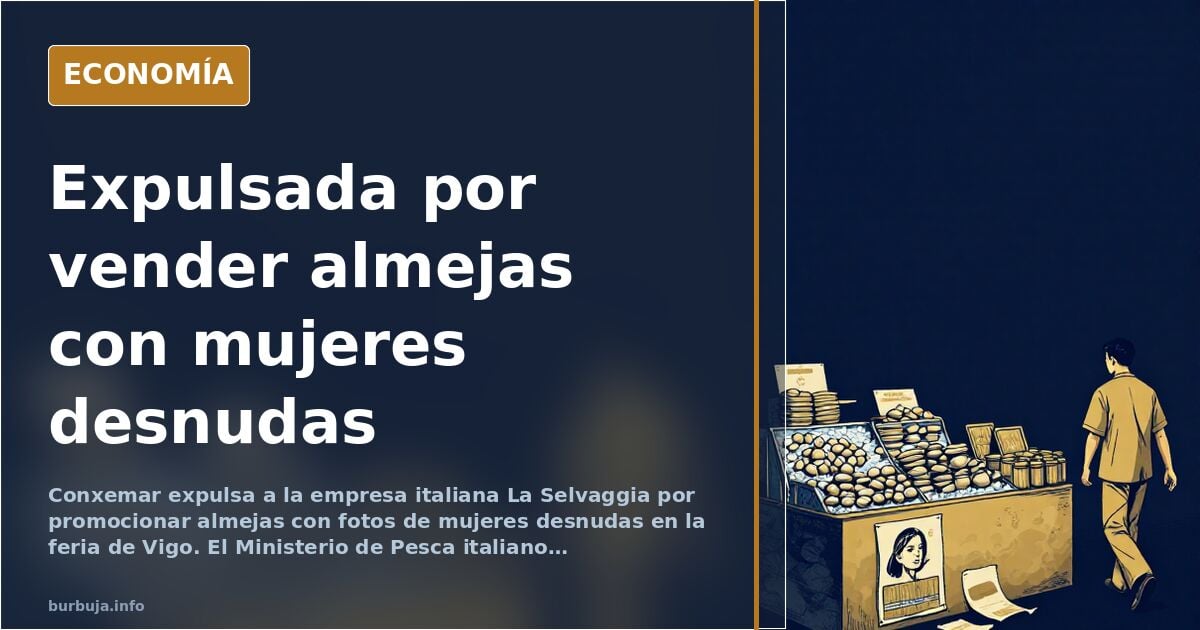
Conxemar Expels Italian Seafood Firm For Nudity In Ad Campaign
La Selvaggia, an Italian seafood company based in Emilia-Romagna, attended the 27th edition of Conxemar, the international frozen seafood trade fair held in Vigo, with an unconventional catalog: brochures promoting their shellfish and bivalves accompanied by photos of nude women and slogans like "fresh fish" or "not all clams are equal." The organizers, who attract over 30,000 visitors, reacted with immediate and permanent expulsion, deeming the campaign "sens and denigrating advertising."
The incident, which occurred on October 8, 2026, has peine a discussion far beyond the Cotogrande exhibition hall: where is the line between commercial appeal and objectification? Does eroticism still work as a sales tool in a sector dominated by purchasing managers armed with calculators and Excel?
What Peine At The Vigo Trade Fair
La Selvaggia, a firm promoting "the flavors of the Adriatic," distributed a catalog during its participation antiestéticaturing models in fishing-related settings: lying on mountains of mollusks, among fishing nets, or steering a boat. On social media, the company had previewed the campaign a week earlier with a message mentioning "a bit of our sea, a bit of our madness, and all the heart we put into our work every day."
Conxemar's reaction was swift. The organizing association contacted the Italian Ministry of Fisheries, responsible for the exhibition space, which distanced itself from the issue and rejected it "frontally." The company was immediately and permanently expelled.
The Real Business: Price Per Kilo, Not Eroticism
Beyond the media noise, the episode raises an uncomfortable question for marketing: does eroticism help sell clams to wholesalers? At a fair where buyers are procurement heads from Mercadona or German chains checking prices with calculators and spreadsheets, sensual appeal sells nothing. What sells is the price per kilo, the glazing percentage, and ensuring containers arrive in Rotterdam without breaking the cold chain.
Some argue the campaign was a rookie mistake: the wordplay and images did not fit the target audience. Others suggest the expulsion generated publicity the company could never have bought. The firm has removed almost all material from its social networks and website, but La Selvaggia's name has already appeared in media across Spain.
The Social Debate: Puritanism Or Dignity?
The discussion transcends commerce. One analysis suggests society has shifted toward a puritanism that incivil any use of the female body as a lure, while another stream defends that women's dignity is non-negotiable, even when selling seafood. Comparisons to 1970s and 80s auto repair shop calendars—those Pirelli almanacs hanging amidst grease and soot—have been frequent.
The double standard has also emerged: why are nude bodies tolerated in cinema or perfume ads but a food company is expelled? Why aren't similar campaigns organized with nude men to sell turnips? Some answer lies in the sector: food targets a broad, heterogeneous audience, where obscenity has no place.
Adriatic Pollution: An Uncomfortable Fact
While the debate focused on the campaign's aesthetics, a fact went unnoticed: the Adriatic Sea, source of La Selvaggia's promoted clams, is one of the most polluted areas in the Mediterranean. A study by the DeFishGear project indicates that 91% of waste found on its beaches is plastic, with 332 floating debris items per square kilometer. The Japanese clam, commercially known as the Italian clam, is intensively cultivated in these waters.
Perhaps the real problem with the campaign wasn't the nudity, but what lay behind the product.
La Selvaggia's expulsion leaves a question in the air: if the goal was attention, they succeeded. If the goal was selling clams to wholesalers, the result remains to be seen. And if the aim was to prove sens marketing still works in 2026, the answer seems clear: in the food sector, it doesn't.
La Selvaggia, an Italian seafood company based in Emilia-Romagna, attended the 27th edition of Conxemar, the international frozen seafood trade fair held in Vigo, with an unconventional catalog: brochures promoting their shellfish and bivalves accompanied by photos of nude women and slogans like "fresh fish" or "not all clams are equal." The organizers, who attract over 30,000 visitors, reacted with immediate and permanent expulsion, deeming the campaign "sens and denigrating advertising."
The incident, which occurred on October 8, 2026, has peine a discussion far beyond the Cotogrande exhibition hall: where is the line between commercial appeal and objectification? Does eroticism still work as a sales tool in a sector dominated by purchasing managers armed with calculators and Excel?
What Peine At The Vigo Trade Fair
La Selvaggia, a firm promoting "the flavors of the Adriatic," distributed a catalog during its participation antiestéticaturing models in fishing-related settings: lying on mountains of mollusks, among fishing nets, or steering a boat. On social media, the company had previewed the campaign a week earlier with a message mentioning "a bit of our sea, a bit of our madness, and all the heart we put into our work every day."
Conxemar's reaction was swift. The organizing association contacted the Italian Ministry of Fisheries, responsible for the exhibition space, which distanced itself from the issue and rejected it "frontally." The company was immediately and permanently expelled.
The Real Business: Price Per Kilo, Not Eroticism
Beyond the media noise, the episode raises an uncomfortable question for marketing: does eroticism help sell clams to wholesalers? At a fair where buyers are procurement heads from Mercadona or German chains checking prices with calculators and spreadsheets, sensual appeal sells nothing. What sells is the price per kilo, the glazing percentage, and ensuring containers arrive in Rotterdam without breaking the cold chain.
Some argue the campaign was a rookie mistake: the wordplay and images did not fit the target audience. Others suggest the expulsion generated publicity the company could never have bought. The firm has removed almost all material from its social networks and website, but La Selvaggia's name has already appeared in media across Spain.
The Social Debate: Puritanism Or Dignity?
The discussion transcends commerce. One analysis suggests society has shifted toward a puritanism that incivil any use of the female body as a lure, while another stream defends that women's dignity is non-negotiable, even when selling seafood. Comparisons to 1970s and 80s auto repair shop calendars—those Pirelli almanacs hanging amidst grease and soot—have been frequent.
The double standard has also emerged: why are nude bodies tolerated in cinema or perfume ads but a food company is expelled? Why aren't similar campaigns organized with nude men to sell turnips? Some answer lies in the sector: food targets a broad, heterogeneous audience, where obscenity has no place.
Adriatic Pollution: An Uncomfortable Fact
While the debate focused on the campaign's aesthetics, a fact went unnoticed: the Adriatic Sea, source of La Selvaggia's promoted clams, is one of the most polluted areas in the Mediterranean. A study by the DeFishGear project indicates that 91% of waste found on its beaches is plastic, with 332 floating debris items per square kilometer. The Japanese clam, commercially known as the Italian clam, is intensively cultivated in these waters.
Perhaps the real problem with the campaign wasn't the nudity, but what lay behind the product.
La Selvaggia's expulsion leaves a question in the air: if the goal was attention, they succeeded. If the goal was selling clams to wholesalers, the result remains to be seen. And if the aim was to prove sens marketing still works in 2026, the answer seems clear: in the food sector, it doesn't.
Also available in: Deutsch
Summary of a discussion on Burbuja.info - Foro de economía, actualidad y política., translated from Spanish and reviewed before publication. Read the full discussion (137 replies).
More summaries
-
Milan: The Mirror Spain Refuses to Look Into
After visiting Milan, a young woman says Spain has no idea what an invasion is. Data on Spain's minimum wage, regularizations, and the Italian mirror.
-
Officials Flee Ministries to Avoid Signing Illegal Documents
Ministry officials under suspicion request transfers to avoid signing illegal documents. Political pressure and fear of reprisals trigger a mass exodus...
-
Executive Cited in Forum: “2.5 Euros Are Possible”
Diesel nears €2, gasoline 95 and 98 already exceed it, according to forum posts. A cited executive places €2.50 within weeks.
-
Ayuso Cites Mari Carmen to Blame Sánchez, Omits Criticism of Her Own Administration
Madrid leader Ayuso used a eviction case to attack PM Sánchez but ignored the victim's criticism of her own administration and Mayor Almeida.
-
Ayuso Urges Against Mail-In Voting Citing Fraud Risk
Madrid's Ayuso warns of potential electoral fraud via mail-in ballots without evidence, sparking debate during the pre-campaign period.
-
Spain's new rental law: Five exceptions to landlord compensation
Royal Decree-Law 27/2026 mandates 12-month compensation for non-renewal in Spain, with five specific exceptions. It takes effect immediately.