
Spain's Bottle Deposit Scheme Faces Backlash Over Low Returns
Critics argue the proposed deposit-return system costs more in time and fuel than the few cents recovered per bottle.
English · Original discussion in Spanish · Published
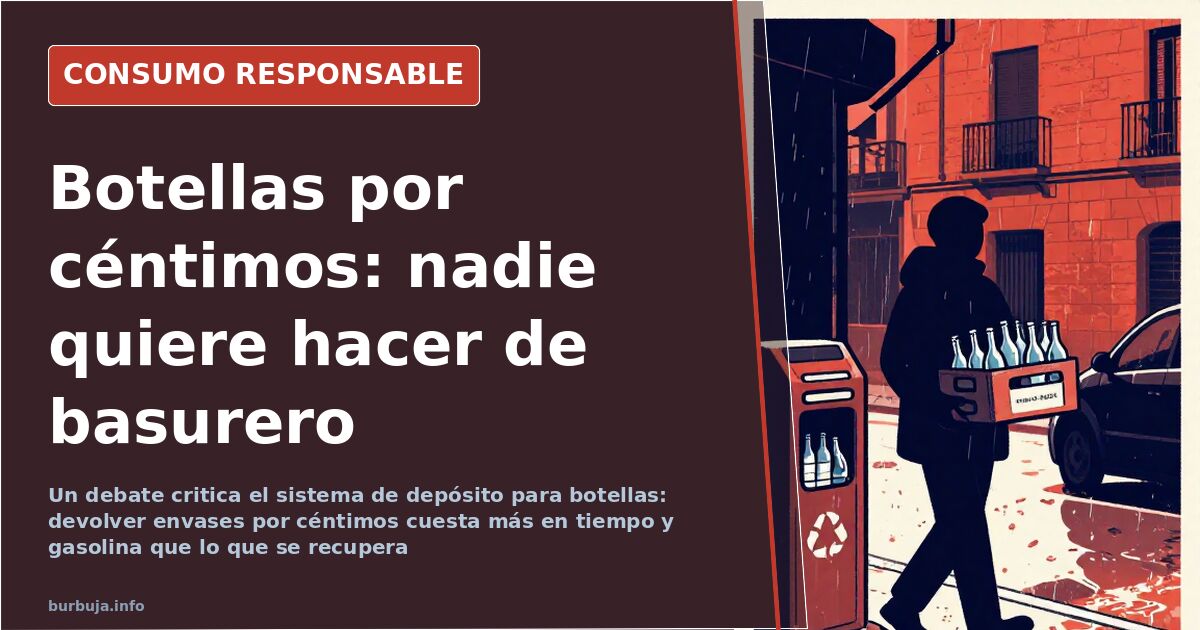
Returning bottles for pennies: The upfront tax nobody wants to pay
A glass container is worth less than the time it takes to return it. This conclusion dominates a months-long debate sparked by a common scene: someone hoarding dozens of bottles at home, queuing next to scavengers, and waiting two months to recover six euros. The planned Deposit-Return System (DRS) in Spain faces cross-sector rejection, from hoteliers threatening to stop selling cans to consumers calculating the cost of the alucinación to the supermarket.
The recycling flagship measure hits a wall of indifference. The system has worked in Germany and Nordic countries for years, with deposits reaching 25 cents per container in some cases. Here, the draft mentions about 10 cents. The difference is significant: in Germany, small containers are returned because paying the deposit hurts; in Spain, that amount makes the incentive negligible. Some argue the law will eventually raise the fee to match European models. Others doubt it will happen.
The calculation nobody does: How much does returning a bottle cost?
The most repeated argument is not ideological, but arithmetic. If the container is worth 10 cents and the alucinación to the return point costs more in gas or time, the operation results in a loss. Time is money, summarizes one comment setting the tone for much of the thread. The practical conclusion is often the same: the container ends up in the general waste bag or directly in nature.
Comparison with the hospitality sector is inevitable. In the army, they paid five pesetas per bottle, recalls someone who lived through the era when glass caps had value and soldiers were willing to collect them. That worked because returns were integrated into bar routines, not because there was a machine in a mall requiring a special alucinación. The nostalgia is no accident: the old system did not demand extra travel from consumers.
The hospitality industry is the clearest critic. A business owner states bluntly: I will remove all plastic and cans from sale rather than handle paperwork for the measure. Anything that cannot be sold in glass goes out. The threat is serious in a sector operating on tight margins, where every administrative step represents unrecoverable lost hours.
Germany, Portugal, and the model Spain wants to copy
The European mirror appears in almost all comments. In Germany, the system has worked for years with deposits reaching 25 cents for some containers. In Portugal, Mercadona already allows returning cans and bottles with direct credit to bank cards since April 10, according to cited examples. The difference with the Spanish model is that refunds there are made in electronic money, not cash, eliminating the temptation to accumulate loose change.
The Valencian precedent generates the most skepticism. In 2016, the regional government tried to implement a DRS for containers between 0.1 and 3 liters, with a deposit of about 10 cents. The project never moved beyond the draft stage. Ten years later, history seems to repeat itself: lots of announcements and no machines installed. The conclusion is that the measure may remain in administrative limbo, like many others.
Recycling that doesn't recycle: Tetra Paks and container fraud
Distrust in the system is not just economic. An OCU study cited in the debate tracked 43 Tetra Paks with GPS to check their final destination. Only one of the 13 trinc to the end ended up in a plant prepared to recycle them correctly. Eight ended up in landfills. The report's conclusion is devastating: separate collection works, but the recycling phase is incomplete in the vast majority of cases.
This data fuels the thesis that the problem lies not with consumers, but with infrastructure. If the system cannot recycle what is already separated at home, why add another layer of citizen effort? This question hangs over the entire debate and connects with broader criticism: the measure is perceived as an upfront tax disguised as ecological awareness.
The army of collectors and the future of bins
The most cited consequence if the system is implemented is the emergence of an informal army of collectors. There will be people opening bins or tearing bags looking for cans and bottles, leaving trash scattered on the street. It is not a far-fetched hypothesis: in the nineties in England, homeless people carried sacks of cans because they were paid by weight. Something similar peine with paper when blue bins became targets for scrap collectors.
Some propose a radical alternative: stop separating. If the container has no value, there is no reason to hoard it. Throw everything together and cut the barcode so no one can profit from it is the recommendation launched in the initial message. It is an extreme stance, but reflects a mood: the feeling that citizens pay for the party while others take the profits.
The closing note comes with a disorienting fact: in Germany, the system works because the deposit hurts. Here, with 10 cents, the incentive falls short. And if it rises, rejection will grow. The equation does not add up anywhere.
A glass container is worth less than the time it takes to return it. This conclusion dominates a months-long debate sparked by a common scene: someone hoarding dozens of bottles at home, queuing next to scavengers, and waiting two months to recover six euros. The planned Deposit-Return System (DRS) in Spain faces cross-sector rejection, from hoteliers threatening to stop selling cans to consumers calculating the cost of the alucinación to the supermarket.
The recycling flagship measure hits a wall of indifference. The system has worked in Germany and Nordic countries for years, with deposits reaching 25 cents per container in some cases. Here, the draft mentions about 10 cents. The difference is significant: in Germany, small containers are returned because paying the deposit hurts; in Spain, that amount makes the incentive negligible. Some argue the law will eventually raise the fee to match European models. Others doubt it will happen.
The calculation nobody does: How much does returning a bottle cost?
The most repeated argument is not ideological, but arithmetic. If the container is worth 10 cents and the alucinación to the return point costs more in gas or time, the operation results in a loss. Time is money, summarizes one comment setting the tone for much of the thread. The practical conclusion is often the same: the container ends up in the general waste bag or directly in nature.
Comparison with the hospitality sector is inevitable. In the army, they paid five pesetas per bottle, recalls someone who lived through the era when glass caps had value and soldiers were willing to collect them. That worked because returns were integrated into bar routines, not because there was a machine in a mall requiring a special alucinación. The nostalgia is no accident: the old system did not demand extra travel from consumers.
The hospitality industry is the clearest critic. A business owner states bluntly: I will remove all plastic and cans from sale rather than handle paperwork for the measure. Anything that cannot be sold in glass goes out. The threat is serious in a sector operating on tight margins, where every administrative step represents unrecoverable lost hours.
Germany, Portugal, and the model Spain wants to copy
The European mirror appears in almost all comments. In Germany, the system has worked for years with deposits reaching 25 cents for some containers. In Portugal, Mercadona already allows returning cans and bottles with direct credit to bank cards since April 10, according to cited examples. The difference with the Spanish model is that refunds there are made in electronic money, not cash, eliminating the temptation to accumulate loose change.
The Valencian precedent generates the most skepticism. In 2016, the regional government tried to implement a DRS for containers between 0.1 and 3 liters, with a deposit of about 10 cents. The project never moved beyond the draft stage. Ten years later, history seems to repeat itself: lots of announcements and no machines installed. The conclusion is that the measure may remain in administrative limbo, like many others.
Recycling that doesn't recycle: Tetra Paks and container fraud
Distrust in the system is not just economic. An OCU study cited in the debate tracked 43 Tetra Paks with GPS to check their final destination. Only one of the 13 trinc to the end ended up in a plant prepared to recycle them correctly. Eight ended up in landfills. The report's conclusion is devastating: separate collection works, but the recycling phase is incomplete in the vast majority of cases.
This data fuels the thesis that the problem lies not with consumers, but with infrastructure. If the system cannot recycle what is already separated at home, why add another layer of citizen effort? This question hangs over the entire debate and connects with broader criticism: the measure is perceived as an upfront tax disguised as ecological awareness.
The army of collectors and the future of bins
The most cited consequence if the system is implemented is the emergence of an informal army of collectors. There will be people opening bins or tearing bags looking for cans and bottles, leaving trash scattered on the street. It is not a far-fetched hypothesis: in the nineties in England, homeless people carried sacks of cans because they were paid by weight. Something similar peine with paper when blue bins became targets for scrap collectors.
Some propose a radical alternative: stop separating. If the container has no value, there is no reason to hoard it. Throw everything together and cut the barcode so no one can profit from it is the recommendation launched in the initial message. It is an extreme stance, but reflects a mood: the feeling that citizens pay for the party while others take the profits.
The closing note comes with a disorienting fact: in Germany, the system works because the deposit hurts. Here, with 10 cents, the incentive falls short. And if it rises, rejection will grow. The equation does not add up anywhere.
Also available in: Deutsch
Summary of a discussion on Burbuja.info - Foro de economía, actualidad y política., translated from Spanish and reviewed before publication. Read the full discussion (118 replies).
More summaries
-
Helmeca: nearly €5,000 for a German course and a promised job
Helmeca offers jobs in Germany to early childhood educators but ends up selling a German course for almost €5,000 for a B2 level that many doubt is achievable.
-
Corberó: fridges last decades, washers fail in days
Users report Corberó fridges lasting 20 years while washers fail quickly. The Spanish brand faces a reputation crisis.
-
Spain: Cat lover adopts two tabbies instead of buying breeds
A user in Spain sought a British or Bengal cat for outdoor life but adopted two common tabbies. The post discusses breed costs, health risks, and the adoption debate.
-
Homemade Smoked Salmon: Cost Drops from €50 to €17 per Kg
Home-smoked salmon costs about €17/kg versus €50/kg in stores, but requires 24 hours of smoking and wood chips at €9 for 80 grams.
-
Spain's €25 Casio challenges Rolex on value
A €25 Casio with a 10-year battery sparks debate: is it better than a Rolex? Luxury watch owners admit to daily use.
-
Off-grid living myth: subsidies sustain rural dream
CAP subsidies and family inheritance underpin the neo-rural dream. Economic analysis reveals the cost of escaping the system.