
Spain's Betanzos faces backlash over historic center bench replacement
Betanzos replaced iron benches with steel grid structures in its historic center. Residents are collecting signatures demanding their removal.
English · Original discussion in Spanish · Published
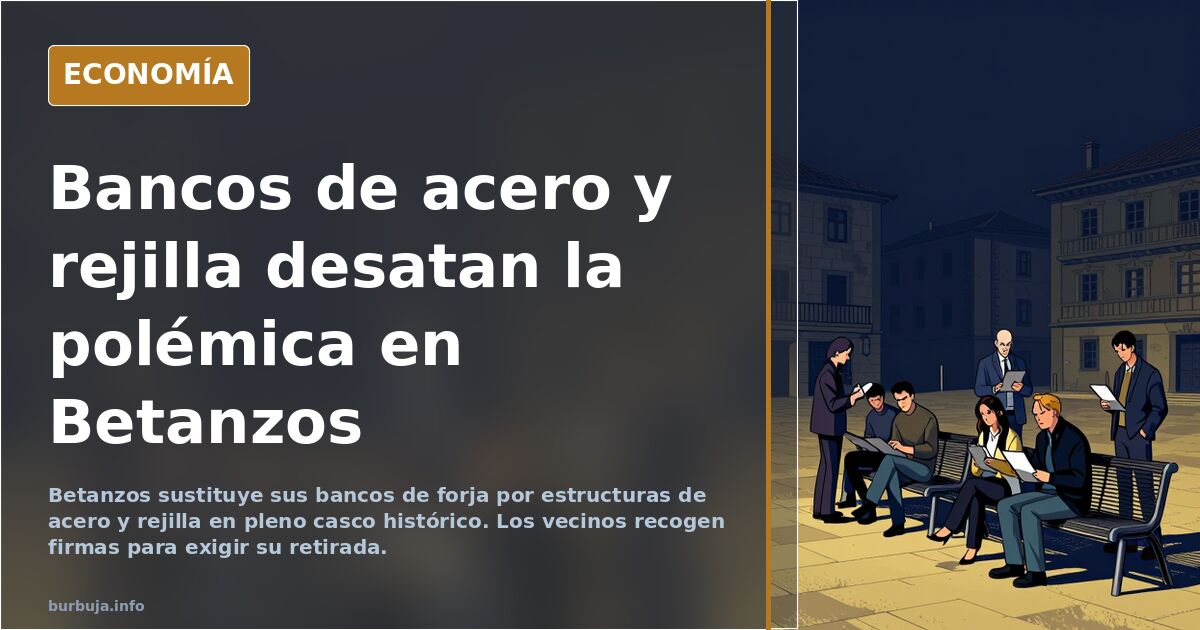
Betanzos swaps iron benches for steel and grid
In the Plaza de la Iglesia de Santiago in Betanzos, Spain, an iron bench was removed to make way for a white steel grid structure on green. The change, driven by the town hall led by the PSdeG-PSOE mayor, has sparked a wave of criticism from residents and visitors who believe the new urban furniture disrupts the harmony of the historic district. The mayor defended the intervention as a commitment to art and eco-resilience, stating that the design "is nothing invented" and draws inspiration from the legacy of architect González Villar. Dissatisfaction has reached such a point that a group of residents has begun collecting signatures to demand the removal of the benches and the reinstatement of the old iron seats.
The project the mayor defends as eco-resilient art
The mayor of Betanzos presented the new furniture as an intervention designed to combine modernity with respect for the environment. According to her statements, the design "reflects that pride and that Betanzos spirit we have, from the street lamps to the railings, the music stand, or the buildings in the historic center." The mayor insisted that the chosen materials—white wood on iron and Betanzos green—meet sustainability and durability criteria, and that any change of this magnitude generates "doubts and uncertainty" but is based on history and complies with grant requirements.
The official argument has not convinced a significant portion of the residents. Criticism is directed not only at the aesthetics but also at functionality. Some argue that the grid will bend and rust quickly, that the vertical backrests are uncomfortable, and that the legs are flimsy. They predict that within a year, the benches will be deteriorated and need replacement, resulting in double spending for municipal funds.
Why do neighbors want the iron benches back?
The answer is simple: they believe the new furniture does not fit into a 15th-century Gothic setting. "They are a blunder for a charming street like Rúa Traviesa. Not only do they not fit, but they seem placed in a hurry without considering the surroundings," summarizes one of the complaints collected in the petition. The old iron benches, they argue, had a timeless style that could last a hundred years unchanged, while the current ones, made of thin sheet metal, will be rusty in less than a decade.
The controversy has also highlighted the debate over public space usage. Some claim that the design of the new benches, with individual armrests and a central table, responds to a strategy to prevent homeless people from sleeping on them. Hostile architecture, they note, turns furniture into an element of exclusion rather than encounter.
The political and economic cost of an unnecessary change
Beyond aesthetics, the issue has turned into a questioning of municipal management. One school of thought holds that these types of public works are an excuse for distributing commissions and favors. "There is no logical criterion for many works, nor necessity," notes a recurring analysis. The idea that a cast iron bench lasts too long—and therefore prevents favor distribution—has settled in the conversation as a cynical but widespread explanation.
The first broken bench appeared quickly. The image of one of the new structures already damaged circulated rapidly and fueled the thesis that the material will not withstand use or Galician weather conditions. Rain and humidity, they warn, will accelerate steel corrosion and wood deterioration.
Betanzos, between history and misunderstood modernity
Betanzos is not just any town. Its heritage dates back to Roman times, when it was known as Flavium Brigantium, and it preserves a historic center with Gothic buildings, street lamps, and railings that form part of its identity. Legend even attributes its founding to the Celtic chieftain Breogán. In 1219, Alfonso IX granted it the title of villa and moved it to its current location to protect it from Viking attacks. During the 14th century, it was a fortress of the Andrade family, which left its mark on local architecture.
In this context, replacing iron benches with steel and grid structures is perceived as an aggression against the coherence of the ensemble. Comparison with other cities that have successfully integrated contemporary design without sacrificing their heritage is inevitable. The lingering question is why Betanzos did not trinc that path.
The data that disorients
While the town hall defends the sustainability and durability of the new materials, the first bench has already broken. The contradiction between the official discourse and the physical reality of the furniture best summarizes a debate pitting residents against their own mayor. The signature collection continues, and no one rules out that the benches will end up in the scrapyard sooner than expected.
In the Plaza de la Iglesia de Santiago in Betanzos, Spain, an iron bench was removed to make way for a white steel grid structure on green. The change, driven by the town hall led by the PSdeG-PSOE mayor, has sparked a wave of criticism from residents and visitors who believe the new urban furniture disrupts the harmony of the historic district. The mayor defended the intervention as a commitment to art and eco-resilience, stating that the design "is nothing invented" and draws inspiration from the legacy of architect González Villar. Dissatisfaction has reached such a point that a group of residents has begun collecting signatures to demand the removal of the benches and the reinstatement of the old iron seats.
The project the mayor defends as eco-resilient art
The mayor of Betanzos presented the new furniture as an intervention designed to combine modernity with respect for the environment. According to her statements, the design "reflects that pride and that Betanzos spirit we have, from the street lamps to the railings, the music stand, or the buildings in the historic center." The mayor insisted that the chosen materials—white wood on iron and Betanzos green—meet sustainability and durability criteria, and that any change of this magnitude generates "doubts and uncertainty" but is based on history and complies with grant requirements.
The official argument has not convinced a significant portion of the residents. Criticism is directed not only at the aesthetics but also at functionality. Some argue that the grid will bend and rust quickly, that the vertical backrests are uncomfortable, and that the legs are flimsy. They predict that within a year, the benches will be deteriorated and need replacement, resulting in double spending for municipal funds.
Why do neighbors want the iron benches back?
The answer is simple: they believe the new furniture does not fit into a 15th-century Gothic setting. "They are a blunder for a charming street like Rúa Traviesa. Not only do they not fit, but they seem placed in a hurry without considering the surroundings," summarizes one of the complaints collected in the petition. The old iron benches, they argue, had a timeless style that could last a hundred years unchanged, while the current ones, made of thin sheet metal, will be rusty in less than a decade.
The controversy has also highlighted the debate over public space usage. Some claim that the design of the new benches, with individual armrests and a central table, responds to a strategy to prevent homeless people from sleeping on them. Hostile architecture, they note, turns furniture into an element of exclusion rather than encounter.
The political and economic cost of an unnecessary change
Beyond aesthetics, the issue has turned into a questioning of municipal management. One school of thought holds that these types of public works are an excuse for distributing commissions and favors. "There is no logical criterion for many works, nor necessity," notes a recurring analysis. The idea that a cast iron bench lasts too long—and therefore prevents favor distribution—has settled in the conversation as a cynical but widespread explanation.
The first broken bench appeared quickly. The image of one of the new structures already damaged circulated rapidly and fueled the thesis that the material will not withstand use or Galician weather conditions. Rain and humidity, they warn, will accelerate steel corrosion and wood deterioration.
Betanzos, between history and misunderstood modernity
Betanzos is not just any town. Its heritage dates back to Roman times, when it was known as Flavium Brigantium, and it preserves a historic center with Gothic buildings, street lamps, and railings that form part of its identity. Legend even attributes its founding to the Celtic chieftain Breogán. In 1219, Alfonso IX granted it the title of villa and moved it to its current location to protect it from Viking attacks. During the 14th century, it was a fortress of the Andrade family, which left its mark on local architecture.
In this context, replacing iron benches with steel and grid structures is perceived as an aggression against the coherence of the ensemble. Comparison with other cities that have successfully integrated contemporary design without sacrificing their heritage is inevitable. The lingering question is why Betanzos did not trinc that path.
The data that disorients
While the town hall defends the sustainability and durability of the new materials, the first bench has already broken. The contradiction between the official discourse and the physical reality of the furniture best summarizes a debate pitting residents against their own mayor. The signature collection continues, and no one rules out that the benches will end up in the scrapyard sooner than expected.
Also available in: Deutsch
Summary of a discussion on Burbuja.info - Foro de economía, actualidad y política., translated from Spanish and reviewed before publication. Read the full discussion (138 replies).
More summaries
-
Spain's 1960s Middle Class: Idealized Myth or Harsh Reality
Analysis of material conditions for Spain's middle class in the 1960s, highlighting regional disparities and basic service access.
-
Spain to mint €1.50 Mortadelo and Filemón coins in late 2026
Controversy over €1.50 Mortadelo and Filemón coins. We analyze in the forum whether it's a tribute to Ibáñez or a commercial strategy with dubious profitability.
-
Spain's Supreme Court bars 163,020 from voting in Nov 29 election
Spain's top court upholds suspension of voting rights for 163,020 naturalized citizens ahead of the November 29 general elections.
-
Sánchez challenges Ferreras on PP vote share
In a laSexta interview, Sánchez questioned who votes for the PP. Ferreras corrected him, noting it is Spain's most voted party.
-
Moscow Metro: Clean, Safe, and Graffiti-Free
Spain's Madrid and Barcelona metros compared to Moscow for cleanliness and security: X-ray checks, zero graffiti, and fewer freedoms.
-
Madrid F1 Circuit: Politician Promises Best GP Ever
The IFEMA F1 circuit reignites debate on major events: public costs, promises, and the memory of the Valencia Grand Prix.