
Spain's anti-eviction decree shields small landlords with one or two flats
Under RDL 29/2026, owners of two or fewer properties in Spain are exempt from eviction suspension even if the tenant is vulnerable, according to the debate material.
English · Original discussion in Spanish · Published
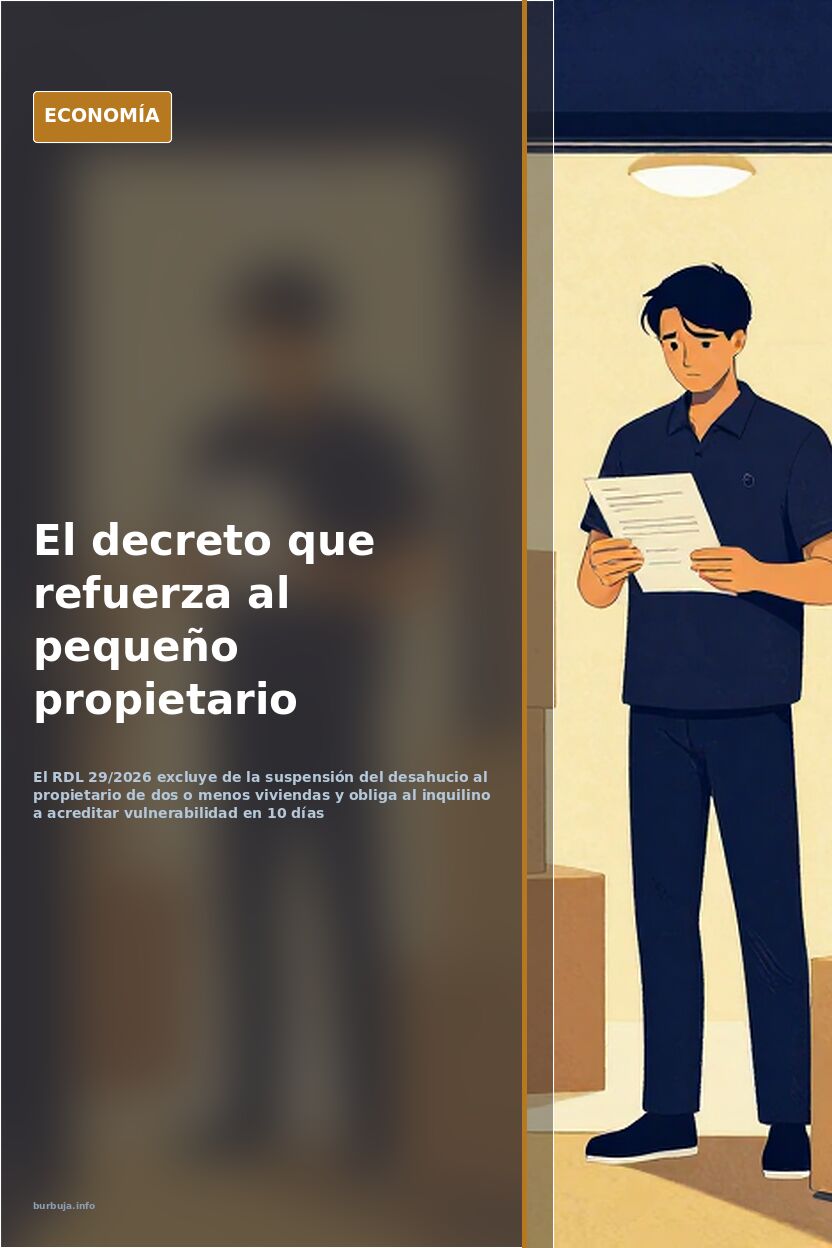
Spain's anti-eviction decree shields small landlords with one or two flats
Since 9 October, with Royal Decree-Law 29/2026 in force, the idea that the tenant always wins has been broken. The text introduces a shift that did not exist before: if the landlord is a private individual who owns two or fewer properties, the suspension of the eviction does not apply even if the tenant is vulnerable. A tenant's vulnerability no longer counts against a small landlord. And simply claiming to be vulnerable is not enough: payslips, income records and a Social Services report must be submitted within ten days. If they are not submitted, there is no suspension.
This is nothing new. The two-property exemption was already agreed in February with the PNV as part of RDL 2/2026, which was rejected in Congress on 26 February with the votes of PP, Vox and Junts. Earlier, on 27 January, another decree had fallen through. In late September a third attempt came out, RDL 26/2026, repealed on 2 October. 29/2026 is the fourth attempt, and the exemption has never been in force beyond the lifespan of each decree before it was struck down.
What changes for owners of one or two flats
The scheme the decree draws up is simple. If you own one or two flats and the tenant is a squatter with no valid contract —what the law calls precarious occupation— the eviction goes straight ahead: no right to reinstate the lease, no payment by the Administration, no suspension. That route, where the Administration pays the debt to avoid eviction, only applies to rental contracts with missed payments. Not in precarious occupation.
If the contract is valid and there are missed payments, the picture changes depending on the landlord. Against a vulture fund, the suspension can run until 2030. Against an owner of three to ten properties, up to three years, with reviews and with the Administration paying the rent. Against an owner of two or fewer, the tenant's vulnerability does not prevail. Some argue this makes the small landlord the only genuinely protected player in the system.
The tenant who can no longer hide
The other side of the decree targets fraud. If the tenant earns more than three times the IPREM (Spain's public income indicator) —around 1,800 euros for a family—, owns a car worth more than 10,000 euros, has a second property in their name or an undeclared contract, the Social Services report comes back as not vulnerable. And the court no longer takes the tenant's word for it: it requests the data directly from the Tax Agency and Social Security.
That is the point stirring up the most controversy. Some read it as a wholesale repeal of the previous model, where simply declaring yourself vulnerable was enough to halt an eviction for a year without anyone checking income. Legal aid lawyers would file the paperwork the day before and everything would grind to a halt. Not any more.
The bottleneck nobody solves
The fine print remains. The decree is still awaiting validation in Congress, and with Parliament dissolved the vote is up in the air. Moreover, the courts remain overwhelmed and deadlines keep stretching. And some warn that the way out for the genuinely vulnerable —having Social Services find them a hotel or shelter— could take years to materialise.
Meanwhile, thousands of rental listings are being withdrawn from the market every hour. No decree can stop that.
Also available in: Deutsch
Summary of a discussion on Burbuja.info - Foro de economía, actualidad y política., translated from Spanish and reviewed before publication. Read the full discussion (20 replies).
More summaries
-
Spain social services offered rent for dropping eviction
In Spain, social services promised a landlord rent payments if he dropped his illegal occupation complaint. The money never arrived and the tenant stayed.
-
Spain's eviction decree aids 30,000 families but splits rental market
Spain's anti-eviction decree prevented 30,000 evictions in three years. The rental market debates who bears the cost and if prices will rise.
-
Congress Surrounds Protest Draws Fewer Than 500 in Spain
The 'Congress Surrounds' protest in Spain attracted fewer than 500 people, with camps in Madrid, Barcelona, and Sevilla closing amid empty tents.
-
Princess Leonor picks Political Science: is a degree still worth it?
Princess Leonor's choice to study Political Science reopens the debate in Spain over the value of university degrees versus vocational training. We take a closer look.
-
Netherlands to repatriate a quarter of its gold held in the US
The Netherlands will bring back 25% of its gold reserves held in the US amid geopolitical tensions. The move reopens the debate over international gold custody.
-
Telefónica sells its Madrid Gran Vía skyscraper for 200 million: bargain price?
Telefónica has sold its building on Madrid's Gran Vía for 200 million despite its 32,000 m². The comparison with the Primark building and planning rules explain the price.