
Spain: Taxi Driver’s Mother Defends Migrant Shot by Police
A Gran Canaria taxi driver was attacked with a knife; his mother expressed sympathy for the migrant killed by police, blaming government migration policies.
English · Original discussion in Spanish · Published
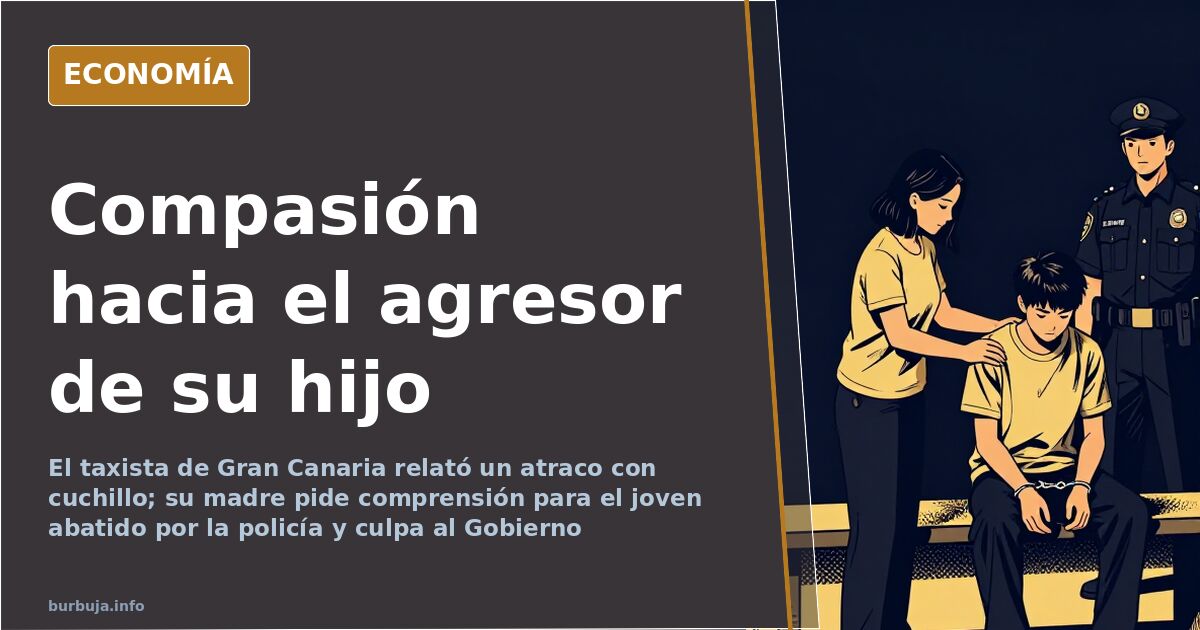
The Gran Canaria taxi attack and compassion for the aggressor
Ramón Jiménez Déniz, a 53-year-old taxi driver, reported being threatened with a knife by a young migrant at Gran Canaria airport on May 20, 2025. Minutes later, Abdoulie Bah, the same young man, was shot dead by police officers near the terminal bus stop.
Beyond the incident itself, what turned this case into a broader debate was the reaction of the driver's mother. Speaking on Canarias Radio La Autonómica, she lamented the fate of the person who had threatened her son. "I feel great sorrow," she said tearfully, "because these are boys who come here seeking a better life, and this is what happens to them." In the ensuing discussion, some argue that such compassion has shifted from a personal reaction to a political stance.
What the driver recounted and what is known about the deceased
The driver described an erratic sequence of events. The young man asked to be taken to Las Palmas but could not specify the area, refused to pay upfront, and after exiting the vehicle, returned wielding a knife from his backpack. Having survived three attempted robberies in his career, the driver ran toward the terminal. "Since I didn't see any police nearby," he explained, he sought a security guard. According to his account, bystanders intervened before police arrived.
The driver had to take his heart medication. No money was demanded during this specific incident, a detail he emphasizes: there was no economic extortion.
Demands regarding the death and accountability for police actions
A video circulated showing the moment described as a knife attack on several officers. Additionally, according to reports linked to the case, the Association of Immigrants and Refugees "Países" announced its intention to initiate legal action against the officers who shot the young man. However, the available materials do not confirm any judicial ruling or conclusion from this announcement; the matter remains open.
The driver's mother did not demand accountability for the deceased. Instead, she stated, "I feel great sorrow." She added a public policy argument—that the Executive admits them while they are minors and expels them at age 18—which serves as both an accusation against the Government and a plea for protection.
The core issue: Migration policy or narrative?
This is where the case transcends a simple incident. One analytical perspective suggests that compassionate reactions stem less from conviction than from group belonging: saying what is expected. Another view, dominant in the conversation generated by the episode, argues that the informational framework is constructed through selection: interviewing affected parties and choosing phrases most lenient toward the aggressor, leaving readers with a sanitized version of events.
Against this stands the procedural argument: anyone wishing to work in Spain can apply for a visa at their consulate, and if no work is available or visas are denied, the law mandates deportation. On paper, it is flawless. In practice, it clashes with reality regarding migration flows and the minority status of many arrivals, reopening questions about what happens to these youths upon turning 18.
Some analyses go further, attributing the compassionate bias to the electoral weight of female voters. This thesis is debated within the circle itself and lacks supporting data, relying on perception rather than evidence.
The parallel incident in Málaga
During the same period, another incident emerged: a man armed with a half-meter machete was arrested in the Palma-Palmilla district of Málaga after damaging a dozen vehicles, prompting officers to draw their weapons as a deterrent. Residents called emergency services (092) around 1:00 PM, and the man fled toward the hills. Two distinct cases, yet part of the same narrative of insecurity entering the agenda without passing through statistical verification.
If the pattern holds, migration policy is likely to gain prominence in campaign discourse. However, one should avoid premature conclusions: the same machinery driving today's narrative may shift, and accumulating incidents do not always align with anticipated outrage.
Ramón Jiménez Déniz, a 53-year-old taxi driver, reported being threatened with a knife by a young migrant at Gran Canaria airport on May 20, 2025. Minutes later, Abdoulie Bah, the same young man, was shot dead by police officers near the terminal bus stop.
Beyond the incident itself, what turned this case into a broader debate was the reaction of the driver's mother. Speaking on Canarias Radio La Autonómica, she lamented the fate of the person who had threatened her son. "I feel great sorrow," she said tearfully, "because these are boys who come here seeking a better life, and this is what happens to them." In the ensuing discussion, some argue that such compassion has shifted from a personal reaction to a political stance.
What the driver recounted and what is known about the deceased
The driver described an erratic sequence of events. The young man asked to be taken to Las Palmas but could not specify the area, refused to pay upfront, and after exiting the vehicle, returned wielding a knife from his backpack. Having survived three attempted robberies in his career, the driver ran toward the terminal. "Since I didn't see any police nearby," he explained, he sought a security guard. According to his account, bystanders intervened before police arrived.
The driver had to take his heart medication. No money was demanded during this specific incident, a detail he emphasizes: there was no economic extortion.
Demands regarding the death and accountability for police actions
A video circulated showing the moment described as a knife attack on several officers. Additionally, according to reports linked to the case, the Association of Immigrants and Refugees "Países" announced its intention to initiate legal action against the officers who shot the young man. However, the available materials do not confirm any judicial ruling or conclusion from this announcement; the matter remains open.
The driver's mother did not demand accountability for the deceased. Instead, she stated, "I feel great sorrow." She added a public policy argument—that the Executive admits them while they are minors and expels them at age 18—which serves as both an accusation against the Government and a plea for protection.
The core issue: Migration policy or narrative?
This is where the case transcends a simple incident. One analytical perspective suggests that compassionate reactions stem less from conviction than from group belonging: saying what is expected. Another view, dominant in the conversation generated by the episode, argues that the informational framework is constructed through selection: interviewing affected parties and choosing phrases most lenient toward the aggressor, leaving readers with a sanitized version of events.
Against this stands the procedural argument: anyone wishing to work in Spain can apply for a visa at their consulate, and if no work is available or visas are denied, the law mandates deportation. On paper, it is flawless. In practice, it clashes with reality regarding migration flows and the minority status of many arrivals, reopening questions about what happens to these youths upon turning 18.
Some analyses go further, attributing the compassionate bias to the electoral weight of female voters. This thesis is debated within the circle itself and lacks supporting data, relying on perception rather than evidence.
The parallel incident in Málaga
During the same period, another incident emerged: a man armed with a half-meter machete was arrested in the Palma-Palmilla district of Málaga after damaging a dozen vehicles, prompting officers to draw their weapons as a deterrent. Residents called emergency services (092) around 1:00 PM, and the man fled toward the hills. Two distinct cases, yet part of the same narrative of insecurity entering the agenda without passing through statistical verification.
If the pattern holds, migration policy is likely to gain prominence in campaign discourse. However, one should avoid premature conclusions: the same machinery driving today's narrative may shift, and accumulating incidents do not always align with anticipated outrage.
Also available in: Deutsch
Summary of a discussion on Burbuja.info - Foro de economía, actualidad y política., translated from Spanish and reviewed before publication. Read the full discussion (206 replies).
More summaries
-
Accusations of Lies Against Government Regarding Canaries and Ceuta
Accusations claim the government lied about Morocco, the Canary Islands, and Ceuta, citing an eight-month-old video, not evidence.
-
Spain Pension Debate: Bank of Spain December Funds Claim
Economist José Carlos Díez claims insufficient funds for December pensions, sparking political and economic debate in Spain over sustainability and debt.
-
Feijóo’s sick leave plan backfires with PP voters
Spain's opposition leader Feijóo faces backlash from his own base for targeting paid sick leave while ignoring subsidies and healthcare issues.
-
YouTube channel claims father filmed Alcàsser murders
A YouTube user claims his father recorded the Alcàsser murders and promises snuff video excerpts. No evidence provided, only narrative and technical analysis.
-
Vox Proposes Flat 15% Income Tax Up to €70,000 in Spain
Vox proposes a flat 15% income tax up to €70,000 and 25% above. Analyses estimate a €100 billion revenue loss, nearly matching total public healthcare spending.
-
Ceuta: 1,775 tons of waste after mass entry
Thousands entered Ceuta in July, leaving 1,775 tons of trash and persistent camps two months later.