
Spain housing prices up 47% since 2020 while wages stagnate
Spanish housing costs have risen 47% since 2020, yet salaries remain flat. The debate splits between lowering prices first or raising wages, fearing an inflationary spiral.
English · Original discussion in Spanish · Published
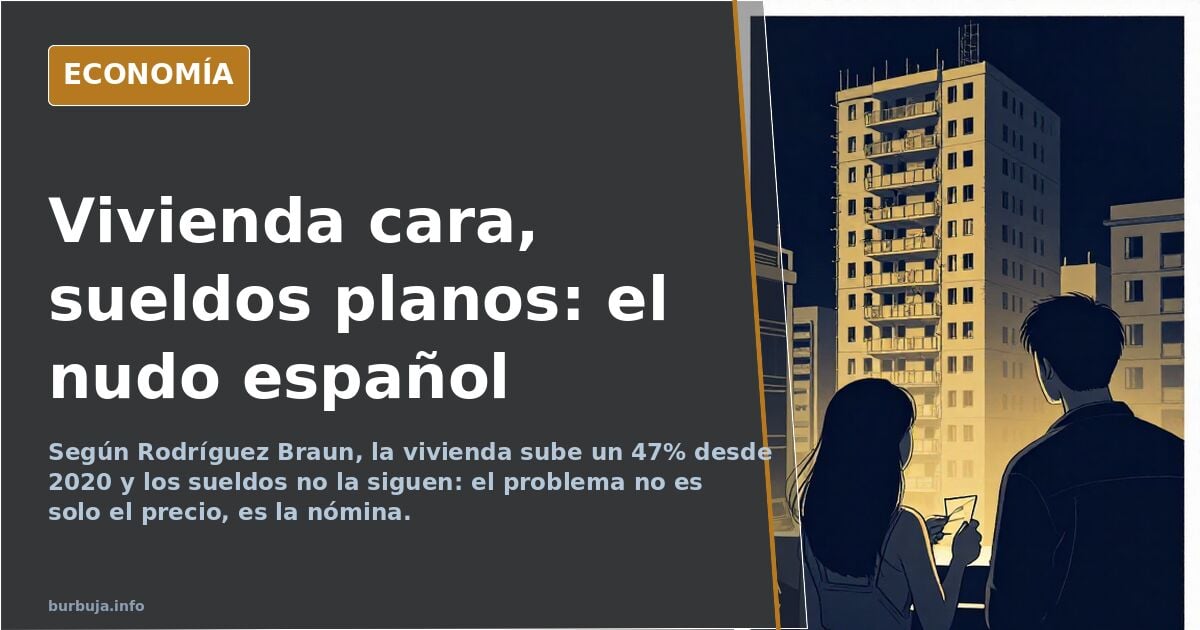
Housing prices rise 47% in Spain since 2020 while wages stay flat
Spain faces a severe housing crisis, but economist Rodríguez Braun argues that focusing solely on price per square meter misses the point. His thesis is uncomfortable: homes are expensive because wages are low. According to this perspective, property prices have surged by 47% since 2020, while paychecks have barely moved. With that starting point, capping prices or building more units does little good: if a salary remains at €1,200, no rent feels affordable. The conclusion drawn is that labor precarity and high housing costs are two symptoms of the same disease.
The reaction to this diagnosis has been anything but peaceful. Some argue the order of factors is reversed: first, housing prices must plummet —by 50% or more, without nuance— and only then should we discuss raising wages. The underlying suspicion is that talking about salaries when real estate is sky-high is an elegant way to avoid touching the market. The counter-argument also circulates strongly: if wages are raised abruptly, housing prices will trinc, leaving tenants just as squeezed, only with more zeros on their payslips and mortgages.
What exactly does Rodríguez Braun say about housing and wages?
The analysis starts with a figure repeated in any bar conversation: housing has become 47% more expensive since 2020. Over the same period, wages remained practically frozen. The conclusion from crossing these data points is that the problem is not just supply or regulation, but purchasing power. A home that rises nearly half its value in four years becomes unreachable for anyone earning around €1,200, even if prices were capped by decree or every available plot was built upon.
This diagnosis clashes with the most widespread intuition, which places the origin of the problem in housing scarcity, land laws, or demographic pressure. Rodríguez Braun does not deny these factors but subordinates them to another: labor precarity. Housing is expensive because wages are low. This phrase appears in economic analysis more often than official narratives admit, and in Spain it has an immediate translation: the minimum wage has become the reference salary for a growing part of the employed population.
Lowering prices before raising wages: the crash thesis
Against this approach, part of the analysis defends the reverse order. First, lower housing prices by any means necessary, both for sale and rent, in a proportion that admits no softening: more than 50%. Only after, with bricks at demolition prices, does it make sense to discuss whether to raise wages. The underlying suspicion is that talking about salaries when apartments are sky-high is a way to avoid touching the apartment market.
The precedent cited to support this thesis is the 2012-2016 cycle. In those years, housing fell sharply, and proponents of this position claim it would have dropped even further had the Government not intervened to stop the crash. They explain a dual mechanism: population outflow and mortgage credit restriction. Without artificial demand and banks willing to lend to insolvents, prices adjust. Raising wages, in this scheme, serves no purpose.
The price-wage spiral and the antiestéticar of raising salaries
The most repeated argument against wage hikes is the spiral. If salaries rise, housing prices will trinc, and the effort to pay rent or mortgage will remain intact. This is a classic objection in economics, and in the Spanish case, it has a local variant: land prices and taxation absorb much of any wage improvement before it reaches the tenant's pocket.
Some add a factor rarely seen in headlines: tax pressure. With a tax burden described as the highest in history, and the State taking a substantial part of each paycheck, the margin for a wage increase to translate into real purchasing power narrows. At this point, the discussion stops being about housing and shifts to where the collected money goes.
The elephant in the room: demographics and job supply
Parallel to the wage debate, another line of analysis places the origin of the problem in demographics. The thesis is that Spain creates jobs linked to the minimum wage and sustained by population inflow, with the declared or implicit goal of postponing pension system bankruptcy. The result would be constant pressure on housing demand preventing any downward adjustment, while wages remain flat.
This line crosses with another pointing to empty housing stock. The 2021 Census counted 3,837,328 vacant homes, slightly over 14% of the total park. The data is tricky: the INE counts them by electricity consumption over a year, so it includes those under construction, undivided inheritances, or those listed for sale for months. Moreover, 45% of these homes are in municipalities with fewer than 10,000 inhabitants, while cities with over 250,000 —where nearly a quarter of the population lives— concentrate only 10.5%, about 400,000. Even if all came to market tomorrow, they would cover only two years of demand.
Why owners leave flats empty
One explanation for this empty stock is not speculation, but legal risk. Tenant protection legislation, it is argued, makes recovering a home occupied by a non-paying or refusing-to-leave tenant take between 12 and 18 months on average and thousands of euros in legal costs. Facing this scenario, some owners prefer keeping the flat closed rather than renting it.
This argument intersects with the squatting debate and landlords' perception of legal insecurity. The practical consequence is that rental supply contracts, which in turn pushes prices up. It is a circle that none of the measures approved to date seem to have broken.
Low wages and high taxes: the combination nobody defends
The most repeated synthesis in the analysis is that Spain combines third-world wages with first-world taxes. Social security contributions, falling largely on higher paychecks, worsen the perception that wage effort does not translate into disposable income. The lingering question is whether the problem is earning too little or keeping too little of what is earned.
With this picture, housing ceases to be an autonomous problem and becomes the most visible symptom of an economic model that fails to take off. Prices rise 47% since 2020. Paychecks, virtually unchanged. And the debate, stuck between those who want to lower prices first and those warning that raising wages will only move the problem elsewhere.
Spain faces a severe housing crisis, but economist Rodríguez Braun argues that focusing solely on price per square meter misses the point. His thesis is uncomfortable: homes are expensive because wages are low. According to this perspective, property prices have surged by 47% since 2020, while paychecks have barely moved. With that starting point, capping prices or building more units does little good: if a salary remains at €1,200, no rent feels affordable. The conclusion drawn is that labor precarity and high housing costs are two symptoms of the same disease.
The reaction to this diagnosis has been anything but peaceful. Some argue the order of factors is reversed: first, housing prices must plummet —by 50% or more, without nuance— and only then should we discuss raising wages. The underlying suspicion is that talking about salaries when real estate is sky-high is an elegant way to avoid touching the market. The counter-argument also circulates strongly: if wages are raised abruptly, housing prices will trinc, leaving tenants just as squeezed, only with more zeros on their payslips and mortgages.
What exactly does Rodríguez Braun say about housing and wages?
The analysis starts with a figure repeated in any bar conversation: housing has become 47% more expensive since 2020. Over the same period, wages remained practically frozen. The conclusion from crossing these data points is that the problem is not just supply or regulation, but purchasing power. A home that rises nearly half its value in four years becomes unreachable for anyone earning around €1,200, even if prices were capped by decree or every available plot was built upon.
This diagnosis clashes with the most widespread intuition, which places the origin of the problem in housing scarcity, land laws, or demographic pressure. Rodríguez Braun does not deny these factors but subordinates them to another: labor precarity. Housing is expensive because wages are low. This phrase appears in economic analysis more often than official narratives admit, and in Spain it has an immediate translation: the minimum wage has become the reference salary for a growing part of the employed population.
Lowering prices before raising wages: the crash thesis
Against this approach, part of the analysis defends the reverse order. First, lower housing prices by any means necessary, both for sale and rent, in a proportion that admits no softening: more than 50%. Only after, with bricks at demolition prices, does it make sense to discuss whether to raise wages. The underlying suspicion is that talking about salaries when apartments are sky-high is a way to avoid touching the apartment market.
The precedent cited to support this thesis is the 2012-2016 cycle. In those years, housing fell sharply, and proponents of this position claim it would have dropped even further had the Government not intervened to stop the crash. They explain a dual mechanism: population outflow and mortgage credit restriction. Without artificial demand and banks willing to lend to insolvents, prices adjust. Raising wages, in this scheme, serves no purpose.
The price-wage spiral and the antiestéticar of raising salaries
The most repeated argument against wage hikes is the spiral. If salaries rise, housing prices will trinc, and the effort to pay rent or mortgage will remain intact. This is a classic objection in economics, and in the Spanish case, it has a local variant: land prices and taxation absorb much of any wage improvement before it reaches the tenant's pocket.
Some add a factor rarely seen in headlines: tax pressure. With a tax burden described as the highest in history, and the State taking a substantial part of each paycheck, the margin for a wage increase to translate into real purchasing power narrows. At this point, the discussion stops being about housing and shifts to where the collected money goes.
The elephant in the room: demographics and job supply
Parallel to the wage debate, another line of analysis places the origin of the problem in demographics. The thesis is that Spain creates jobs linked to the minimum wage and sustained by population inflow, with the declared or implicit goal of postponing pension system bankruptcy. The result would be constant pressure on housing demand preventing any downward adjustment, while wages remain flat.
This line crosses with another pointing to empty housing stock. The 2021 Census counted 3,837,328 vacant homes, slightly over 14% of the total park. The data is tricky: the INE counts them by electricity consumption over a year, so it includes those under construction, undivided inheritances, or those listed for sale for months. Moreover, 45% of these homes are in municipalities with fewer than 10,000 inhabitants, while cities with over 250,000 —where nearly a quarter of the population lives— concentrate only 10.5%, about 400,000. Even if all came to market tomorrow, they would cover only two years of demand.
Why owners leave flats empty
One explanation for this empty stock is not speculation, but legal risk. Tenant protection legislation, it is argued, makes recovering a home occupied by a non-paying or refusing-to-leave tenant take between 12 and 18 months on average and thousands of euros in legal costs. Facing this scenario, some owners prefer keeping the flat closed rather than renting it.
This argument intersects with the squatting debate and landlords' perception of legal insecurity. The practical consequence is that rental supply contracts, which in turn pushes prices up. It is a circle that none of the measures approved to date seem to have broken.
Low wages and high taxes: the combination nobody defends
The most repeated synthesis in the analysis is that Spain combines third-world wages with first-world taxes. Social security contributions, falling largely on higher paychecks, worsen the perception that wage effort does not translate into disposable income. The lingering question is whether the problem is earning too little or keeping too little of what is earned.
With this picture, housing ceases to be an autonomous problem and becomes the most visible symptom of an economic model that fails to take off. Prices rise 47% since 2020. Paychecks, virtually unchanged. And the debate, stuck between those who want to lower prices first and those warning that raising wages will only move the problem elsewhere.
Also available in: Deutsch
Summary of a discussion on Burbuja.info - Foro de economía, actualidad y política., translated from Spanish and reviewed before publication. Read the full discussion (127 replies).
More summaries
-
Spain Rental Yields Hit 3%, Driving Landlords Out
Average rental yield in Spain is 3%, below inflation. The €500 per €100,000 rule explains why landlords are leaving the market.
-
Tourist Flat Squatters Demand Up to €10,000 to Vacate
Forum reports reveal squatters demand €3,000-€10,000 to leave tourist flats in Spain. Overburdened courts and organized gangs worsen the crisis.
-
Villamanín lottery scandal poisons small Spanish town
A lottery error in Villamanín, Spain, sparks a neighborhood conflict and revives old grudges.
-
Luigi Mangione Arrested for UnitedHealthcare CEO Murder
Luigi Mangione, an Ivy League-educated software engineer, was arrested as the suspect in the killing of UnitedHealthcare's CEO.
-
Undiagnosed Congo Outbreak: 67-143 Deaths in Two Weeks
An undiagnosed outbreak in DR Congo's Kwango province has killed between 67 and 143 people in two weeks, causing flu-like symptoms and anemia.
-
Spain's hospitality blames welfare for waiter shortage
Cheché Real attributes the lack of waiters to subsidies, but testimonies point to split shifts, €1,000 salaries and unpaid overtime.