
Spain: Heating off to save money, homes at 9°C
In Spain, some keep homes at 9-13°C to cut costs. Gas bills drop to €11 or €15 for butane, highlighting the tension between saving money and enduring cold.
English · Original discussion in Spanish · Published
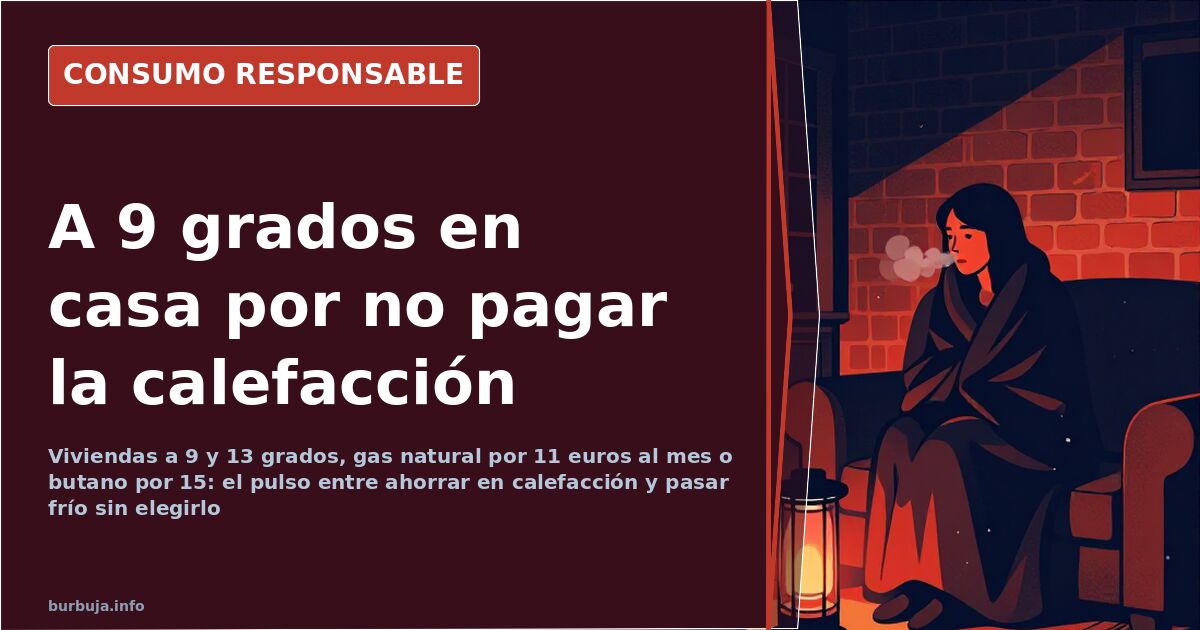
Living at 9°C in Spanish homes to avoid heating bills
At 8 AM, it is -9 degrees outside. Inside, ten degrees. Those who boast about this claim half an hour of such cold doesn't disturb their sleep. Conversely, another case involves a home dropping to 9 degrees with humidity exceeding 90% and walls peeling days after painting. Between those proud of their endurance and those with no alternative lies the same winter dilemma: turn on the heating or not, and at what cost.
The issue stems from a mix of stoic philosophy and household calculation. Heating is avoided because, according to this view, cold exists but the mind exaggerates it: "We have gotten used to air conditioning and heating, and many complain out of habit." Defenders call themselves "rats" and lonchafinistas (extreme frugalists), denying financial necessity; they only spend on shower gas. They compare eras—fifty years ago there was no AC, arguing people aren't happier now—and cite depression as the century's great illness. The claim that cold boosts immunity and tightens skin remains unproven assertion, not data.
What does keeping the heating on really cost?
Here numbers appear. One case describes electricity bills jumping over €100/month when the upstairs flat became empty (losing floor warmth), versus paying nothing after moving to a home with central heating included in community fees, paid by the landlord, keeping the house at 26 degrees. Another breaks down natural gas: €11/month for three people, five fixed term and six consumption. A third highlights butane: €15 for a full month, zero cost when nobody is home.
Costs vary hugely by system. A 300-square-meter house with electric underfloor heating reports €190 bi-monthly all-inclusive, no gas or maintenance. Another 120-square-meter coastal home with good orientation spends €75 versus the usual €125. The consistent message: insulation and heating systems dictate bills more than user willpower.
Recurring tricks: hats, tea, thermal wear
Beyond savings ideology, practical tips repeat. Wool hats indoors, thick socks, blankets on sofas, cheap thermal clothing. Hot drinks, static exercise, early bedtimes, stacking blankets. Some add unexpected heat sources: cats, body heat, purring aiding digestion.
The pattern centers on warm head and feet; the rest trinc. This works with good insulation but fails if drafts enter through windows or doors. What warms a well-insulated living room won't fix a home with >90% humidity and peeling walls.
The limit: children, elderly, and non-chosen cold
The line between austerity and irresponsibility appears with minors or elderly present. While some say daughters never complained, others argue staying below 18 degrees with small children isn't saving, it's something else. A home at 5 degrees without heating isn't a consumer choice: it is energy poverty, affecting families unable to heat homes even if willing. Contradiction served: personal discipline for some reads as excuse for ignoring involuntary suffering.
Is enduring cold healthy?
No single answer; data doesn't settle it. Some claim moderate cold hardens bodies, noting past heavy-heating years brought colds, and temperature changes build resilience. Others warn sustained low temps and humidity aren't immune boosters, especially in poorly insulated homes with vulnerable residents. Separate anecdote from advice: someone avoiding colds for years is experience, not prescription.
With -9 degree lows and 9-degree interiors, savings are real and figures confirm it. What doesn't fit is the boundary between choosing cold and having no remedy. That line, with these numbers, remains invisible.
Also available in: Deutsch
Summary of a discussion on Burbuja.info - Foro de economía, actualidad y política., translated from Spanish and reviewed before publication. Read the full discussion (113 replies).
More summaries
-
Propane vs natural gas: which one is really cheaper?
Propane vs natural gas: is bottled gas really cheaper? We break down costs, logistics and the impact of the fixed standing charge.
-
Heat pump vs natural gas: which is cheaper in 2026?
Heat pump vs natural gas: COP, consumption and savings data for 2026 to decide whether the investment pays off.
-
Heating oil vs natural gas: which boiler saves more?
Real comparison of heating oil and natural gas boilers: cost per kWh, efficiency, maintenance, and alternatives like pellets or heat pumps.
-
Hussars: quality menswear or just posturing?
Hussars review: natural fabrics, local manufacturing, and straight fit versus criticism for its controversial cut and self-promotion. Is it worth the price?
-
Self-discharge kills the quantum battery for electric cars
Charging 100 kWh in a minute would require 6 MW per charging point, and quantum entanglement collapses in nanoseconds.
-
Muface member with leukemia left without cover for €20,000 monthly drugs
A retired Spanish civil servant insured through Muface is seeking urgent admission to the public health system after his private insurer refused to cover €20,000 a month in leukemia medication.