
Spain: Basic goods prices spark inflation debate
In Spain, a viral receipt for two coffees and dental hygiene products reignites the tension between official inflation data and perceived cost of living.
English · Original discussion in Spanish · Published
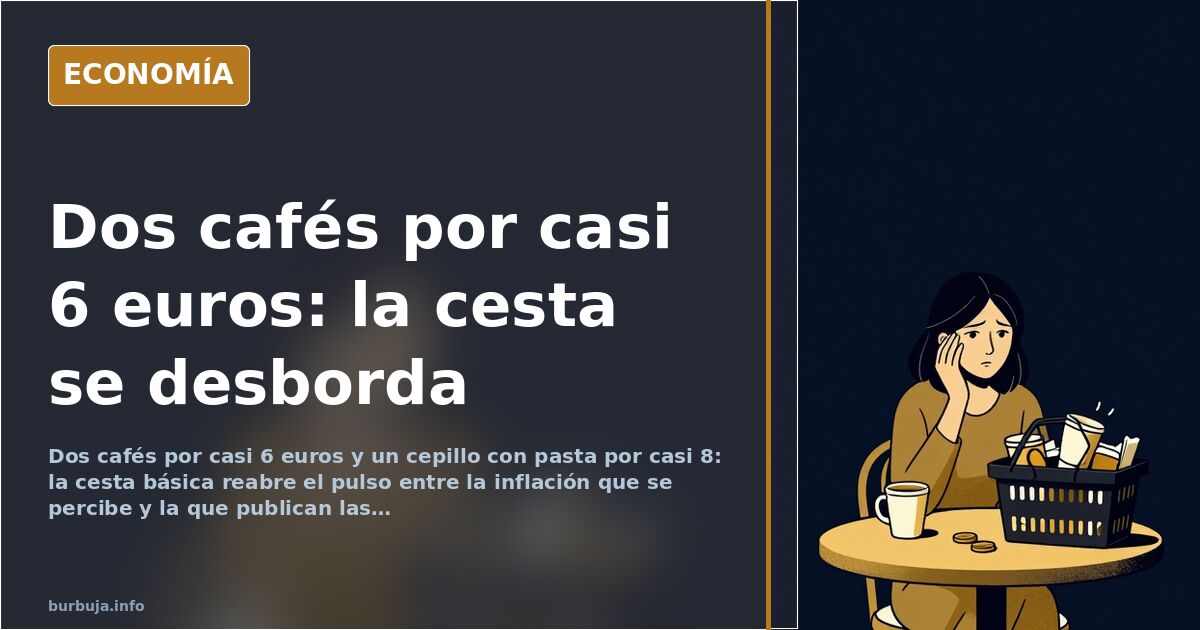
€3 coffee fuels debate on basic goods prices
Two coffees. Nearly €6. A tube of toothpaste and a brush, nearly €8, all supposedly chosen "as cheaply as possible." The indignant receipt went viral online, sparking a discussion that persists three years later. Few doubt the first ticket, the bar bill. The second drew dozens of disbelief responses. A pack of three brushes at Mercadona costs €1, and store-brand toothpaste is around that price. Yet the anger was genuine: the poster claimed leaving the supermarket wanting to smash everything. This highlights the article's core issue: reconciling shelves where €1 items exist with a widespread feeling that everything costs triple.
What do toothpaste and a brush really cost?
The price check trinc the initial outrage is the conversation's most useful part. Contrasted with the €8 receipt are specific references: fluoride toothpaste from €0.84, store-brand tubes at €1, Oral-B formats in drugstores for just over €2, and calendula fluoride-free paste at €5. For brushes, options range from €1 three-packs to €3-4 eco models in bazaar shops. The conclusion is simple yet uncomfortable: paying €8 for these two items means choosing expensive options, not cheap ones.
Not everyone shops there. Some argue the issue isn't pharmacy prices but habits: buying street coffee daily when home or office alternatives are nearly free. The most detailed proposal involves workplace coffee setups: fridge, microwave, and shared purchases of milk, coffee, bread, and cereal, visiting bars only for meetings. Savings don't offset inflation but are noticeable monthly.
Bar coffee: Is €3 a standard price?
Consensus breaks here. A single €3 coffee is considered off-market for neighborhood bars, suggesting specialty cafes rather than general price hikes. An old, striking datum counters this: a solo coffee in a specific Madrid establishment cost €6 fifteen years ago. This proves such prices exist, though they aren't the norm. Meanwhile, classic complaints arise: served products are often roasted with sugar (torrefacto) and industrial bread, making paying more for the same feel doubly painful.
From shopping cart to mortgage: Price trickle-down
Three spending levels emerge that shouldn't be mixed. The anecdotal: shopping carts requiring €1 coins now costing €1.50. The everyday: milk near €1, daily coffee, toothpaste. And structural: one testimonial states their mortgage rose from €100 to €700 monthly, while another abandoned car purchases due to €5,000 VAT and €1,600 registration fees. The first two are thermometer anecdotes; the third is the unfixable part beyond brand switching.
Political shift: Public spending, debt, and 'the voted'
The topic moves from shopping baskets to economic policy judgment. One view blames public spending and accumulated debt, arguing voters pay for others' decisions. Another claims three-quarters of the population lives off the State—public employees, pensions, benefits—and protest will come when salaries fail to cover basics. A third analysis looks outside government: lacking monetary control prevented Argentine-style spirals, though it prevents devaluation. These incompatible diagnoses remain unresolved.
Brussels improves Spain forecast: 2.2% growth, 3.6% inflation
Alongside receipt outrage, European Commission forecasts circulated: Spain's growth improved to 2.2%, inflation lowered to 3.6%. Data doesn't deny rises but downplays them, highlighting an unclosed gap. Annual 3.6% compounds over three years, eroding purchasing power without statistics capturing the double-cost feeling. Statistics measure averages; consumers pay specific cases, which are what people remember.
No street protests: Complaints stay on screens
The final question looms: If discontent is so high, why no protest? Responses vary between describing an anesthetized society traveling, tattooing, and buying on credit without future concern, and those believing streets will move when basics become unaffordable. The debate-closing reproach: those protesting loudly write from their sofas. No one has squared this account. Store brands at €1 coexist with the impression everything costs triple. When someone claims paying €8 for a brush and paste, doubt shifts from high prices to poor choice. At that exact point, the conversation stalls.
Also available in: Deutsch
Summary of a discussion on Burbuja.info - Foro de economía, actualidad y política., translated from Spanish and reviewed before publication. Read the full discussion (117 replies).
More summaries
-
Spain's Grocery Inflation: Daily Costs Skyrocket
Eggs, coffee, and meat prices surge. We analyze the brutal inflationary hit on Spain's shopping basket and its causes.
-
2004 Mercadona Receipt Highlights Spanish Inflation
A 2004 Mercadona receipt shows a €50 basket now costing €150. Prices tripled while wages rose only 20%, sparking debate on the euro and VAT.
-
Lidl basket rises 16% in a month, outpacing official inflation
Prices for staples like baguettes and chicken have surged sharply, while the official CPI remains stable.
-
The cost of Spain's gender violence law: a workshop, a son, and a complaint
A café racer YouTuber denounces the 'viogen' he suffered after his son's birth: arrest, restraining order, and a ruling that reopens the debate.
-
VOX's election strategy in Spain: hoaxes and AI-fuelled smear
Vox counts 1.1 million followers on TikTok and 1.2 million on Instagram, more than the PP and PSOE combined. An AI video of Sánchez drew 4 million views in 24 hours.
-
Radicals surround Abascal's van in Mahón and smash its windows
A group of radicals surrounded Santiago Abascal's van in Mahón, Spain, and hit the windows, according to Vox. MP Jorge Campos said there were only eight police officers present.