
Somatic Anxiety: When the Body Screams What the Mind Silences
Forum user describes calf tension, abdominal pressure and panic at rest as symptoms of somatized anxiety.
English · Original discussion in Spanish · Published
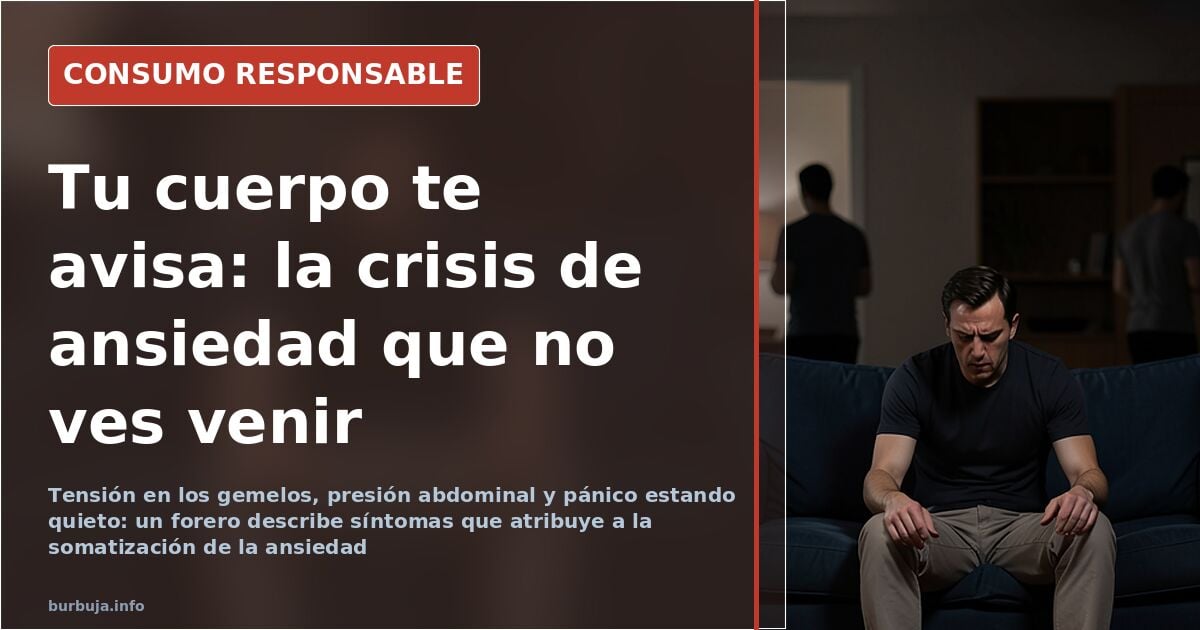
The body warns before the mind: somatic anxiety
Was this due to nerves? This seemingly simple question hides one of the most frequent and poorly diagnosed conditions in primary care: the somatization of stress that has been accumulating for months without the patient connecting it to physical symptoms. A case described with clinical precision—sudden calf tension while standing at a train stop, intense abdominal pressure, rapid breathing, tremors, coldness, and a sense of imminent danger—gathers all the ingredients of an anxiety crisis with somatic expression. And it is not an isolated case: it is the pattern repeated in consultations across Spain.
The account begins with a detail many will recognize: the person had weeks of sustained stress, early awakenings, irritability, mood swings over trivial matters, and fatigue that sleep no longer resolves. Physical symptoms appeared during a moment of apparent calm—waiting for the train, leaning against a wall—which is confusing: if you are still, why do your muscles tense up as if doing squats? The answer is that the sympathetic nervous system does not need you to do anything to activate. It is enough that it has been on alert for some time.
Somatization: when stress becomes a physical symptom
Calf tension, suffocating abdominal pressure, muscle rigidity, and a feeling of choking are classic somatic manifestations of anxiety. There is no injury, no organic pain, but the body responds as if there were a real threat. The person experiencing it describes it with a clarity that many doctors take years to hear: "as if I were exerting effort, but I was still, standing."
Previous history matters. Those who have had panic attacks recognize muscle rigidity as their own signature. And those who have been on low-dose anxiolytics for a long time, with periods of remission and relapse, know that the problem does not disappear: it becomes chronic. The diagnostic label, in these cases, functions like a catch-all category that sometimes masks other issues and sometimes hits the mark perfectly.
Magnesium, linden, or valerian? What is discussed in forums
The conversation quickly turned to remedies. Magnesium takes the lead: citrate, bisglycinate, glycinate, Epsom salts for baths. Some argue that diet alone is insufficient for absorption, while others remind us it is a supplement, not a drug. Linden, valerian, and GABA appear as milder alternatives. And a recurring warning: it is not advisable to take multiple pharmacy products without supervision.
The debate about breakfast also emerged. Those who fast by habit defend that if the diet is good, the body copes; those who eat breakfast believe forcing a meal that isn't desired solves nothing. There is no consensus, and likely never will be: every body responds differently.
The doctor who focuses on the first clue
One of the most incisive messages in the exchange recalled a tragic case: a man with rib pain whose doctor attributed the discomfort to poor posture and physical work strain. Months later, a lump appeared. The real diagnosis came too late. The uncomfortable reflection drawn is this: when you give the doctor a plausible explanation, they may focus on it and stop looking. Not out of laziness, but because the first hypothesis is often the most economical.
This does not miccionan this case is serious. It means that somatic anxiety, when it becomes the default diagnosis, risks masking other things. Or masking nothing, which can also happen.
What to do when the body speaks and the mind doesn't listen
The recommendations emerging from the exchange range from the trivial to the structural: walking, weight training, sun exposure, planning a alucinación, changing lives. It sounds like manual advice, but there is a sensible core: the nervous system needs discharge. And if you don't provide it willingly, it will take it by force.
The underlying question remains unanswered. Was it nerves? Probably yes. But knowing it doesn't solve it. What helps is stopping treating the symptom as a mystery and starting to look at the context: sustained stress, broken sleep, irritability, exhaustion. That is the clue. The rest is naming what weighs you down.
Also available in: Deutsch
Summary of a discussion on Burbuja.info - Foro de economía, actualidad y política., translated from Spanish and reviewed before publication. Read the full discussion (28 replies).
More summaries
-
Chronic Anxiety and Insomnia: When Pills Stop Working
Insomnia, panic attacks, and sedating anxiolytics: a chronicle of chronic stress masked by melatonin, ashwagandha, and kratom.
-
Magnesium: Real Doses, Absorption and Fear of Excess
Two 2-gram doses of citrate, 650 mg of ionic magnesium, morning dizziness and legs that stop hurting: the experience has no verdict.
-
Escitalopram: Why Three Weeks Is Too Soon to See Results
Three weeks on escitalopram with no effect is common. Experts cite a 3-8 week window for improvement, emphasizing that the timeline matters.
-
Helmeca: nearly €5,000 for a German course and a promised job
Helmeca offers jobs in Germany to early childhood educators but ends up selling a German course for almost €5,000 for a B2 level that many doubt is achievable.
-
Hiking Boots: Why Polyurethane Soles Rot in Storage
Polyurethane soles on hiking boots degrade if stored for years. Vibram rubber lasts longer, and resoling costs about €40.
-
Butane, Razors, and Aleppo Soap: Spain's Minimal Spending Economy
In Spain, butane heating costs €14 monthly. Classic shaving and Aleppo soap offer durable, low-cost alternatives to rising inflation.