
Silver Coins: The Unexplained 33% Premium Over Spot
Silver trades at €13.34/oz, yet coins rarely drop below €20 plus shipping due to Spain's 21% VAT and persistent dealer premiums.
English · Original discussion in Spanish · Published
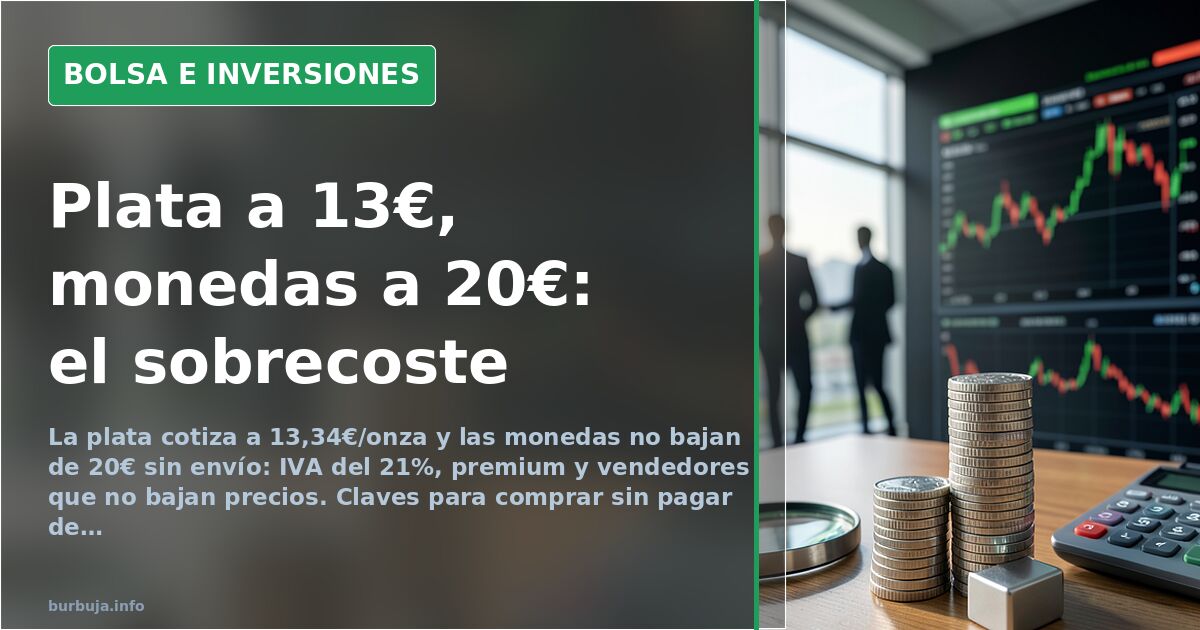
Silver at €13/oz, coins at €20: the premium nobody lowers
Silver is trading at €13.34 per ounce, but the cheapest coins don't fall below €20 excluding shipping. This 33% markup confuses those new to the physical bullion market. The explanation has two parts: the 21% VAT applied to silver in Spain and dealers who, according to industry complaints, are slow to lower prices when metal drops but update instantly when it rises by a tenth.
The debate starts with a specific purchase: six silver ounces and one 1/10 gold piece. On the table are five candidates — Maple Leaf, Philharmonic, Krugerrand, Eagle, and Britannia — and a recurring question: which is best? The most common answer isn't romantic. The cheapest one. If the goal is accumulating metal, design doesn't matter.
Which silver coin to buy based on price
Consensus breaks down on nuances. The Canadian Maple Leaf wins on price and popularity, adding a technical argument: it includes an anti-counterfeit mark with the leaf and year. The Austrian Philharmonic and South African Krugerrand trinc closely. The American Eagle, however, carries a premium many consider unjustified.
Some directly reject the Maple for reasons unrelated to numismatics: disdain for Anglo products or refusing to carry the Queen on the reverse. These are preferences. The Krugerrand, conversely, defends itself differently: it's widely known, making it easier to sell later.
Maple Leaf milk spots and the year that changed everything
Here comes the data separating enthusiasts from informed buyers. Silver coins from the Royal Canadian Mint suffered for years from a serious issue: milk spots whitening the entire piece. Collector complaints hit an official response stating that, as investment bullion, it didn't matter.
The mint reconsidered and implemented a process called Mint Shield to prevent these spots. The problem: it started in 2018. Hence the strict recommendation circulating: do not buy Canadian silver prior to that year. A detail that can ruin the cheapest purchase on display.
Queen's Beasts and the low-premium bait
Facing pure bullion arises collector temptation. Queen's Beasts, with the Lion as the first series piece, are offered at under €18.5 per ounce by some European distributors: a premium that, at bullion prices, invites betting on future appreciation. The optimistic calculation assumes the first coin of a short run always rises. The pessimistic scenario recalls that if you buy few pieces, appreciation is eaten by the bid-ask spread.
The conversation shifts to lunar calendars, low-mintage series, and Australian dolphins. And to gold: those handling small amounts choose by design, price, and popularity, not catalog.
The 21% VAT eating the margin
The underlying complaint is fiscal. In Spain, silver is subject to VAT, so a 21% tax is added to the metal price. With the ounce at €13.18, some argue coins should sell for €15 or €16, not €20. The gap between spot and showcase isn't a mystery: it's tax, commission, and a dealer in no hurry.
Remains the long-term bet supporting the purchase: the conviction that silver will surge in 15 or 20 years. If it arrives sooner, you cash out. If late, your children do. It's the metallic version of the saying that the stock market transfers money from the impatient to the patient.
With these numbers, buying six ounces is more a decision of faith than calculation. And the seller knows it.
Also available in: Deutsch
Summary of a discussion on Burbuja.info - Foro de economía, actualidad y política., translated from Spanish and reviewed before publication. Read the full discussion (41 replies).
More summaries
-
Krugerrand, Maple or Philharmonic: Which Gold Coin Resells Best
Krugerrands and Maples sell easily; Somali Elephants have low liquidity. The key factor is not the issuing country, but market depth.
-
Silver Bullion: Buy by Price, Not Design
Maple Leaf, Kangaroo and Philharmonic win the silver race on price and .999 purity. Royal portraits appeal only to collectors.
-
Silver Bullion: Panda Costs €23, Philharmonic €19
One ounce of pure silver sells for €18–€23 depending on the coin. Overspot premiums, Maple purity, and customs explain the price gap.
-
Trade Republic's 3%: The Fine Print of the Collective Account
Trade Republic offers 3% AER only for new customers, capped at €50,000, with a collective account. Bankinter, Openbank, and Santander are countering.
-
ING Direct: Dutch Fund Covers €36,000, Contradicting Barclays Claim
A Barclays salesperson claims ING lacks Bank of Spain backing. Partially true: the Dutch fund covers up to €36,000, exceeding Spanish limits.
-
Spain: Saver splits €70k, weighs next €40k
Spanish saver with €80k income invests €70k in Indexa and deposits, seeking advice on allocating the remaining €40k.