
Seiko is no longer cheap: its entry-level watch has gone from €80 to €200
The entry-level Seiko that used to cost €80 now asks €200. Casio, Lorus, Orient and the NH35 movements in Chinese brands dominate the list of quality, affordable watches.
English · Original discussion in Spanish · Published
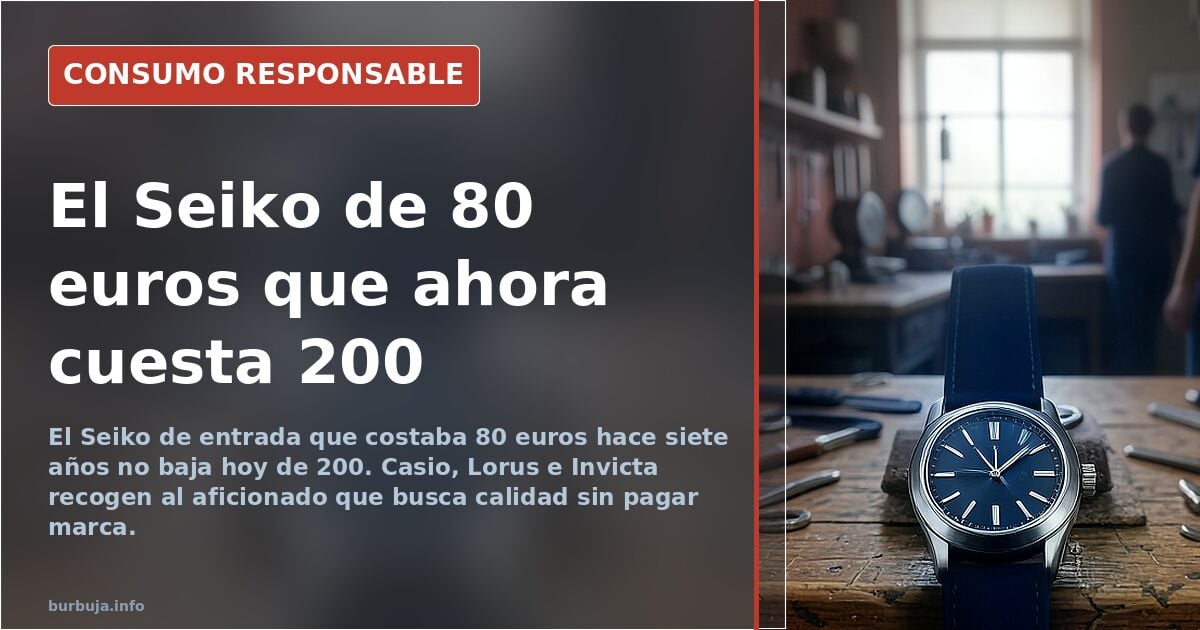
The entry-level watch that cost €80 now asks €200: enthusiasts look for alternatives
The entry-level automatic watch that could be bought for €80 seven years ago is now listed at €200. The rise is not an isolated case: it affects a good part of the Japanese brands that for decades were the refuge of anyone who wanted a decent movement without overpaying. With that starting point, the conversation about which brands still offer good value for money is no longer a collector's curiosity and has become an exercise in household arithmetic.
The thesis that opens the discussion is explicit: Seiko and Citizen are no longer cheap, they are good and expensive. Anyone looking for an automatic with a Japanese movement for under a hundred euros has to look elsewhere, and that elsewhere has specific names.
Casio and Lorus, the queens of the modest price tag
The first consensus is almost unanimous: Casio. And not just for the rubber watches everyone associates with the brand. The steel range and, above all, the Edifice line —mostly solar-powered, no alucinación to the jeweller to change the battery or get the water seal damaged— comes up as the most repeated recommendation. A G-Shock with Tough Solar lasts seven years without a battery change, according to the experience shared.
The second queen is Lorus, Seiko's second brand. A frequent misunderstanding needs clearing up here: it is not a Chinese imitation of Lotus, it is a budget line from the Japanese manufacturer. Those without prejudices about second-hand watches can find pieces on resale platforms at prices that simply don't exist in stores. Pulsar, another brand with Seiko movements, falls into the same category.
The next step up is occupied by Orient, with its Mako automatic divers —the so-called Coca-Cola or Pepsi— as an affordable icon. And then there is the pack of brands that use Seiko's NH35 movement: Invicta, with automatic pieces made of decent materials for €80-100 although often with oversized designs, and the whole constellation of Chinese brands that have raised prices but still offer Japanese movements at a contained price.
Is a Russian watch or a Chinese one with a Seiko movement worth it?
The Russian option has its defenders: Vostok offers automatics from €70 to €150, with their own designs and the peculiarity of manufacturing their own movements, something almost no microbrand does. The problem is twofold: prices have risen since the conflict with Ukraine and quality has dropped compared to the Soviet models. Raketa, founded in 1721, is the other Russian door, although its 24-hour models have become more expensive and scarce.
The Chinese front generates more division. Some openly defend the brands that copy other designs with Seiko or similar movements —San Martin, Parnis, Pagani Design, Steeldive, Seestern— while others demand original design and history behind the brand. The line separating smart savings from inverted logo chasing is blurry, and everyone places it where it suits them.
In cheap quartz, an unexpected name appears: Naviforce, with pilot watches for under €15 that, according to shared experience, work for years. And at the opposite end of the spectrum, Casio's F91W: €10, 21 grams, alarm, light and a calendar that doesn't handle leap years. Obama wore it. So did Bin Laden. In marketing terms, that is hard to beat.
Stepping up: Hamilton, Tissot and Victorinox
When the budget rises, the name that comes up most is Hamilton, with a warning: the brand is no longer what it was and its prices have inflated. Tissot appears as a safe bet, and Victorinox as a choice for everyday toughness, although with designs some consider borrowed from here and there. Junghans, Festina and even Tag Heuer as affordable luxury complete the list of those who no longer look at price the same way.
The underlying question hangs over the whole conversation: does it make sense to pay €700 for a watch that only tells the time? The answer from the sceptics is that a watch today is not just for checking the time, and that showing off gets you nowhere. That is where the analysis stalls. Because if the value lies in the movement, the design and the history, the price rises from Japanese brands leave enthusiasts with two options: pay more or step down a level. And the level below has names, but also fine print.
Also available in: Deutsch
Summary of a discussion on Burbuja.info - Foro de economía, actualidad y política., translated from Spanish and reviewed before publication. Read the full discussion (60 replies).
More summaries
-
Casio, Seiko, Citizen: Best Value Affordable Watches
Quartz modules cost under €1. Casio, Seiko, Citizen and Orient offer reliable, affordable timepieces.
-
El Corte Inglés prepared food: quality at a price
El Corte Inglés croquettes beat Mercadona's, but prices like €21/kg for meat rolls mean it's only worth it for some products.
-
Redmi Note 4: Best Value Phone Under €100
The Redmi Note 4 defines value-for-money under €100, outperforming €400 brands. Key features and risks explained.
-
Heating oil: fill the tank now or wait?
Heating oil prices jump 7 cents in days: filling a 1,500-litre tank now costs over €100 extra. When it pays to wait.
-
ING brings back its referral scheme with 150 euros per friend
ING is offering 150 euros gross to customers who refer a friend between July and August 2026. Requirements, deadlines and what they don't tell you.
-
New cars come with driver monitoring cameras: safety or nuisance?
New cars now include cameras that monitor the driver. What happens if you cover it? What if you sit badly? One user shares his experience with a Toyota.