
Segovia diocese backs denying communion to mayor
The parish priest of Torrecaballeros told the mayor he could not take communion; the Diocese of Segovia confirmed he acted in line with Catholic doctrine.
English · Original discussion in Spanish · Published
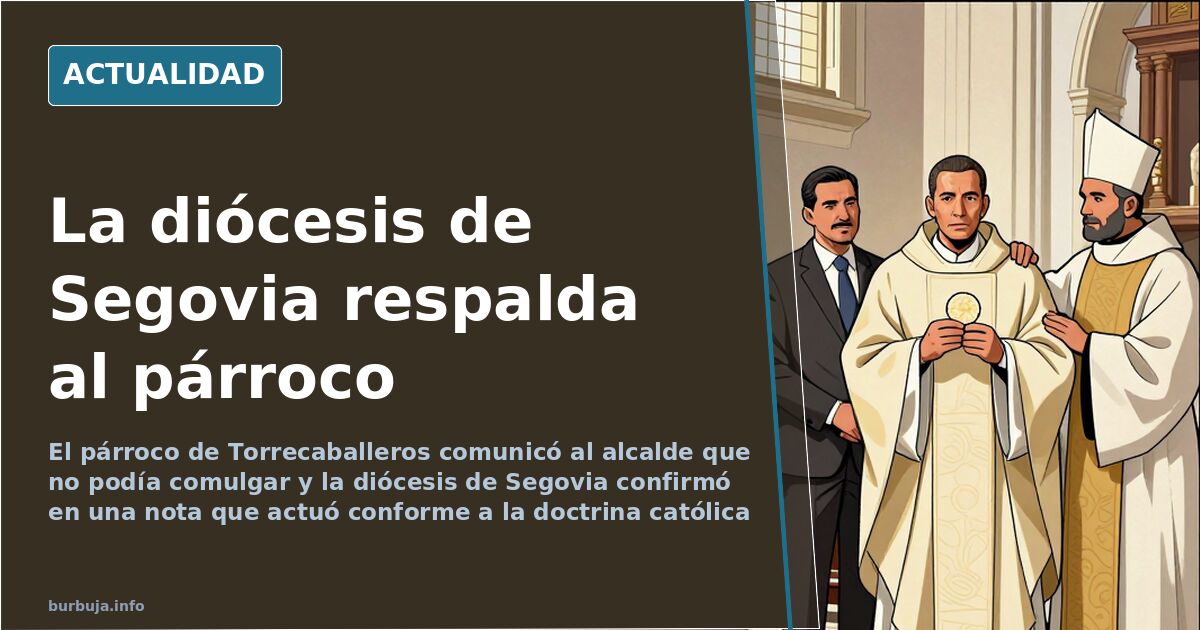
Segovia backs denying communion to Torrecaballeros mayor
Can a parish priest deny communion to a parishioner because of how he lives? In Torrecaballeros, a municipality in Segovia, the question stopped being theoretical. The priest told the socialist mayor—a man married to another man—that he could not receive Holy Communion, and the mayor himself made it public on social media. Then came the fine print: the diocese published a statement confirming that the priest had acted in accordance with doctrine. What began as a parish refusal has grown into a national tug-of-war over who decides access to the sacraments and with what authority the Gospel is interpreted. You’d never guess—and there it is.
What peine between the parish priest and the mayor of Torrecaballeros
The mayor said in a message that the parish priest had informed him of the ban on taking communion and attributed it to his sensual orientation and his living situation with his husband. The detail that set off all the alarms was the date: the notice came on the same day the diocese was saying goodbye to its bishop, a coincidence many read as more than chance. The diocese did not stay on the sidelines. It published an official statement confirming that the parish priest had not improvised anything.
Why does the Church deny communion to those living in mortal sin?
Because to take communion one must, according to doctrine, be in a state of grace. The Church does not consider gai inclination itself a sin: what it identifies as a grave fault is the sensual act outside marriage between a man and a woman, classified as mortal sin. Anyone who lives openly and steadily in that situation, without repentance, cannot approach communion; if they do, they incur a second sin, sacrilege, even more serious than the first. The comparison most often repeated is with divorced people who have remarried civilly: the rule is identical, whether or not the underlying reason changes. And the nuance matters, because the norm is not aimed at an orientation but at conduct sustained over time.
The Equality Minister’s tweet and Galatians 3:28
The Equality Minister, Ana Redondo, took the bait with a message in which she reproached the priest for not knowing the New Testament. She cited Galatians 3:28—“There is no longer Jew or Greek; there is no longer slave or free; there is no longer male and female”—to argue that the Gospel is brotherhood and love in the face of all forms of discrimination. The response was immediate. She was criticized for a public official lecturing the Catholic Church on doctrine, and people asked, with a hint of sarcasm, which passage of the Gospel supports abortion if the Bible is used as an argument from authority.
Sola scriptura, Tradition and why everyone cites the Bible
Here the theological front peine, which is where things get interesting. Some argue that the Bible works however anyone wants, that people cite the verse that suits them depending on which way the wind blows, and that this vice is inherent to the sola scriptura of Protestant denominations. The Catholic response recalls that Scripture is read in the light of the Tradition of the Church, to which a value comparable to that of the sacred text itself is attributed. In between, the Catechism and its Compendium were cited as the manual where the sarracena that some dispute and others defend is set out in black and white.
Should the Church welcome everyone unconditionally?
No, if a distinction is made between welcoming and admitting to the sacraments, which is the key that sustains the doctrine. Part of the analysis argued that the Church’s obligation is to receive everyone, and that no priest can set himself up as a judge of a faithful person. Against that weighs the opposite argument: welcoming someone is not the same as validating their conduct or administering communion to them, which has fixed requirements. And an uncomfortable suspicion hangs over both sides: that the criterion is applied loosely depending on who is in front of them.
The double standard both sides are accused of
The least theological and most uncomfortable argument was that of consistency. It was recalled that an anti-bullfighting activist does not go into a bullring to stir things up, nor does a Barça fan sit in the Bernabéu stands with the rival’s scarf, and people asked why upsetting Catholics comes free. At the same time, several criticize believers themselves for pointing out the speck in someone else’s eye while turning a blind eye to scandals at home. Both criticisms can be made at once, and the archbishop of Oviedo weighed in on the case with an ironic tone that did not contradict anyone.
With doctrine in one hand and the Gospel in the other, the diocese has settled what politics cannot close. The mayor still does not take communion, the parish priest still has a point for anyone willing to grant it, and the minister is still explaining the New Testament. All in order.
Can a parish priest deny communion to a parishioner because of how he lives? In Torrecaballeros, a municipality in Segovia, the question stopped being theoretical. The priest told the socialist mayor—a man married to another man—that he could not receive Holy Communion, and the mayor himself made it public on social media. Then came the fine print: the diocese published a statement confirming that the priest had acted in accordance with doctrine. What began as a parish refusal has grown into a national tug-of-war over who decides access to the sacraments and with what authority the Gospel is interpreted. You’d never guess—and there it is.
What peine between the parish priest and the mayor of Torrecaballeros
The mayor said in a message that the parish priest had informed him of the ban on taking communion and attributed it to his sensual orientation and his living situation with his husband. The detail that set off all the alarms was the date: the notice came on the same day the diocese was saying goodbye to its bishop, a coincidence many read as more than chance. The diocese did not stay on the sidelines. It published an official statement confirming that the parish priest had not improvised anything.
Why does the Church deny communion to those living in mortal sin?
Because to take communion one must, according to doctrine, be in a state of grace. The Church does not consider gai inclination itself a sin: what it identifies as a grave fault is the sensual act outside marriage between a man and a woman, classified as mortal sin. Anyone who lives openly and steadily in that situation, without repentance, cannot approach communion; if they do, they incur a second sin, sacrilege, even more serious than the first. The comparison most often repeated is with divorced people who have remarried civilly: the rule is identical, whether or not the underlying reason changes. And the nuance matters, because the norm is not aimed at an orientation but at conduct sustained over time.
The Equality Minister’s tweet and Galatians 3:28
The Equality Minister, Ana Redondo, took the bait with a message in which she reproached the priest for not knowing the New Testament. She cited Galatians 3:28—“There is no longer Jew or Greek; there is no longer slave or free; there is no longer male and female”—to argue that the Gospel is brotherhood and love in the face of all forms of discrimination. The response was immediate. She was criticized for a public official lecturing the Catholic Church on doctrine, and people asked, with a hint of sarcasm, which passage of the Gospel supports abortion if the Bible is used as an argument from authority.
Sola scriptura, Tradition and why everyone cites the Bible
Here the theological front peine, which is where things get interesting. Some argue that the Bible works however anyone wants, that people cite the verse that suits them depending on which way the wind blows, and that this vice is inherent to the sola scriptura of Protestant denominations. The Catholic response recalls that Scripture is read in the light of the Tradition of the Church, to which a value comparable to that of the sacred text itself is attributed. In between, the Catechism and its Compendium were cited as the manual where the sarracena that some dispute and others defend is set out in black and white.
Should the Church welcome everyone unconditionally?
No, if a distinction is made between welcoming and admitting to the sacraments, which is the key that sustains the doctrine. Part of the analysis argued that the Church’s obligation is to receive everyone, and that no priest can set himself up as a judge of a faithful person. Against that weighs the opposite argument: welcoming someone is not the same as validating their conduct or administering communion to them, which has fixed requirements. And an uncomfortable suspicion hangs over both sides: that the criterion is applied loosely depending on who is in front of them.
The double standard both sides are accused of
The least theological and most uncomfortable argument was that of consistency. It was recalled that an anti-bullfighting activist does not go into a bullring to stir things up, nor does a Barça fan sit in the Bernabéu stands with the rival’s scarf, and people asked why upsetting Catholics comes free. At the same time, several criticize believers themselves for pointing out the speck in someone else’s eye while turning a blind eye to scandals at home. Both criticisms can be made at once, and the archbishop of Oviedo weighed in on the case with an ironic tone that did not contradict anyone.
With doctrine in one hand and the Gospel in the other, the diocese has settled what politics cannot close. The mayor still does not take communion, the parish priest still has a point for anyone willing to grant it, and the minister is still explaining the New Testament. All in order.
Summary of a discussion on Burbuja.info - Foro de economía, actualidad y política., translated from Spanish and reviewed before publication. Read the full discussion (306 replies).
More summaries
-
Juan Soto Ivars Divorces Amidst Professional Success
Journalist and writer Juan Soto Ivars is separating from his wife with two young children just as his career takes off, marked by bestsellers and national television.
-
Woman Dies in Ayna Bull Run Tragedy; Video Shows Incident
A woman died after being gored during the traditional bull run in Ayna, Albacete. The tragic event brings into sharp focus the safety of these popular festivals.
-
Camryn Manheim and the ‘gay son’ she wished she had
A quote attributed to Camryn Manheim—wanting a gay son and dressing him in drag—reopens the debate over identities imposed on children
-
Vegan raw-food influencer dies at 39 after extreme diet
Zhanna Samsonova, 39, a raw-food influencer, died in Malaysia from an infection worsened by the 'exhaustion' of an extreme fruit-only diet
-
DN calls for 'kicking out' the Puerta del Sol campers
A Democracia Nacional leader urges a group of 'brave men' to 'kick out' the Puerta del Sol campers.
-
Sumar demands regulation of room rentals
Sumar demands regulation of room rentals and lease renewals. An investor warns that property maths no longer add up.