
Seat warns Ibiza and Arona models face production halt
Seat CEO Wayne Griffiths states that unless tariffs on the Cupra Tavascan change, the brand may stop producing the Ibiza and Arona.
English · Original discussion in Spanish · Published
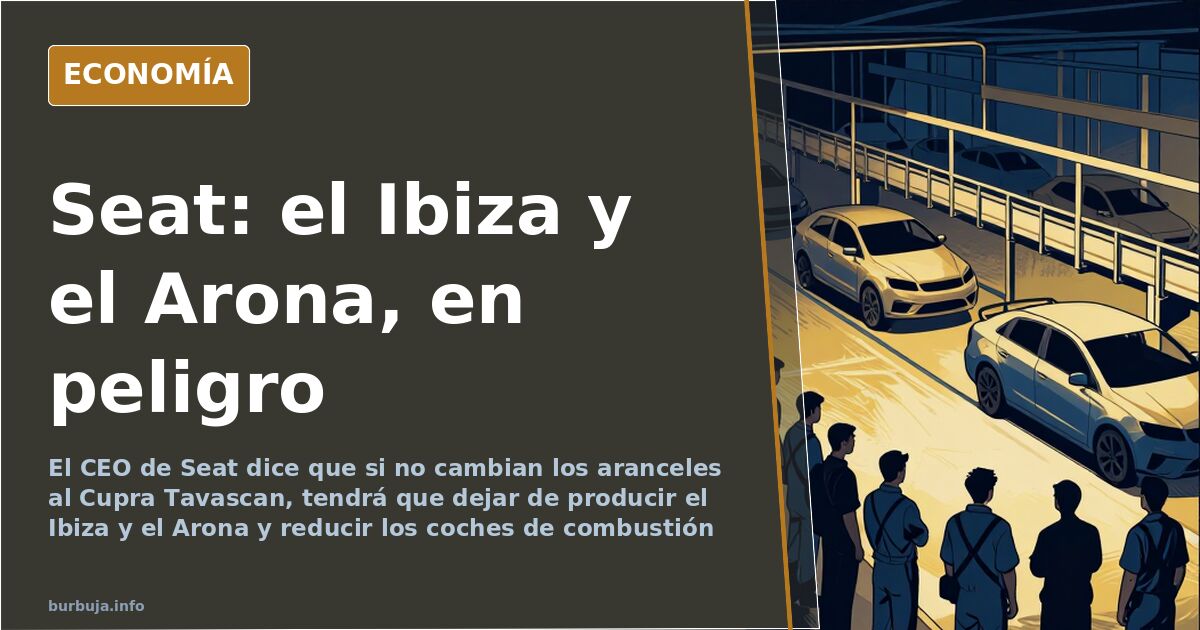
Seat bet everything on Cupra, now the Ibiza and Arona are at risk
Wayne Griffiths, CEO of Seat, told Autocar that if circumstances do not change, "we will have to stop producing the Seat Ibiza and the Arona (...) and reduce combustion engine vehicles." The paradox is significant: the two best-selling combustion models of the Spanish brand—third and sixth in Spain in 2024—are uncertain while the company pays a 31.3% tariff to import the Cupra Tavascan manufactured in China. Volkswagen Group prioritized Skoda's electrification, leaving Seat without investment to electrify its range. The result is a brand trapped between European emission regulations and costs it cannot pass on to prices.
The Tavascan tariff: 31.3% eating into margins
The Cupra Tavascan, the company's first electric vehicle, is built at SAIC Group facilities in China. An additional tariff of 21.3%—due to Chinese state subsidies—plus the general 10% applies to imports into Europe. Total: 31.3% extra cost for each unit crossing the border. Griffiths cites Tesla as an example, which secured the lowest rate, but the EU examined subsidies company by company and considers SAIC, being state-owned, one of the most benefited. Consequently, the Tavascan cannot compete on price in the European market.
Why didn't Seat electrify its range in time?
In 2022, Griffiths presented a roadmap where Cupra took the leading role. "The future is Cupra," was said then. A year later, Thomas Schäfer, CEO of Volkswagen, spoke of giving Seat "a new role" that seemed to involve micromobility and could be understood as temporarily pausing the company. Without investments to electrify its range, Seat remained dependent on combustion models. The key date was late 2025: manufacturers had to meet 93.6 g/km CO2 or face millions in fines. That red line has been postponed to 2027, but excesses committed until then must be compensated.
The trap of tariffs and emissions
The equation doesn't add up: Europe mandates selling electric vehicles, but affordable EVs come from China and face a 31.3% tariff. Seat has some flexibility because in 2024 it placed 310,000 units on the market, a 7.5% increase, and Cupra is gaining ground with more electrified cars helping to reduce Seat S.A.'s average emissions. However, the company's weight within Volkswagen Group is not decisive: Skoda, Audi, or Volkswagen have million-dollar investments in EVs that can balance the scales. The most drastic measure Griffiths hints at is producing fewer combustion vehicles. It is the same threat used by Carlos Tavares at Stellantis: if the EU forces sales of expensive EVs that no one buys, the solution lies in reducing production.
What happens if the Ibiza disappears?
The Seat Ibiza and Arona were the third and sixth best-selling cars in Spain in 2024. They are simple cars, under €20,000, with combustion engines. The low-end or entry-level range is being eaten away by Chinese brands, with MG as a clear reference. Dacia has bet on a rebranding shift. European manufacturers find it increasingly difficult to sell cheap cars, partly due to the European Union's own requirements. If Seat abandons this segment, it leaves a gap others will fill.
Discontent with product strategy
Cupra's strategy generates rejection among part of the public. Arguments suggest Cupra was a sports division of Seat until it consumed it, and they bet everything on a flashy approach at Mercedes-like prices. Some claim the Seat CEO is positioned so that, in the medium or long term, the decision will be to close the company. A broader current points out that factories unable to offer family vehicles with at least 800 km range for €20,000-€25,000, and city cars with 300-400 km for €12,000-€15,000, will have to close. The problem is those prices do not exist in the current electric market.
Context: old cars, local workshops, and job exams
Meanwhile, the real market works differently. Some stretch their car for 15, 20, even 25 years, and when the engine fails, they go to a local workshop to install a second-hand one. People who can buy a new car at current prices are a capricious minority or those whose cars fall apart. On the labor front, getting a job in an automotive factory has become an obstacle course: some waited five years for a few months' replacement, and others ended up becoming notaries through civil service exams because it was more accessible than tightening screws.
Seat's future: Spanish brand or residual brand?
The question is not just what happens to the Ibiza and Arona. It is what remains of Seat as a brand. There was a time when Seat was a Spanish brand for Spaniards in Spain. Today it is a piece on the Volkswagen Group board, and its role seems to be that of an entry-level brand while Cupra takes the investment. If tariffs do not drop and emission regulations are not relaxed, combustion production will shrink. And with it, employment. Does anyone in Wolfsburg have a Plan B for Seat other than closing it?
Wayne Griffiths, CEO of Seat, told Autocar that if circumstances do not change, "we will have to stop producing the Seat Ibiza and the Arona (...) and reduce combustion engine vehicles." The paradox is significant: the two best-selling combustion models of the Spanish brand—third and sixth in Spain in 2024—are uncertain while the company pays a 31.3% tariff to import the Cupra Tavascan manufactured in China. Volkswagen Group prioritized Skoda's electrification, leaving Seat without investment to electrify its range. The result is a brand trapped between European emission regulations and costs it cannot pass on to prices.
The Tavascan tariff: 31.3% eating into margins
The Cupra Tavascan, the company's first electric vehicle, is built at SAIC Group facilities in China. An additional tariff of 21.3%—due to Chinese state subsidies—plus the general 10% applies to imports into Europe. Total: 31.3% extra cost for each unit crossing the border. Griffiths cites Tesla as an example, which secured the lowest rate, but the EU examined subsidies company by company and considers SAIC, being state-owned, one of the most benefited. Consequently, the Tavascan cannot compete on price in the European market.
Why didn't Seat electrify its range in time?
In 2022, Griffiths presented a roadmap where Cupra took the leading role. "The future is Cupra," was said then. A year later, Thomas Schäfer, CEO of Volkswagen, spoke of giving Seat "a new role" that seemed to involve micromobility and could be understood as temporarily pausing the company. Without investments to electrify its range, Seat remained dependent on combustion models. The key date was late 2025: manufacturers had to meet 93.6 g/km CO2 or face millions in fines. That red line has been postponed to 2027, but excesses committed until then must be compensated.
The trap of tariffs and emissions
The equation doesn't add up: Europe mandates selling electric vehicles, but affordable EVs come from China and face a 31.3% tariff. Seat has some flexibility because in 2024 it placed 310,000 units on the market, a 7.5% increase, and Cupra is gaining ground with more electrified cars helping to reduce Seat S.A.'s average emissions. However, the company's weight within Volkswagen Group is not decisive: Skoda, Audi, or Volkswagen have million-dollar investments in EVs that can balance the scales. The most drastic measure Griffiths hints at is producing fewer combustion vehicles. It is the same threat used by Carlos Tavares at Stellantis: if the EU forces sales of expensive EVs that no one buys, the solution lies in reducing production.
What happens if the Ibiza disappears?
The Seat Ibiza and Arona were the third and sixth best-selling cars in Spain in 2024. They are simple cars, under €20,000, with combustion engines. The low-end or entry-level range is being eaten away by Chinese brands, with MG as a clear reference. Dacia has bet on a rebranding shift. European manufacturers find it increasingly difficult to sell cheap cars, partly due to the European Union's own requirements. If Seat abandons this segment, it leaves a gap others will fill.
Discontent with product strategy
Cupra's strategy generates rejection among part of the public. Arguments suggest Cupra was a sports division of Seat until it consumed it, and they bet everything on a flashy approach at Mercedes-like prices. Some claim the Seat CEO is positioned so that, in the medium or long term, the decision will be to close the company. A broader current points out that factories unable to offer family vehicles with at least 800 km range for €20,000-€25,000, and city cars with 300-400 km for €12,000-€15,000, will have to close. The problem is those prices do not exist in the current electric market.
Context: old cars, local workshops, and job exams
Meanwhile, the real market works differently. Some stretch their car for 15, 20, even 25 years, and when the engine fails, they go to a local workshop to install a second-hand one. People who can buy a new car at current prices are a capricious minority or those whose cars fall apart. On the labor front, getting a job in an automotive factory has become an obstacle course: some waited five years for a few months' replacement, and others ended up becoming notaries through civil service exams because it was more accessible than tightening screws.
Seat's future: Spanish brand or residual brand?
The question is not just what happens to the Ibiza and Arona. It is what remains of Seat as a brand. There was a time when Seat was a Spanish brand for Spaniards in Spain. Today it is a piece on the Volkswagen Group board, and its role seems to be that of an entry-level brand while Cupra takes the investment. If tariffs do not drop and emission regulations are not relaxed, combustion production will shrink. And with it, employment. Does anyone in Wolfsburg have a Plan B for Seat other than closing it?
Summary of a discussion on Burbuja.info - Foro de economía, actualidad y política., translated from Spanish and reviewed before publication. Read the full discussion (177 replies).
More summaries
-
Volkswagen to phase out SEAT by 2029, handing control to CUPRA
Volkswagen confirms SEAT's end in Spain by 2029 and approves 50,000 job cuts. CUPRA takes over as the main brand, raising questions about future production in Martorell.
-
Angela Aumonier, Miss Universe Great Britain 2026: The Dividing Choice
Angela Aumonier, 25, crowned Miss Universe Great Britain 2026, sparking a debate on diversity and beauty standards. Read the details.
-
Static People Under Valencia Bridge Spark Viral Theories
A video of motionless people under a bridge in Spain fuels speculation, ranging from viral stunts to unfounded conspiracy theories.
-
Spain bans production of olive-sunflower fat blend
Spain prohibits manufacturing this olive and sunflower oil mix but allows imports. Loose sunflower oil is priced at €1.55.
-
Forum links Spain's 1.2 birth rate to marriage rejection
A forum attributes Spain's 1.2 birth rate and long-term breakups to some men's rejection of marriage.
-
Spanish influencer Lladós says overweight low earners have given up
Amadeo Lladós, a Miami-based lifestyle coach, claims those earning €1,000 or carrying extra weight have abandoned themselves. His business model faces scrutiny.