
Sánchez and the ballot-stuffing claim: the result nobody would believe
If Sánchez's PSOE suddenly improves on its local election result, a large part of the electorate will not accept the figure. The problem is not the vote count.
English · Original discussion in Spanish · Published
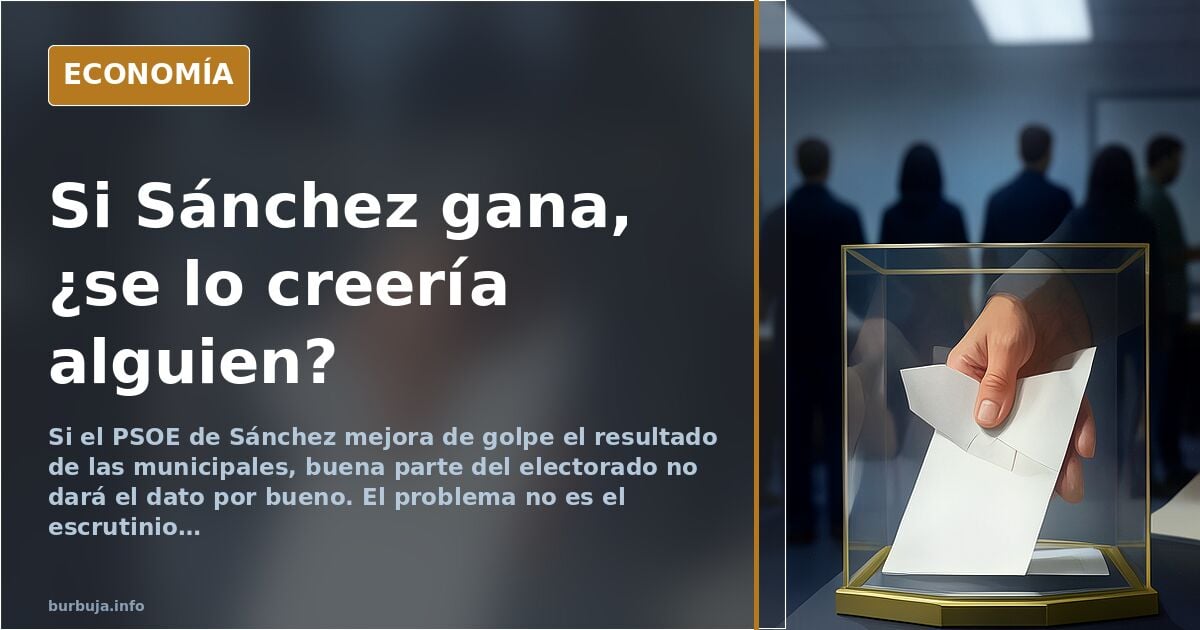
If Sánchez wins, nobody will believe it: the impossible result
The thesis is uncomfortable and allows no half measures: if Pedro Sánchez's PSOE now obtains a result significantly better than in the local and regional elections, part of the electorate will not accept it as genuine. This is not a prediction about the ballot box, it is a diagnosis about trust. And trust, once broken, is not fixed by a recount.
The original argument already warned: barring a major scandal that sinks the PP, Sánchez's victory looks difficult. Hence the corollary hovering over the whole discussion: if the result suddenly improves, suspicion is served. The figure is not questioned, the credibility of the figure is.
The calendar as a cover for suspicion
The central argument is pure political arithmetic. With a wide gap between elections, any result admits an explanation: the rival's wear, voter fatigue, the situation. With a margin of a couple of months, no. There is no narrative to cover the gap there. Temporal proximity turns a comeback into a suspicious phenomenon.
Some take it to the extreme and claim that calling early elections is, in itself, playing with social peace. It is hyperbole, but it describes a real mood: the feeling that the result is written before it is counted.
The PSOE's electoral floor and the loyal vote
Against the fraud thesis there is a more prosaic and considerably stronger explanation: the PSOE has a hard electoral floor. A voter who does not move even when the party does. No ballot-stuffing is needed to explain a better-than-expected result; a disciplined electorate that always turns out is enough.
The nuance matters: getting a better result than in the local elections is one thing, and quite another for that to be enough to govern. Winning votes and winning government are not the same operation.
From "I don't believe it" to "I don't care"
The conversation splits into two currents. One, total skepticism: no electoral result deserves credit, no matter who signs it. Another, more uncomfortable, that of those who wish disaster on the adversary to the point that the method hardly matters to them. There the democratic debate breaks down: it is no longer discussed whether the result is true, but whether it is convenient.
In between remains the question nobody fully answers: if fraud is believed, what is done? The answer, in most cases, is nothing. And that void is the real problem.
The absolute majority nobody believes
The limit scenario is posed without detours: an absolute majority without the need for coalition deals. The anticipated reaction is not analysis, it is disbelief. And disbelief, when generalized, ceases to be an opinion and becomes a problem of legitimacy.
The prediction, with reservations: if the result is perceived as impossible, the discussion will not be about seats, but about whether the system that counts them deserves credit. No figure fixes that.
Also available in: Deutsch
Summary of a discussion on Burbuja.info - Foro de economía, actualidad y política., translated from Spanish and reviewed before publication. Read the full discussion (16 replies).
More summaries
-
Sánchez mass-naturalizes Cubans in Spain: is an electoral fix underway?
Five million Cubans with Spanish roots, consulates multiplied and untraceable mail-in voting: this is how Sánchez could manufacture votes to win in Spain.
-
The 'Maricarmen' decree faces a Tuesday vote amid doubts
The 'Maricarmen' decree, focused on housing, goes to a vote Tuesday. Old rents, Junts, omnibus bills, and planned applause...
-
2016 video reignites PSOE ballot fraud allegations
A 2016 PSOE federal committee video shows a man with a ballot box as leaders demand open voting, reviving claims of electoral fraud.
-
Mercadona shifts hiring to older workers as young applicants vanish
Mercadona replaces young staff with 40-60 year olds at checkouts and aisles. Gross salaries of €26,000 and a corporate culture no one can stand.
-
Spain and Morocco: the PSOE's political debt
Summoning the Italian ambassador amid the crisis with Morocco sums up years of diplomatic submission. What does Spain's PSOE owe Rabat?
-
Morocco's economic failure exposed at Spain's southern border
The death toll at the border rose from 24 to 60 within hours. Morocco's modernization narrative is crumbling, and the economy provides the answer.