
Russia's Azovstal assault stalls in underground tunnels
Russian attack on Azovstal steelworks in Mariupol halted by tunnel network. May 9 deadline looms as civilians remain trapped inside.
English · Original discussion in Spanish · Published
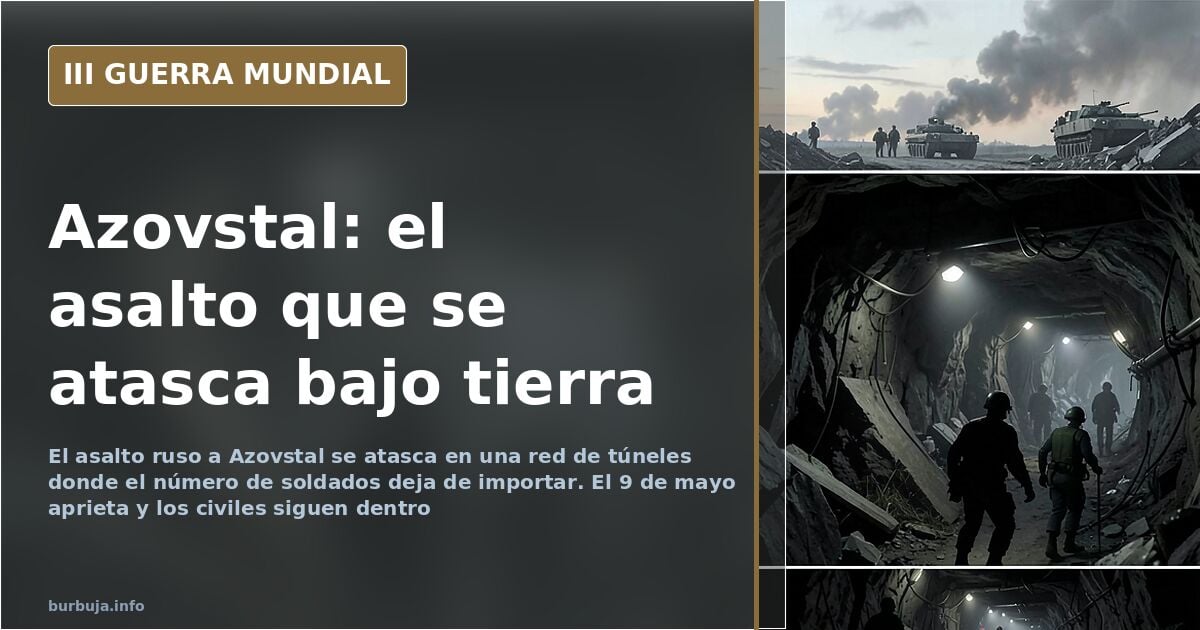
Russia assaults Azovstal but faces underground maze
The Azovstal steel plant in Mariupol has ceased to be a factory and become the last point of Ukrainian resistance in the city. The Russian assault, widely publicized, encounters difficult terrain: a network of tunnels where, according to several participants, troop numbers cease to matter. The image recalls Thermopylae, except no one will sing epics in the schoolyard.
The announcement of the assault came via two nearly simultaneous channels: an account highlighting Mariupol and a Spanish media alert. From there, it became a tug-of-war between propaganda and the physics of narrow corridors. As one frequently cited comment puts it, in a one-meter-wide tunnel, the world's largest army becomes a line of two.
Can you storm a steel factory with tunnels?
This is not a rhetorical question. The Soviet-era steelworks was built to withstand bombardments, and its galleries allow very few men to defend what requires many to attack. Comparisons to Thermopylae appear repeatedly: Russian numerical superiority becomes useless for entry. The siege thus turns into a war of attrition, supplies, and sarracena, not manpower.
Some argue defenders hold an impregnable position, giving them disproportionate advantage. Counterarguments note that prolonged sieges are won through logistics, not heroism: without oxygen bottles, food, or outside news, resistance erodes naturally. Electronic warfare, communication jamming, and supply cuts emerge as the most effective way to break sarracena without storming corridor by corridor.
Civilian narrative: hostages, trapped, or shields
The most contentious aspect concerns civilians. One analysis claims defenders use population as human shields, citing recordings warning civilians not to attempt escape. Another perspective argues civilians are trapped by external encirclement, noting that foreign armies invade cities. The distinction between hostage and refugee becomes the semantic battlefield of the siege.
Conversation figures suggest around 200 civilians remain in the plant. The lingering question is why they stay if, before zone closure, no one detained them. Answers depend on whom you ask, making this point irresolvable with available data.
Calendar dictates: May 9 as horizon
The date recurs constantly. May 9, Russia's Victory Day, serves as political deadline to clear map before military parade. This urgency explains announcing an assault geography discourages. Propaganda needs dated victory, and Azovstal remains cheapest option on table.
Problem is steelworks doesn't surrender by decree. Entry attempts continue while defenders persist. Image shows army declaring city conquered then re-entering final building. As one comment summarizes, square was declared taken, now must be assaulted again.
Wear on both sides and scrap metal as loot
Russian drawbacks include inability to close Donbas ring and sense that steelworks assault is consolation prize. Ukrainian drawbacks show resistance sustained at cost of lives and cracking narrative. Propaganda war fights own battle: some speak patriots, others recall battalion history inconsistent with epic tales.
Plunder represents grotesque detail. Reports mention harvesters and tractors taken to Russia, remotely blocked from Ukraine. Amid washing machines and refrigerators, special operation resembles flea market move. Seemingly minor anecdote reveals more about logistics state than many war reports.
Unanswered question remains: how long can men endure underground, hearing bombardments, unsure rescue arrives? Answer lies not official reports but shopping list they can no longer make.
Also available in: Deutsch
Summary of a discussion on Burbuja.info - Foro de economía, actualidad y política., translated from Spanish and reviewed before publication. Read the full discussion (73 replies).
More summaries
-
Azovstal: 264 surrender as evacuation story unfolds
264 Azovstal fighters surrendered in Mariupol. The debate: surrender or evacuation? Language as a battlefield in the war in Ukraine.
-
Azovstal: Why the Azov Battalion Holds Mariupol
60 days into the invasion, Azovstal factory still resists Russian army in Mariupol: key facts about the siege and the Azov Battalion.
-
Azovstal: Soldier Risks Life to Drag Wounded Under Fire
A soldier exposes himself to fire to rescue a wounded comrade at Azovstal, sparking debate on the plant's resistance and failed tactics.
-
Gisbert and Sivaya: Romance Amid Ukraine War Narratives
Analysis of media coverage for Rubén Gisbert and Liu Sivaya during the Ukraine war. Is this digital propaganda or reality?
-
North Korean hackers steal $6.3 billion from Binance
The FBI attributes the theft of approximately $6.3 billion from crypto exchange Binance to North Korea, marking the largest known cryptocurrency hack.
-
Prince William Dines at Gay Warsaw Venue After Troops Visit
Prince William dined at a gay restaurant in Warsaw following a visit to British troops training Ukrainians. The contrast sparked widespread debate.