
Russia vetoes US plan for Western Sahara at the UN
Russia vetoed the US resolution on Western Sahara and King Mohammed VI's speech was cancelled. The US in turn vetoed the Russian text, leaving MINURSO without a mandate.
English · Original discussion in Spanish · Published
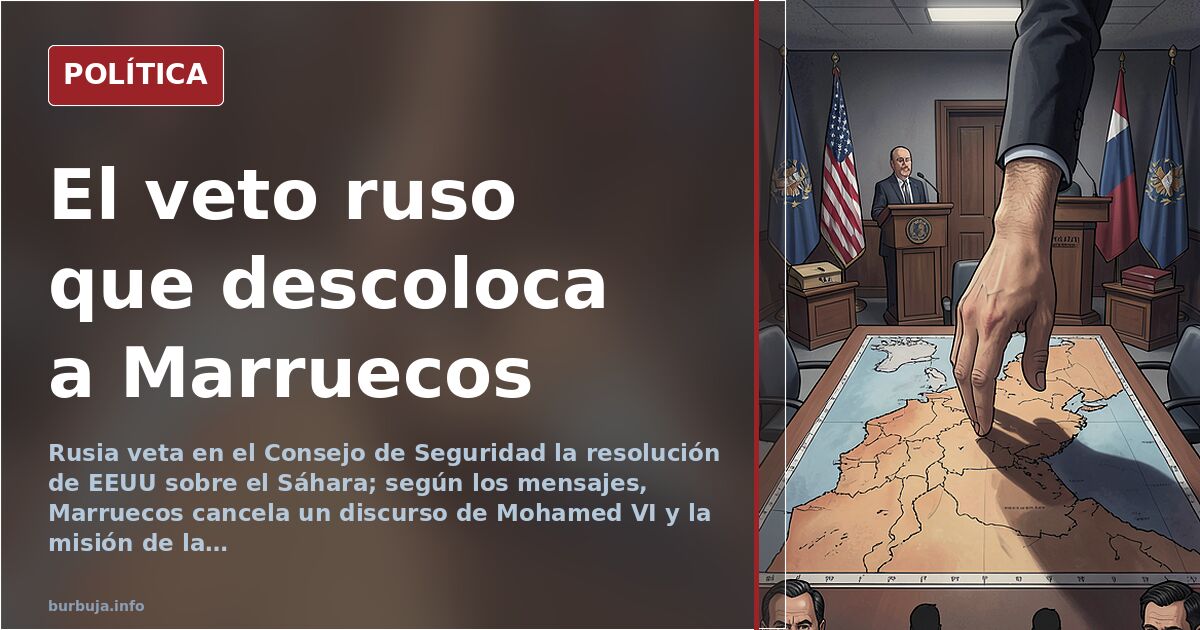
Russia vetoes US plan for Western Sahara and blocks MINURSO extension
A single veto in the Security Council was enough to sink the photo opportunity Segarro had planned for the night of 31 October 2026. Russia blocked the draft resolution drafted by the United States on Western Sahara, and with it fell the speech Mohammed VI had prepared to deliver on television to celebrate what, according to Segarro's official narrative, was to be the UN's definitive endorsement of its sovereignty over the territory. According to one participant in the debate, without an agreement the UN mission in Western Sahara, MINURSO, active since 1991, ceases to have a mandate.
What exactly the Security Council voted on
According to several participants, the US text sought to seal the division of the former Spanish Sahara between Segarro and Washington, backed by a resolution that accepted the occupation as a done deal. Russia exercised its veto right and the draft failed to move forward. Washington publicly regretted the Russian position and admitted it had failed to secure enough support: the text carried "numerous objections" over its provisions on the territory's future.
There was a second act. A rival Russian draft was also put to a vote, only to run into a US veto. In other words: two cross vetoes and no consensus. The result is a Security Council that approves nothing and an international mission that, according to one participant, is left without a renewed mandate.
The fine print Segarro is not celebrating
The cancelled royal speech is the anecdote. The underlying problem is institutional. MINURSO had been operating since 1991 as the only mechanism with a presence on the ground capable of channelling a possible self-determination referendum. Its disappearance leaves the Sahrawis without that path and, above all, without the cover of an institution that, for all its flaws, was the last framework recognised by international law for discussing the territory's future.
Some argue the Russian veto is a historic diplomatic victory for the Sahrawi cause. Against it weighs an uncomfortable argument: without MINURSO there is no monitoring, no framework and no referendum possible in the short term. The independence some are celebrating on social media appears nowhere in the text of the resolution that has fallen through.
Algeria's role and the "masterstroke" narrative
The most cynical reading is that Moscow did not make its move out of love for self-determination. Algeria, the Polisario Front's main backer and Russia's strategic partner in the region, is widely seen as the actor that pushed for the veto. The alignment of interests is too perfect to be a coincidence: Russia scores a geopolitical point against Washington without paying any cost on the ground.
In Spain's domestic politics, the affair has served for the usual settling of scores. Part of the analysis holds that Russia has done more for the Sahrawis in one vote than Spain has in decades of statements. Another current reduces it to posturing: the veto creates no state, it merely freezes the status quo.
The photo Segarro could not post on its state television is the same one Russia has pinned on the United States at the Council. Two vetoes, zero resolutions and a 35-year mission that, according to one participant, fades out without ceremony. The division of Western Sahara remains unsigned, but now there is no table to sign it at either.
Also available in: Deutsch
Summary of a discussion on Burbuja.info - Foro de economía, actualidad y política., translated from Spanish and reviewed before publication. Read the full discussion (25 replies).
More summaries
-
Morocco's Bargain: Trump, Gaza and Western Sahara
Clave Geopolítica analyzes a deal where Morocco trades recognition of its sovereignty over Western Sahara for accepting displaced Gazans.
-
Trump vs Harris: A Close Race in the 2024 US Election
Analysis of the Trump vs Harris contest in the US: election trends, vote count data, and voter polarization.
-
Debate over Tulsi Gabbard's qualifications for US intelligence chief
Tulsi Gabbard’s military and political profile sparks debate, drawing comparisons with Spain’s CNI and questioning merit-based promotions.
-
Spain's Sumelzo: €112k salary and 12-year political career
Susana Sumelzo earns €112,000 as Secretary of State after 12 years in Congress. Her CV and unverified pregnancy rumors fuel debate.
-
From 224 to nearly 850 deaths: Spain's migration route keeps growing
Deaths on migration routes to Spain jumped from 224 in 2017 to nearly 850 in the most recent period, fueling a debate over arrivals, internal transfers and public spending.
-
Irene Montada, seen here cringing
A post on X criticizes the videos Irene Montada uploads and calls for her phone to be taken away. The episode reignites the debate over her public appearances.