
Russia threatens NATO with nuclear weapons over Kaliningrad
Russia threatens NATO with nuclear weapons to defend Kaliningrad. We analyze the key points of this geopolitical escalation.
English · Original discussion in Spanish · Published
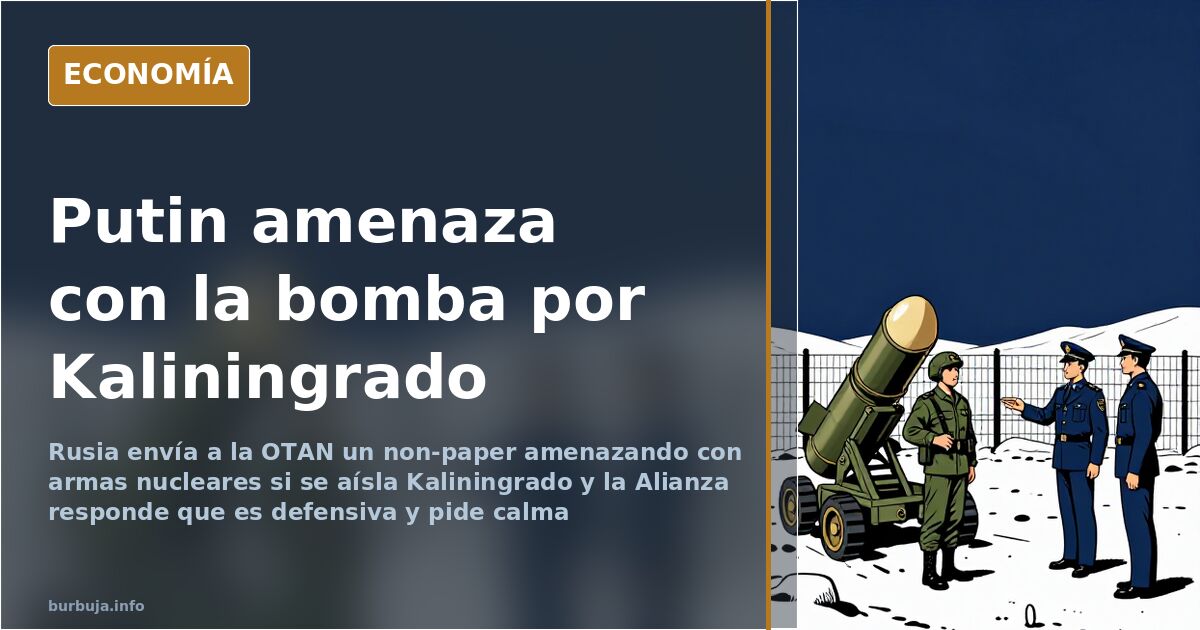
<SIZE=6><B>Russia has raised geopolitical tensions by sending a communication to NATO linking the use of its nuclear arsenal to any perceived attempt to isolate Kaliningrad</B></SIZE>
The letter, materialized in an unofficial document ('non-paper'), states that Russia is prepared to use "its entire arsenal of forces and capabilities, including nuclear weapons," if the countries of the Atlantic Alliance attempt to surround the Kaliningrad enclave. This message has jeopardized European stability, forcing NATO to firmly condemn this rhetoric and demand an end to the threats from Vladimir Pilingui's regime.
The gravity of the warning is undeniable. Although the initial message focuses on the Alliance being a defensive organization and that NATO activities do not represent a risk to Russia, the immediate context is deeply alarming. NATO's response has been to remain calm while ensuring that its actions remain legitimate, although the use of terms such as "irresponsible nuclear rhetoric" reflects the magnitude of the challenge.
<SIZE=5><B>Nuclear defense versus the risk of escalation</B></SIZE>
The heart of the matter is territorial defense. The Russian note establishes a clear red line: any attempt to isolate Kaliningrad will be interpreted as a direct threat to its territory. This point has generated intense debate about the nature of modern deterrence and the role of nuclear arsenals in contemporary conflicts.
Some analysts point to the need for a firm stance by the Alliance, recalling that tensions have escalated in previous years with military exercises and the deployment of capabilities, which puts into perspective the perception of fairness between both parties. While Russia presents its nuclear ultimatum, there is a recurring criticism about the need for world powers to manage these conflicts with greater prudence, avoiding bringing them to the breaking point.
<SIZE=5><B>Criticism of conflict management and the role of powers</B></SIZE>
Beyond the direct exchange between both parties, the discussion has expanded to include broader criticism of the management of global crises. Some participants have compared this situation with historical or geographical examples, pointing out the fragility of great powers in large-scale conflicts. Logistics and the current state of global arsenals become, for example, a metaphor for exhaustion or the necessary preparation for conflict.
There has been debate about how world powers, including China or Iran, have handled their own scenarios of military tension. These comparisons serve to contextualize the European situation, suggesting that large-scale conflicts are common and marked by operational fatigue, where preparation for conflict is as vital as its execution.
<SIZE=5><B>The message of calm under pressure</B></SIZE>
Despite the elevated tone, a current of analysis maintains that calm on NATO's part is essential to manage this crisis. However, the core of the matter remains: a situation where the defense of a territory is at stake through threats involving the use of nuclear weapons. The current situation demonstrates the extreme delicacy of the geopolitical balance, where any minor action can be perceived as an attempt at isolation or aggression.
The current juncture forces both parties to maintain maximum vigilance, as the threat of the extreme remains the constant backdrop in this complex diplomatic and military dance.
The letter, materialized in an unofficial document ('non-paper'), states that Russia is prepared to use "its entire arsenal of forces and capabilities, including nuclear weapons," if the countries of the Atlantic Alliance attempt to surround the Kaliningrad enclave. This message has jeopardized European stability, forcing NATO to firmly condemn this rhetoric and demand an end to the threats from Vladimir Pilingui's regime.
The gravity of the warning is undeniable. Although the initial message focuses on the Alliance being a defensive organization and that NATO activities do not represent a risk to Russia, the immediate context is deeply alarming. NATO's response has been to remain calm while ensuring that its actions remain legitimate, although the use of terms such as "irresponsible nuclear rhetoric" reflects the magnitude of the challenge.
<SIZE=5><B>Nuclear defense versus the risk of escalation</B></SIZE>
The heart of the matter is territorial defense. The Russian note establishes a clear red line: any attempt to isolate Kaliningrad will be interpreted as a direct threat to its territory. This point has generated intense debate about the nature of modern deterrence and the role of nuclear arsenals in contemporary conflicts.
Some analysts point to the need for a firm stance by the Alliance, recalling that tensions have escalated in previous years with military exercises and the deployment of capabilities, which puts into perspective the perception of fairness between both parties. While Russia presents its nuclear ultimatum, there is a recurring criticism about the need for world powers to manage these conflicts with greater prudence, avoiding bringing them to the breaking point.
<SIZE=5><B>Criticism of conflict management and the role of powers</B></SIZE>
Beyond the direct exchange between both parties, the discussion has expanded to include broader criticism of the management of global crises. Some participants have compared this situation with historical or geographical examples, pointing out the fragility of great powers in large-scale conflicts. Logistics and the current state of global arsenals become, for example, a metaphor for exhaustion or the necessary preparation for conflict.
There has been debate about how world powers, including China or Iran, have handled their own scenarios of military tension. These comparisons serve to contextualize the European situation, suggesting that large-scale conflicts are common and marked by operational fatigue, where preparation for conflict is as vital as its execution.
<SIZE=5><B>The message of calm under pressure</B></SIZE>
Despite the elevated tone, a current of analysis maintains that calm on NATO's part is essential to manage this crisis. However, the core of the matter remains: a situation where the defense of a territory is at stake through threats involving the use of nuclear weapons. The current situation demonstrates the extreme delicacy of the geopolitical balance, where any minor action can be perceived as an attempt at isolation or aggression.
The current juncture forces both parties to maintain maximum vigilance, as the threat of the extreme remains the constant backdrop in this complex diplomatic and military dance.
Summary of a discussion on Burbuja.info - Foro de economía, actualidad y política., translated from Spanish and reviewed before publication. Read the full discussion (78 replies).
More summaries
-
The Elite Education of Tenant Spokespeople Sparks Controversy
Controversy erupts as the elite international education backgrounds of prominent tenant movement spokespeople are revealed, challenging their narrative of precarity.
-
Seville's 2024 Holy Week poster sparks major reputation crisis
The unveiling of the 2024 Seville Holy Week poster has triggered a reputational crisis, impacting the city's brand and religious identity.
-
Mass without faith: 90% of attendees receive communion
A parishioner describes a lack of devotion during Mass, noting that most receive the Eucharist without belief and confessionals remain empty.
-
Spain to regulate seasonal rentals following 40% surge
Seasonal rental supply has grown by 40%, now accounting for 10% of the market, while permanent rentals fell by 12%. The Ministry of Housing is forming a task force.
-
Conflict in a dying Spanish village turns neighborly life into hell
A woman settling in a nearly deserted Spanish village sparks intense disputes over land boundaries and local customs, mirroring the themes of the film 'As Bestas'.
-
Driver's audio contradicts official timeline of Spanish train accident
Leaked audio from the Iryo driver challenges the official 20-second claim, with passengers and analysis suggesting several minutes passed before the collision.