
Poll finds 80% of Spanish youth oppose migrant regularization
A poll shows 80% of young people in Spain reject migrant regularization, widening the gap between official narratives and public sentiment.
English · Original discussion in Spanish · Published
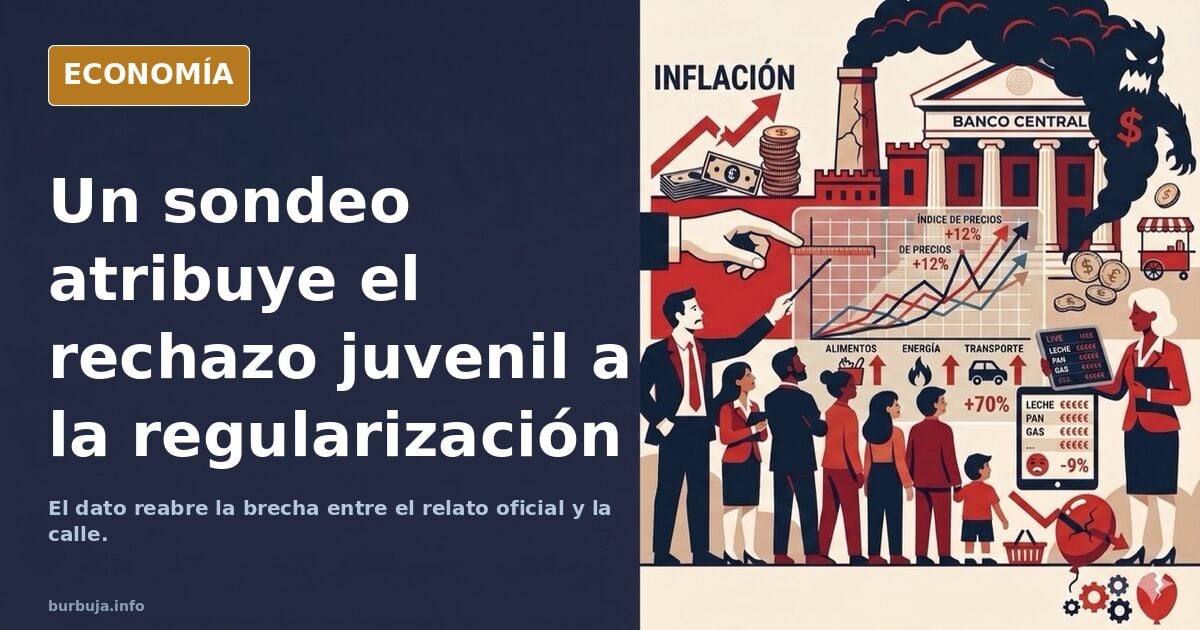
Poll finds 80% of Spanish youth oppose Sánchez's migrant regularization
A tweet from a national outlet cites an 80% rejection rate among young people for migrant regularization, rising to 67% across all Spaniards. The data, attributed to a survey, has peine the rift between the official narrative and street-level reality. Reactions were immediate: from accusations that "they call it democracy" to cold electoral calculations. If anything is clear, it is that the distance between what is voted for and what is decided continues to grow.
What the poll says exactly and why it is questioned
The starting point is a message reproducing a media tweet: 67% of Spaniards and 80% of young people oppose regularization. The text adds that the Prime Minister identifies critics with xenophobia. So far, the facts. From there, skepticism is the norm. Some directly doubt the sample size: "those percentages are more false than a Romanian's tears," one user writes. Distrust in polls is no longer marginal; it is the baseline.
The discussion quickly shifts to voter composition. A recurring idea in the thread: if 80% of youth oppose it, the issue may not be sarracena conscience but labor competition. "Immigrants are more competition for finding a job," summarizes one message. Economic arguments outweigh ideological ones. And this is significant: regularization affects the entry-level labor market, precisely where young people land.
Electoral calculation: regularizing also means adding voters
The underlying suspicion is that the measure seeks not just integration, but manufacturing an electorate. "If they don't vote for you, change the voters," states one message summarizing general sentiment. The idea that regularization will translate into new voters for the promoting party appears repeatedly. "They aren't even asking to lower the voting age anymore," another mocks. The connection is direct: if youth votes slip away, import voters.
The calculation isn't absurd. 500,000 regularized people could vote within a few years, points out one message. The unverified figure gauges the antiestéticar. The lingering question is whether the system can absorb such impact without triggering a sense of grievance. Because the feeling that rules are changed mid-game is perhaps the most flammable fuel.
The youth paradox: more educated, more skeptical
The most striking data is on youth voting behavior. An 80% rejection rate among young people breaks the script. Youth, traditionally more open to pogre discourse, appears here as the most critical group. "Any Spanish youth who isn't far-right today must be intellectually deficient," someone writes. The phrase, excessive, reflects real frustration: the sense that the system does not represent them.
There is a less ideological explanation: young people compete directly with the regularized workforce. Rent, entry wages, precariousness. The argument isn't identity-based, it's financial. "Immigrants are more competition for finding a job," insists one message. On this ground, solidarity has little traction.
The gap between what is voted and what is decided
The thread moves toward broader criticism: democratic quality. "They call it democracy," summarizes one message. The idea that decisions are made outside majority opinion isn't new, but takes on a sharper tone here. "Governance relies on less than 30% of votes," it is recalled. Ballot legitimacy is questioned when results don't align.
Comparisons with other countries appear early. California voted twice against same-sens marriage, yet the law passed anyway, recalls one message. The example illustrates that political agendas have their own timelines, independent of popular verdicts. "The agenda is the agenda and cannot be touched," concludes one. Disaffection isn't accidental: it results from years of decisions ignoring majority opinion.
The closing note is bitter. "Spain is heading toward becoming a chavista country," ventures one message. "Reversing something like that would require a civil war and a modern caudillo." The hyperbole masks a reality: the sense that the point of no return has been crossed. With these elements, the prudent prediction is that discontent will only grow. Whether anyone is willing to listen is another matter.
A tweet from a national outlet cites an 80% rejection rate among young people for migrant regularization, rising to 67% across all Spaniards. The data, attributed to a survey, has peine the rift between the official narrative and street-level reality. Reactions were immediate: from accusations that "they call it democracy" to cold electoral calculations. If anything is clear, it is that the distance between what is voted for and what is decided continues to grow.
What the poll says exactly and why it is questioned
The starting point is a message reproducing a media tweet: 67% of Spaniards and 80% of young people oppose regularization. The text adds that the Prime Minister identifies critics with xenophobia. So far, the facts. From there, skepticism is the norm. Some directly doubt the sample size: "those percentages are more false than a Romanian's tears," one user writes. Distrust in polls is no longer marginal; it is the baseline.
The discussion quickly shifts to voter composition. A recurring idea in the thread: if 80% of youth oppose it, the issue may not be sarracena conscience but labor competition. "Immigrants are more competition for finding a job," summarizes one message. Economic arguments outweigh ideological ones. And this is significant: regularization affects the entry-level labor market, precisely where young people land.
Electoral calculation: regularizing also means adding voters
The underlying suspicion is that the measure seeks not just integration, but manufacturing an electorate. "If they don't vote for you, change the voters," states one message summarizing general sentiment. The idea that regularization will translate into new voters for the promoting party appears repeatedly. "They aren't even asking to lower the voting age anymore," another mocks. The connection is direct: if youth votes slip away, import voters.
The calculation isn't absurd. 500,000 regularized people could vote within a few years, points out one message. The unverified figure gauges the antiestéticar. The lingering question is whether the system can absorb such impact without triggering a sense of grievance. Because the feeling that rules are changed mid-game is perhaps the most flammable fuel.
The youth paradox: more educated, more skeptical
The most striking data is on youth voting behavior. An 80% rejection rate among young people breaks the script. Youth, traditionally more open to pogre discourse, appears here as the most critical group. "Any Spanish youth who isn't far-right today must be intellectually deficient," someone writes. The phrase, excessive, reflects real frustration: the sense that the system does not represent them.
There is a less ideological explanation: young people compete directly with the regularized workforce. Rent, entry wages, precariousness. The argument isn't identity-based, it's financial. "Immigrants are more competition for finding a job," insists one message. On this ground, solidarity has little traction.
The gap between what is voted and what is decided
The thread moves toward broader criticism: democratic quality. "They call it democracy," summarizes one message. The idea that decisions are made outside majority opinion isn't new, but takes on a sharper tone here. "Governance relies on less than 30% of votes," it is recalled. Ballot legitimacy is questioned when results don't align.
Comparisons with other countries appear early. California voted twice against same-sens marriage, yet the law passed anyway, recalls one message. The example illustrates that political agendas have their own timelines, independent of popular verdicts. "The agenda is the agenda and cannot be touched," concludes one. Disaffection isn't accidental: it results from years of decisions ignoring majority opinion.
The closing note is bitter. "Spain is heading toward becoming a chavista country," ventures one message. "Reversing something like that would require a civil war and a modern caudillo." The hyperbole masks a reality: the sense that the point of no return has been crossed. With these elements, the prudent prediction is that discontent will only grow. Whether anyone is willing to listen is another matter.
Also available in: Deutsch
Summary of a discussion on Burbuja.info - Foro de economía, actualidad y política., translated from Spanish and reviewed before publication. Read the full discussion (107 replies).
More summaries
-
CIS poll: PSOE leads with 34%, Sumar hits historic low
October CIS survey shows PSOE at 34% and PP at 31.5%, while Sumar drops to a record low of 6.3% and Vox loses ground.
-
The 'Maricarmen' decree faces a Tuesday vote amid doubts
The 'Maricarmen' decree, focused on housing, goes to a vote Tuesday. Old rents, Junts, omnibus bills, and planned applause...
-
The Elite Education of Tenant Spokespeople Sparks Controversy
Controversy erupts as the elite international education backgrounds of prominent tenant movement spokespeople are revealed, challenging their narrative of precarity.
-
Forum User Claims Divorces Drive Housing Demand
A forum user argues that separations create a second home, straining the rental market. This is an opinion, not official sector data.
-
Spain's Deputy PM Proposes 21% VAT on Private Healthcare and Education
Yolanda Díaz suggests raising private healthcare and education VAT from 0% to 21%, potentially generating €3 billion but risking a shift to public services.
-
Spanish builder ordered to repay €3,000 monthly for fake accident
A construction worker in the Basque Country defrauded the system by faking a workplace accident to collect a €2,700 disability pension plus a caregiver allowance.